You are using an outdated browser. Please upgrade your browser to improve your experience.

Top Blue Paint Shades for Modern Interiors and Exteriors in 2026

Top Blue Paint Shades for Modern Interiors and Exteriors in 2026

Blue as the Most Versatile Colour for Contemporary Indian Architecture

Among all colour families, blue continues to stand out as one of the most adaptable and enduring choices for Indian homes. Its ability to feel calm yet confident, modern yet timeless, makes it especially relevant for contemporary architecture in 2026.

In Indian contexts, blue carries both emotional and practical value. It reflects openness and tranquillity while responding well to varied lighting conditions, climates, and design styles. Whether used subtly indoors or boldly on exteriors, blue effortlessly bridges aesthetics and functionality, making it a preferred choice for homeowners seeking balance rather than excess.

Trending Blue Shades for 2026: Calm, Grounded, and Contemporary

The blue palette for 2026 moves away from loud or overly saturated tones, leaning instead towards softer, more sophisticated shades that feel grounded and liveable.

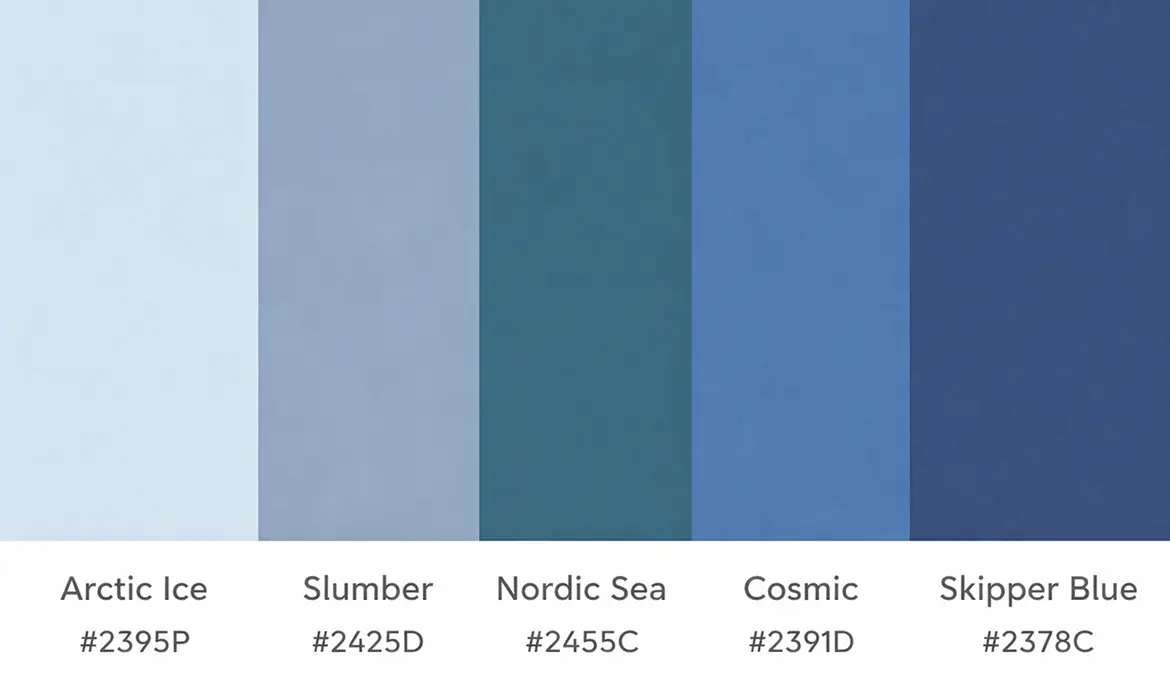
Key blue shades shaping modern interiors and exteriors include:

  • Arctic Ice (2395P) – A light, airy shade that introduces freshness without feeling cold
  • Slumber (2425D) – A grey-infused blue offering depth and architectural elegance
  • Nordic Sea (2455C) – A balanced blend of blue and green, ideal for contemporary Indian homes
  • Cosmic (2391D) – Industrial yet refined, perfect for modern facades and accents
  • Skipper Blue (2378C) – Rich and expressive, adding drama without overwhelming a space

These shades work well because they adapt easily to both minimal and layered design approaches, making them suitable for long-term use rather than short-lived trends.
Interior Applications: Creating Calm, Functional Living Spaces

Blue has a unique ability to influence mood indoors, making it particularly effective in spaces meant for rest, focus, and everyday living.

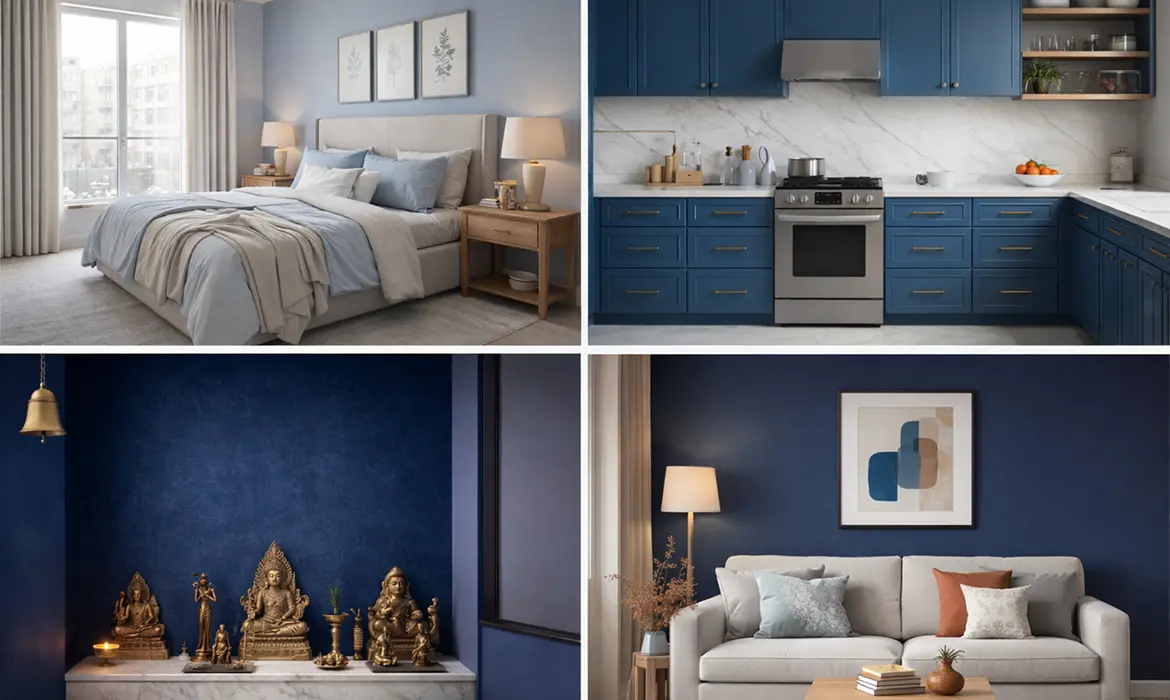
In bedrooms, softer blues like powder blue or slate blue shades promote relaxation and emotional balance. These shades help create restful environments, especially important in urban Indian homes where external noise and visual clutter are common.

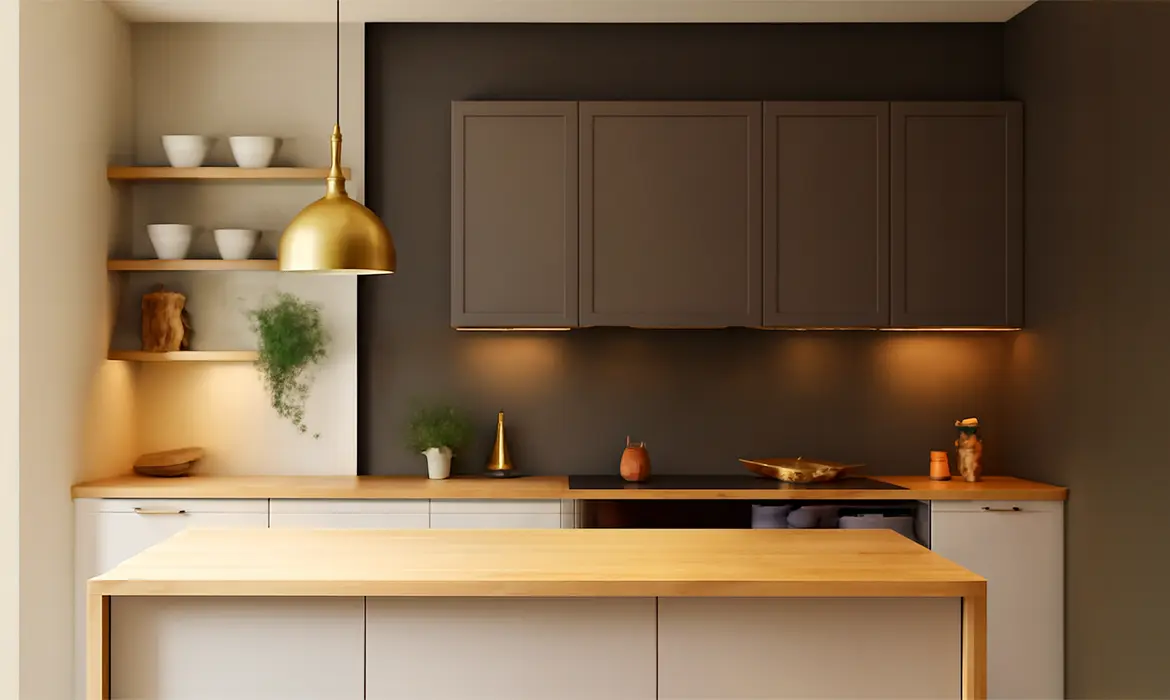
For kitchens, teal blue and steel blue shades offer a modern alternative to whites and greys. They bring freshness while still feeling clean and structured, especially when paired with neutral cabinetry or natural stone finishes.

In pooja rooms, blue particularly deeper shades like indigo blue shade adds a sense of serenity and spiritual depth. When used sparingly, it enhances the sacred atmosphere without distracting from traditional elements.

As accent walls, deeper blues create focal points in living rooms or dining areas. They add visual interest while allowing other elements, such as furniture and artwork, to stand out naturally.
Exterior Applications: Strong Visual Identity with Practical Benefits

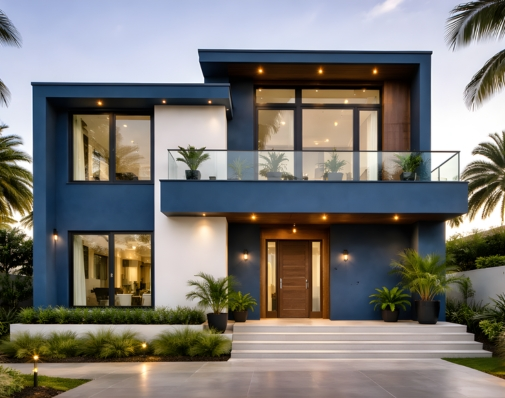
Blue is increasingly being embraced for exteriors, not just for its visual appeal but also for its performance in Indian conditions.

Common exterior applications include:

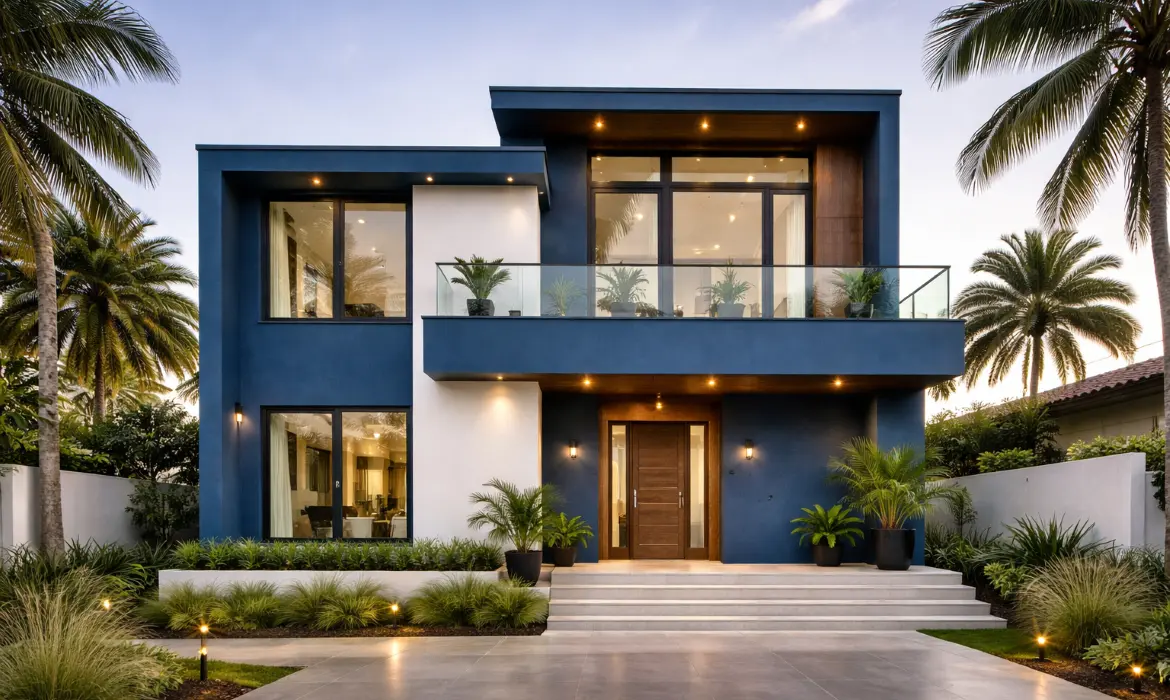
  • Facades, where slate blue or steel blue lends a contemporary architectural character
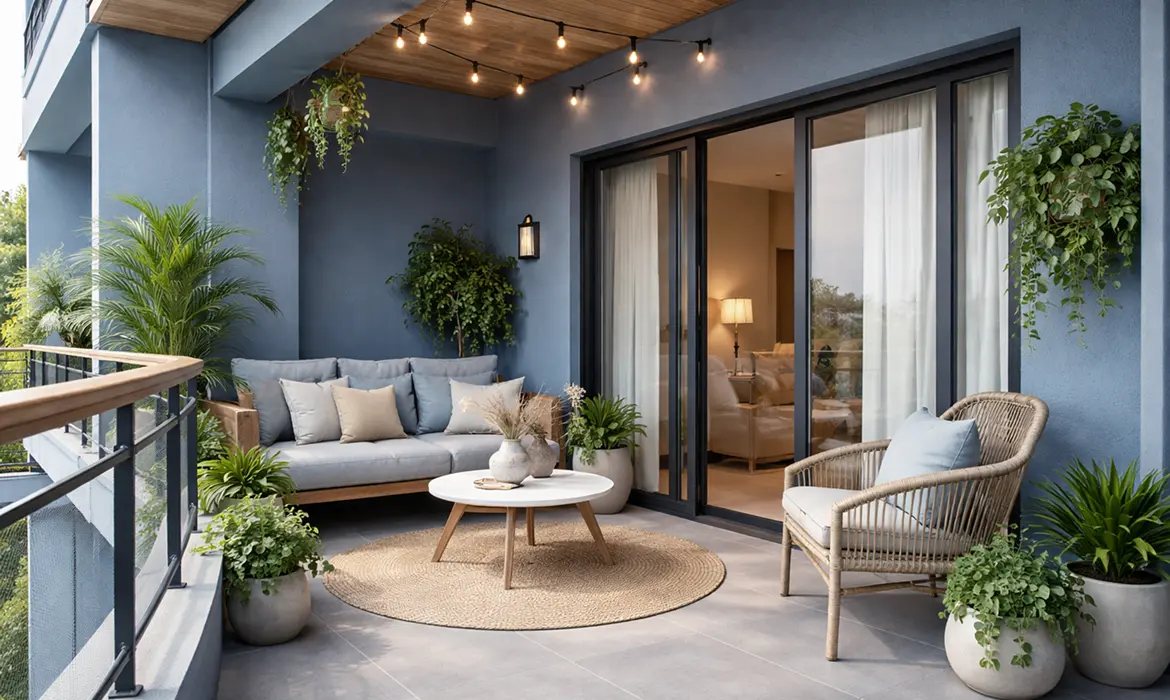
  • Balconies, using muted blues to create calm transitions between indoor and outdoor spaces
  • Compound walls, where deeper blues provide contrast while hiding dust and stains
  • Coastal homes, where blue tones naturally complement the surrounding environment

Unlike very light or very dark colours, mid-tone blues age gracefully on exteriors. They resist looking faded too quickly and maintain a neat appearance even in dusty or humid conditions.
Best Colour Pairings: Enhancing Blue with Balance

Blue becomes most effective when paired thoughtfully with complementary tones and textures. The right combinations prevent it from feeling cold or overpowering.

Some of the most successful pairings include:

  • White and off-white for a clean, timeless contrast
  • Sandstone beige to add warmth and softness
  • Charcoal grey for a bold, modern edge
  • Natural wood finishes to bring balance and organic warmth

These pairings work across both interiors and exteriors, allowing homeowners to maintain a cohesive colour story throughout the property.

Climate Suitability: Designed for Indian Summers and Beyond

One of blue’s greatest strengths lies in its climate-friendly nature. In a country where heat, dust, and humidity are constant design considerations, blue performs exceptionally well.

Lighter blues create a visual cooling effect, making interiors feel more comfortable during long summers. Even on exteriors, blue tones absorb less visual heat compared to darker shades, contributing to a cooler overall appearance.

Muted and mid-tone blues are also more forgiving when it comes to dust and pollution, helping walls retain a fresh look for longer periods. This makes them a practical choice for homes in both urban and semi-urban areas.
A Colour That Evolves with Modern Indian Homes

Blue’s continued popularity in 2026 is no coincidence. It adapts effortlessly to changing lifestyles, architectural styles, and environmental needs. From calm bedrooms to striking facades, blue offers a design solution that is both expressive and enduring.

With thoughtfully developed shades suited to Indian light and climate, Indicus Paints offers blue palettes that balance style with performance. Each shade is crafted to feel contemporary yet timeless, ensuring homes look relevant not just today, but for years to come.

Because when chosen well, blue isn’t just a colour it’s a foundation for modern Indian living.
Colours of Puthandu: Traditional Tamil New Year Shades for Your Homes

Colours of Puthandu: Traditional Tamil New Year Shades for Your Homes

Significance of Colours in Puthandu and Tamil Cultural Traditions

Puthandu, the Tamil New Year as it marks gratitude and the hopeful beginning of another year filled with prosperity and harmony. Across Tamil households, preparation for this festival begins with cleaning, decorating, and refreshing living spaces and colour plays a deeply symbolic role in this transformation.

In Tamil culture, colours are never chosen at random. They carry meaning rooted in tradition, spirituality, and nature. From the bright hues of festive kolams at the entrance to the rich tones of silk sarees and temple décor, colour becomes a language of celebration. Incorporating these traditional shades into home interiors during Puthandu is not only culturally meaningful but also visually uplifting.

Today, many homeowners are rediscovering these timeless palettes, adapting them thoughtfully to suit contemporary interiors while retaining their symbolic depth.

Traditional Colour Palette

The traditional colours of Puthandu are inspired by nature, harvest, and sacred rituals. These hues are vibrant, warm, and filled with life.

Key shades associated with Tamil New Year celebrations include:

  • Mango Yellow – A bright, joyful tone symbolising harvest and auspicious beginnings
  • Vermilion Red – A sacred shade associated with strength, energy, and devotion
  • Turmeric Gold – A warm golden-yellow reflecting purity and prosperity
  • Leaf Green – Representing growth, fertility, and renewal
  • Coconut White – A clean, calming shade symbolising peace and spiritual clarity

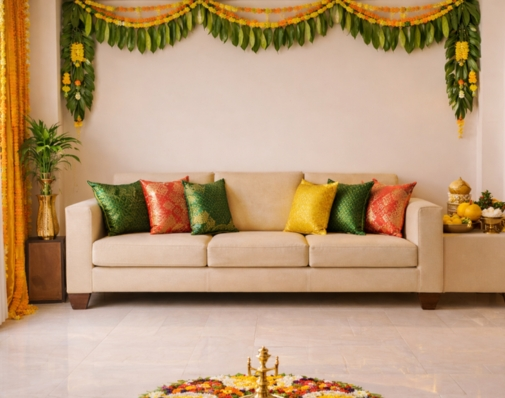
These colours are visible in everyday festival elements from mango leaf garlands (thoranams) to turmeric powder used in rituals. When thoughtfully incorporated into interiors, they bring authenticity and cultural richness to modern homes.

Symbolism of Shades

Each colour used during Puthandu carries a layered meaning, rooted in Tamil traditions and spiritual beliefs.
  • Prosperity: Mango yellow and turmeric gold are strongly associated with wealth and abundance. They mirror the colour of ripened crops and the warmth of the sun, signifying success and fullness.
  • Positivity: Vermilion red embodies vitality and auspiciousness. It energises spaces and is often seen in temple décor and festive adornments.
  • Renewal: Leaf green represents fresh beginnings, echoing the renewal of nature during harvest cycles.
  • Purity and Harmony: Coconut white brings balance to brighter tones, ensuring the home feels serene rather than overwhelming.
Together, these shades create a harmonious palette that celebrates life while encouraging optimism for the year ahead.

Where to Use Them

Introducing festive colours does not require a complete home overhaul. Instead, strategic placement can make a meaningful impact while maintaining elegance.

Entrance Walls

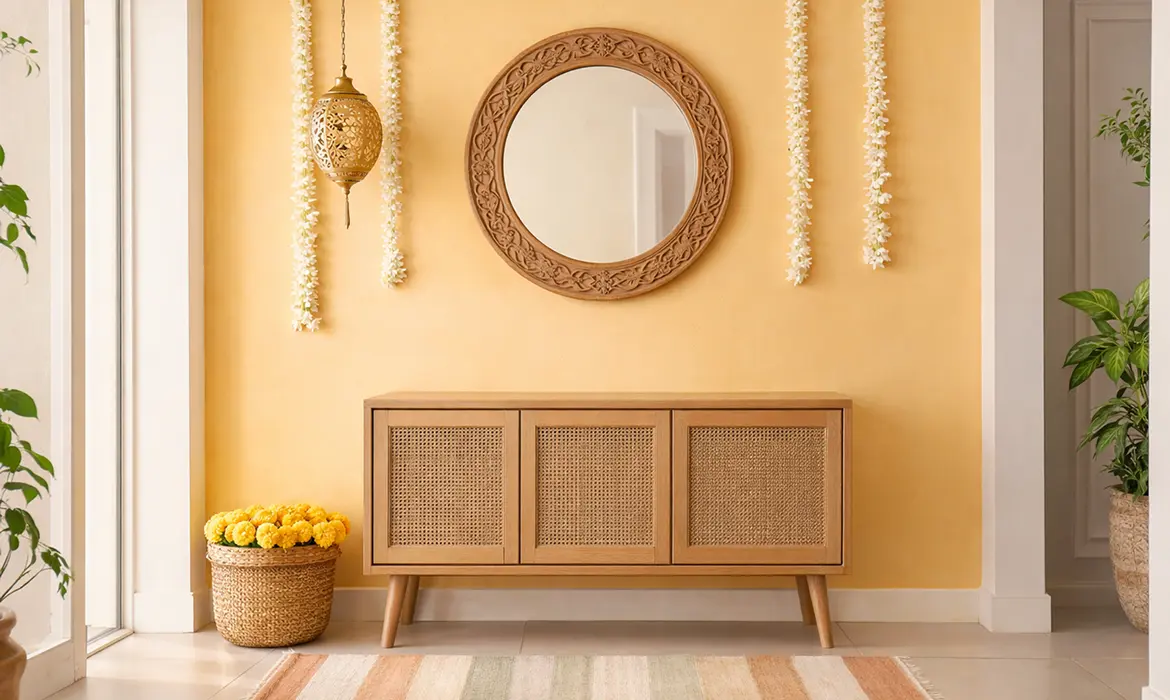
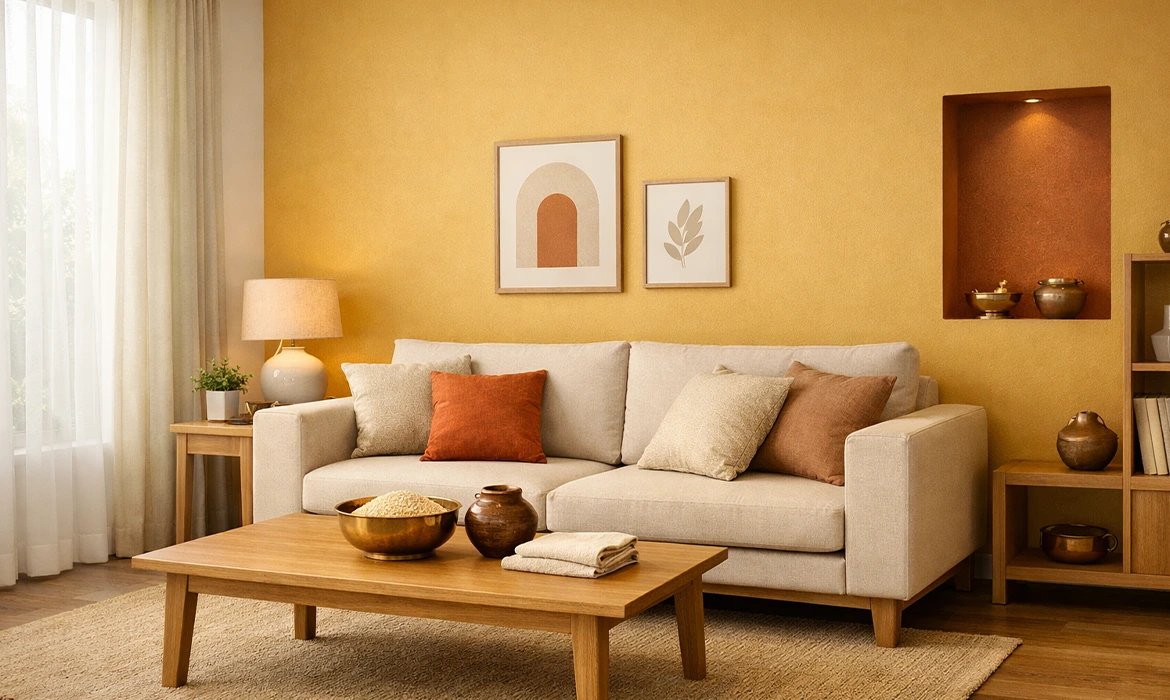
The entrance sets the tone for the home. Soft mango yellow or turmeric gold walls create an inviting first impression. Paired with traditional kolam patterns and brass lamps, the effect feels warm and celebratory.

Pooja Rooms

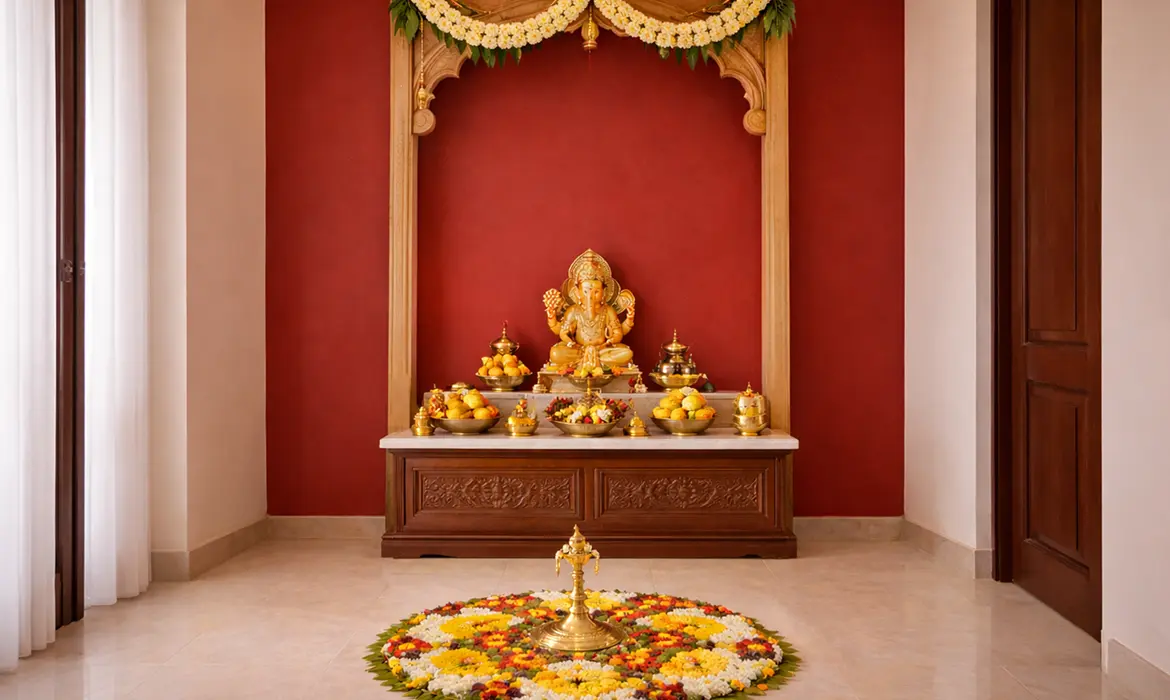
This is where deeper symbolism shines. Vermilion accents or muted gold backgrounds enhance the spiritual atmosphere. Leaf green can be used sparingly to add freshness without overpowering sacred elements.

Living Spaces

In living rooms, consider incorporating these shades through:

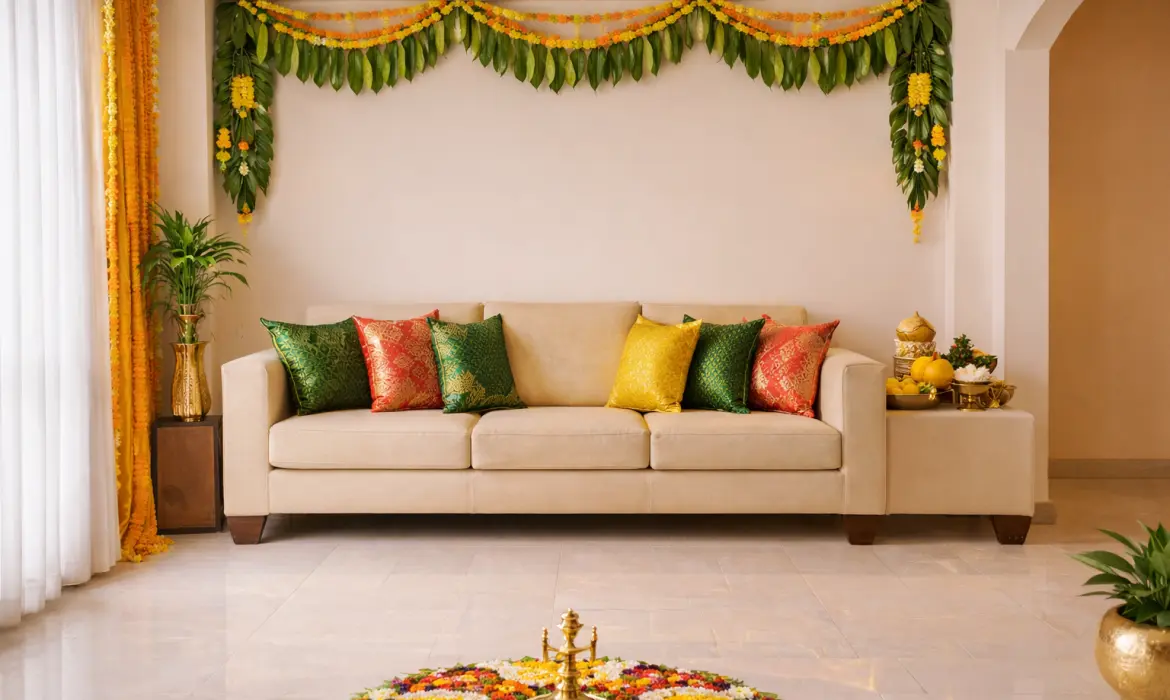
  • Accent walls in softened mango or muted terracotta-red
  • Cushions or throws in leaf green
  • Decorative pieces in gold and brass

The key is balance allowing vibrant hues to enhance rather than dominate the space.

Dining Areas

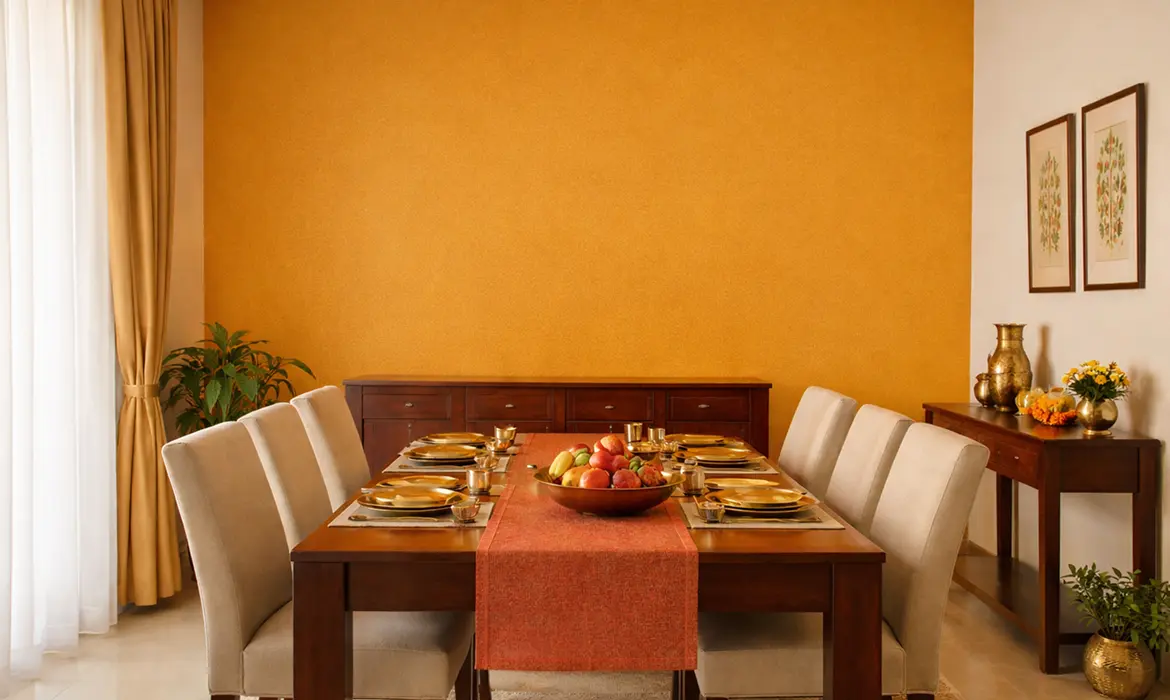
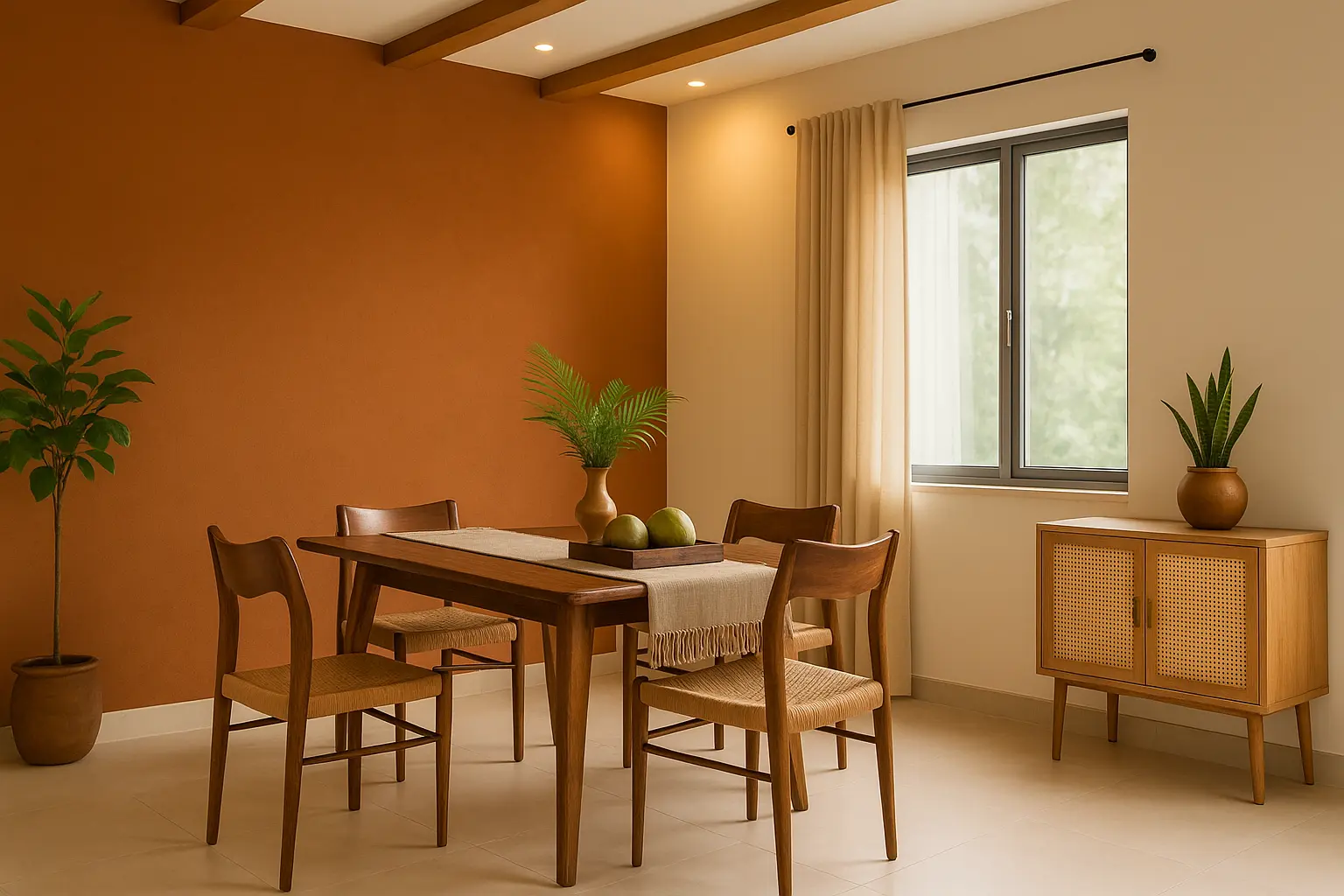
Dining spaces benefit from warm tones such as turmeric gold and soft red accents. These shades stimulate conversation and create a welcoming environment for festive meals shared with family.

Modern Adaptation: Bringing Tradition into Contemporary Homes

While traditional colours are vibrant, modern interiors often favour subtler palettes. The solution lies in adaptation rather than dilution.

Instead of bold, saturated shades, homeowners can explore:

  • Pastel mango instead of bright yellow
  • Muted terracotta-red instead of intense vermilion
  • Soft sage green as a refined alternative to bright leaf green
  • Warm ivory in place of stark white

These softened tones maintain cultural authenticity while blending seamlessly with minimalist furniture and contemporary layouts.

Additionally, using these colours as accents rather than covering entire rooms ensures that the décor feels sophisticated and suitable for year-round living.

Why It Works Today: Festive Yet Timeless

In modern Indian interiors, there is a growing appreciation for culturally rooted design. Rather than following fleeting global trends, homeowners are embracing palettes that reflect heritage while maintaining elegance.

Puthandu colours work beautifully today because:

  • They are emotionally meaningful, not just visually appealing.
  • They suit India’s warm climate, where sunlit interiors enhance golden and earthy tones.
  • They transition easily from festive décor to everyday sophistication.

A soft mango-toned wall can feel celebratory during Tamil New Year and remain cheerful throughout the year. Leaf green accents provide freshness in every season. Coconut white keeps spaces balanced and breathable.

By choosing the right intensity and placement, these shades remain timeless rather than seasonal.

A Celebration of Heritage Through Colour

Puthandu offers an opportunity to reconnect with tradition in a deeply personal way. Refreshing your home with culturally significant colours transforms walls into expressions of optimism, gratitude, and renewal.

Whether through a subtle accent wall, festive décor updates, or thoughtfully curated material pairings, the colours of Tamil New Year bring warmth and identity into contemporary homes. They celebrate prosperity, positivity, and abundance values that extend far beyond a single day.

By blending tradition with modern sensibilities, homeowners can create interiors that honour heritage while embracing the present as a true reflection of what Puthandu stands for: new beginnings rooted in timeless culture.

At Indicus Paints, we believe that colour is more than decoration, it is an expression of culture, emotion, and identity. The shades inspired by Puthandu beautifully combine tradition with contemporary living, allowing homes to feel festive yet refined throughout the year.

Top 10 Elegant Wall Shades That Age Beautifully Over Time

Top 10 Elegant Wall Shades That Age Beautifully Over Time

Choosing the right wall colour is more than just a design decision, it’s an investment. Elegant, timeless shades not only elevate your interiors but also continue to look refined as years pass. In Indian homes, where lighting, décor, and furniture evolve, opting for colours that age gracefully ensures longevity and a sense of continuity.

Indicus Paints offers a rich palette of over 1,000+ colours. Here are ten refined hues that strike the perfect balance between classic appeal and lasting charm.

The Charm of Timeless Colours

Timeless colours remain relevant across trends. They act as a neutral canvas, whether you’re layering décor, changing furniture, or updating accessories, they provide a stable backdrop. In Indian interiors, where architectural styles and décor influences vary widely, such shades offer both versatility and warmth.

These enduring tones:

  • Create a sense of harmony and calm.
  • Adapt well to different design styles, from modern minimalism to heritage-inspired homes.
  • Age attractively, without feeling dated or overused.

Factors That Make a Colour Age Gracefully

Not all colours are created equal when it comes to staying beautiful year after year. The ones that truly age well are backed by quality and thoughtful formulation. Here’s what makes a shade enduring:

  • Lightfastness & Pigment Quality: High-quality pigments resist fading even with prolonged exposure to sunlight.
  • Versatility: Shades that blend seamlessly with a variety of décor styles, from ethnic to contemporary.
  • Durability: Paint formulations that resist wear, scuffs, and dirt over time.
  • Emotional Comfort: Colours that feel familiar, calming, and inviting long after they are painted.

Indicus Paints uses advanced emulsion technology to deliver rich, resilient colours with outstanding washability and long-term vibrancy.

Top 10 Elegant Wall Shades That Age Beautifully

Here are ten refined shades from Indicus Paints’ colour range that bring timeless sophistication to any interior:

  1. Mission Beige (2078P) – A gentle, neutral shade that feels cosy and classic. Ideal for living rooms or corridors.
  2. Taupe Gray (2913P) – A balanced mix of grey and beige, offering a modern but soft touch.
  3. Light Tulip (2008P) – Clean and luminous, perfect for enhancing natural light and creating an airy feel.
  4. Damask Rose (2180T) – A subtle pink with elegance and softness, adding warmth without overwhelming.
  5. Golden Olive (2672C) – Earthy, calm, and inviting connects beautifully with natural materials.
  6. Fountain Creek (2998T) – Deep and sophisticated; works as a dramatic but timeless accent or main shade.
  7. Autumn Flame (2097D) – Inspired by traditional Indian clay hues, this shade brings grounded warmth and character.
  8. Stem (2613T) – A soft green with subtle sophistication, ideal for restful spaces like bedrooms.
  9. Taupe Mist (2883P) – Rich and graceful, offering a neutral base with richness and depth.
  10. Gray’Lily (2332P) – Airy and calm, this colour evokes a serene, slightly cool ambience.

These shades draw inspiration from Indicus’ broad colour categories (earthy tones, greys, greens & blues, neutrals) available on its palette.

Tips to Keep Timeless Shades Looking Fresh

Even the most elegant colour can fade in appeal if not maintained thoughtfully. Here are a few practical strategies to preserve their charm:

  • Regular Cleaning & Touch-ups: Use mild detergent and soft cloths to clean walls gently; repair minor scuffs or marks before they worsen.
  • Choose the Right Finish: A matte or low-sheen finish that helps hide imperfections and keeps walls looking smooth.
  • Use High-Quality Paint: Investing in premium emulsions ensures the pigment and film remain stable over time.
  • Smart Décor & Lighting Choices: Coordinate furniture, fabrics, and lighting both natural and artificial to enrich the hue rather than distort it. For example, warm bulbs enhance beige or taupe, while cooler lights suit grey or blue-grey.

Why Indicus Paints Shades Endure

There’s a strong reason why Indicus Paints is trusted for long-lasting, elegant finishes:

  • Superior Quality Formulations: Products like Admyra Premium Interior Emulsion offer stain resistance and washability, helping walls retain their vibrancy.
  • Durable Exterior Options: For exteriors that remain true-colour over time, Indicus offers Forto Durable Exterior Emulsion, engineered to resist UV rays, dirt, and peeling.
  • Extensive Colour Range: With 1000+ shades in its Colour Symphony palette, Indicus gives homeowners the flexibility to choose tones that are both timeless and tailored to their style.
  • Warranties & Performance Guarantees: High-performance paints like Forto Durable Exterior Emulsion that comes with performance warranty for film integrity, flaking and peeling.

Conclusion

Elegance is not always about the boldest colours, it often lies in subtle, refined shades that grow richer over time. The ten wall colours highlighted here offer the perfect blend of sophistication and resilience. Whether you’re repainting your home or planning a long-term interior scheme, these hues offer a timeless foundation.

By choosing Indicus Paints, you’re not just picking a colour you’re investing in quality, longevity, and a palette that remains relevant through changing décor trends and seasons. With their curated, high-performance range, your walls can reflect the beauty of time, not its wear.

Elevate your space with shades that age as gracefully as your memories. Let your walls become a legacy in colour.

Unexpected Colour Combinations That Work Beautifully in Indian Interiors

Unexpected Colour Combinations That Work Beautifully in Indian Interiors

Indian homes have always celebrated colour. From the vibrant blues of Rajasthan to the soft earthy hues of Kerala’s traditional architecture, colour has long been at the heart of Indian design. As modern interiors continue to evolve, homeowners are increasingly exploring palettes beyond the familiar. Today, the best interior colour combinations are those that feel both expressive and effortlessly harmonious, bringing fresh personality and balance into every space.

Pairing contrasting tones or blending bold and subtle shades can transform spaces, making them feel fresh, stylish, and deeply personal. With Indicus Paints’ extensive range of shades curated for Indian homes and climates, creating these beautiful, unconventional pairings becomes effortless.

The Beauty of Contrast: Breaking the Monotony

When chosen thoughtfully, contrasting colours can create a sense of visual excitement without overwhelming a space. Instead of sticking to similar tones, blending opposites brings energy and depth to interiors.
Contrast works because it plays with visual tension, the eye moves between light and dark, warm and cool, muted and bright, creating a space that feels alive.

Some stunning contrast combinations for Indian homes include:

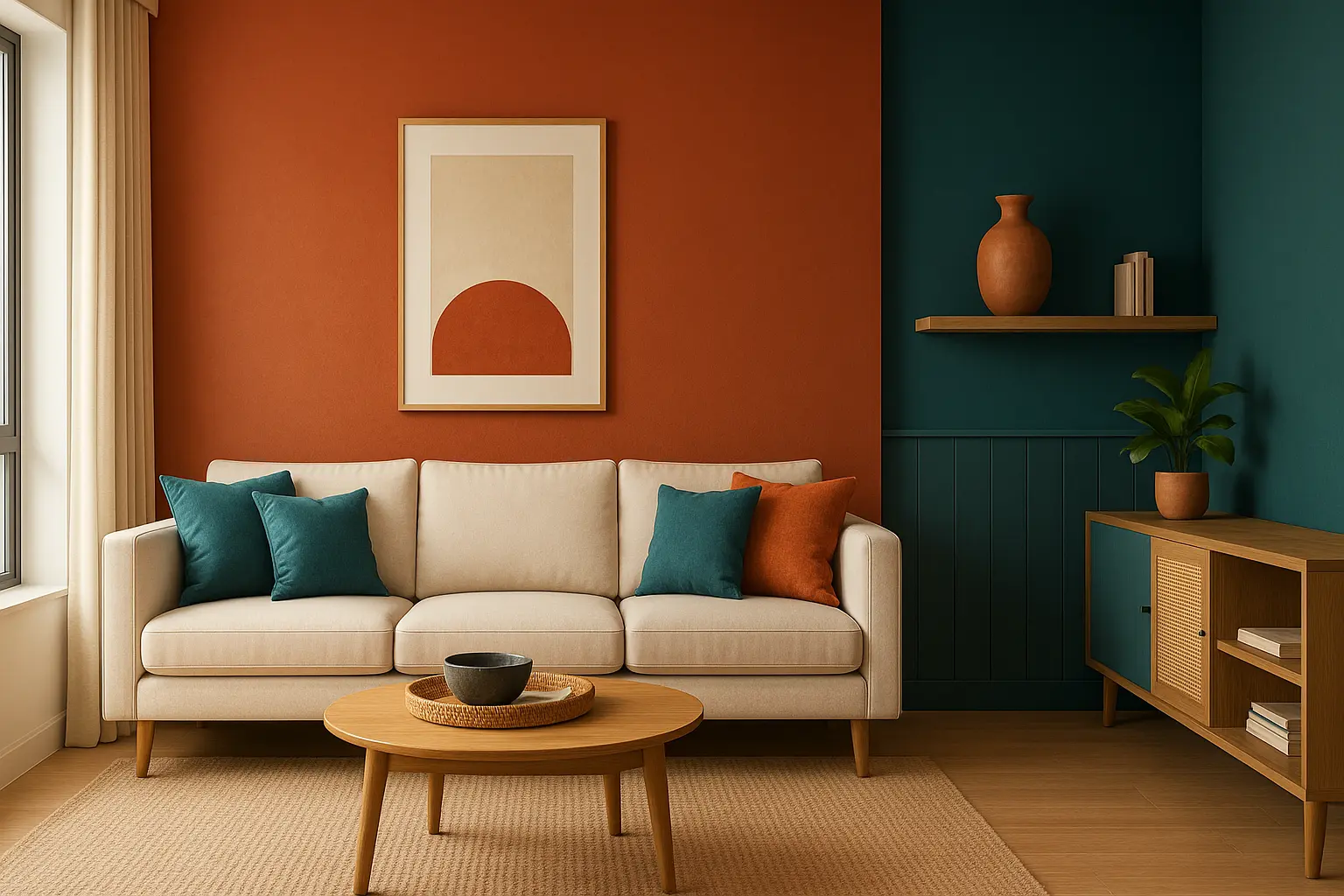
  • Terracotta and Teal: The earthy warmth of terracotta beautifully offsets the cool sophistication of teal, making it ideal for living rooms or entryways.
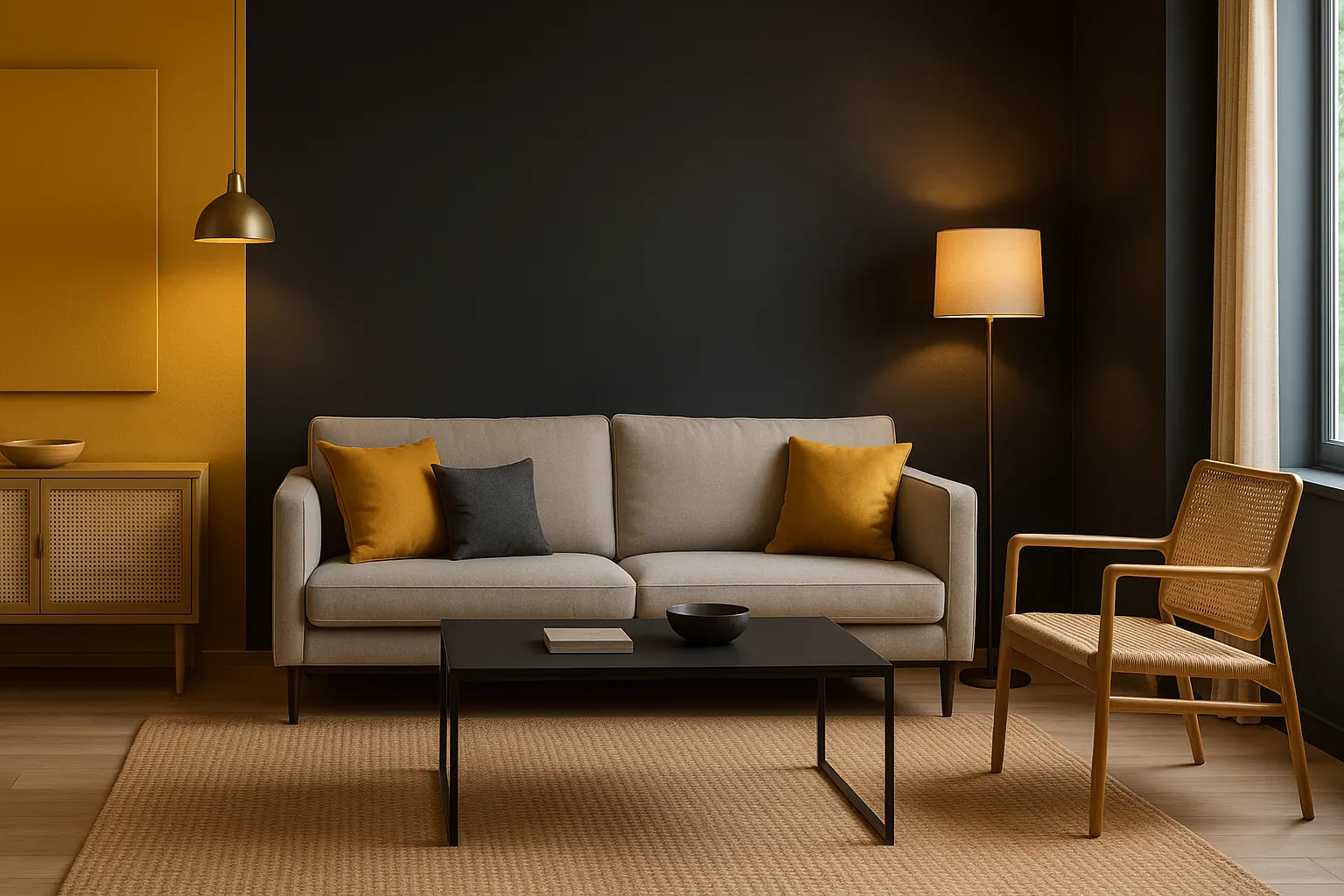
  • Mustard and Charcoal Grey: A bold, modern contrast that combines vibrancy with grounded elegance.
  • Olive Green and Blush Pink: Soft yet unexpected this pairing adds freshness to bedrooms or quiet corners.

When working with contrast:

  • Use one dominant shade (for walls or furniture) and keep the other as an accent.
  • Add natural textures through wooden furniture or woven accents to help tie both wall colours together and create a unified, grounded look.
  • Ensure lighting complements both hues and warm lighting enhances richer tones.

This balance of contrast and cohesion defines the charm of contemporary Indian interiors.

Soft Meets Bold: Balancing Subtle and Statement Shades

Another way to achieve an unexpected but beautiful look is by pairing a soft neutral base with a bold accent shade. This technique gives the room character while keeping it visually balanced.

Neutrals provide calmness and space for bold shades to shine and this works wonderfully in Indian homes that need both comfort and personality.

Try these pairings for your interiors:

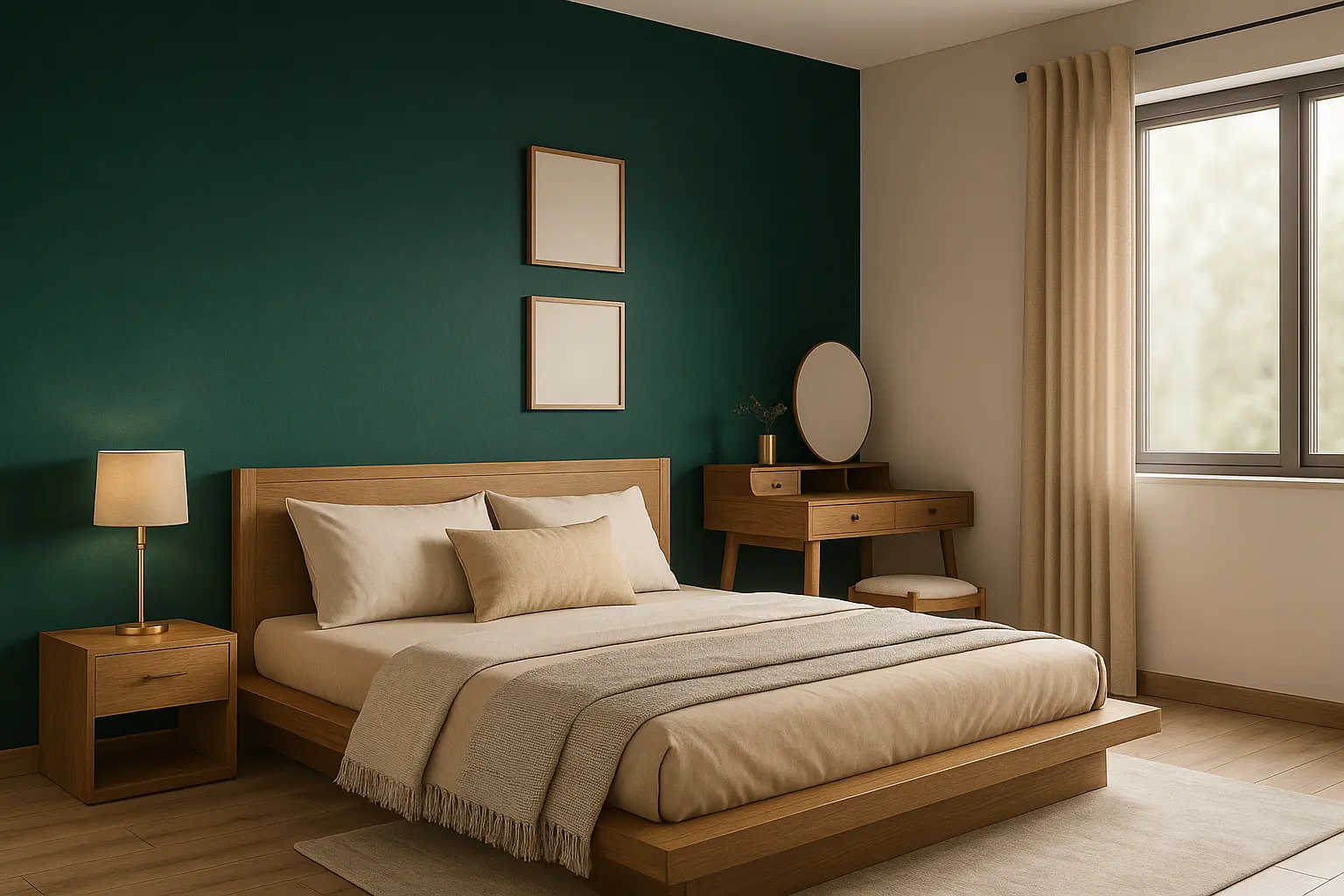
  • Beige with Emerald Green: Creates an elegant, nature-inspired aesthetic that feels luxurious yet grounded.
  • Soft Grey with Burnt Orange: Adds warmth and vibrancy, perfect for living rooms or dining areas.
  • Ivory with Deep Indigo: A timeless duo that reflects both tradition and sophistication.

Styling Tips:

  • Use bold shades on a feature wall, headboard backdrop, or statement furniture piece.
  • Keep accessories with minimal brass accents or ceramic décor pieces that work beautifully.
  • For compact spaces, use the bold hue sparingly to maintain balance.

This soft-meets-bold palette is ideal for homeowners who want vibrancy without overpowering the calmness of their space.

Earthy Indian Hues with Modern Neutrals

India’s design sensibility has always embraced earth tones colours inspired by clay, spice, and nature. When paired with contemporary neutrals, they create a beautiful balance between the traditional and the modern.

This approach suits homes that carry cultural touches like handcrafted tiles, carved furniture, or brass detailing while maintaining a minimalist look.

A few effective combinations include:

  • Clay Brown with Cool White: A warm, grounded tone balanced by crisp freshness.
  • Turmeric Yellow with Stone Grey: Perfect for adding brightness without being too loud.
  • Brick Red with Off-White: Classic and comforting, yet timelessly stylish.

Design Note:

  • Use matte finishes for earthy tones to preserve their natural charm.
  • Add textured fabrics like linen or cotton in neutral shades to complement the palette.
  • Choose Indicus Paints’ range of natural-inspired hues, designed to withstand humidity and sunlight, keeping your walls vibrant through the seasons.
These pairings bridge the gap between cultural familiarity and modern design perfect for urban Indian homes that value both heritage and simplicity.

Playing with Monochrome Accents

For those who prefer a minimalist aesthetic, monochrome interiors can be surprisingly expressive when layered with subtle variations of a single colour. The key is to play with shades, textures, and finishes to avoid flatness.

Monochrome doesn’t mean just black and white. You can create depth using gradients of one hue from dark to light that work harmoniously.

Examples of modern monochrome pairings:

  • Charcoal with Silver Grey: Ideal for a sophisticated, urban living space.
  • Sand Beige with Warm Cream: A soft and inviting palette for bedrooms or lounges.
  • Slate Blue with Sky Blue: Adds serenity and subtle character to compact spaces.

Ways to bring dimension to monochrome palettes:

  • Use different wall finishes matte for the main walls, satin for trims or borders.
  • Incorporate metallic accents like brushed gold or copper for warmth.
  • Layer fabrics and décor cushions, rugs, and curtains in varying tones of the same colour.

Indicus Paints’ modern neutrals and monochrome collections make it simple to achieve this look, ensuring seamless blending between tones.

Finding Inspiration from Indian Elements

India’s landscape, crafts, and architecture offer endless inspiration for colour pairing. From the deep reds of temple bricks to the serene whites of coastal homes, every region has its own visual story. Translating these inspirations into paint combinations allows your interiors to reflect a piece of that heritage.

You can draw colour ideas from:

  • Traditional Crafts: Think Rajasthani block prints, Madhubani art, or Kanchipuram silk these patterns often feature striking colour juxtapositions.
  • Natural Elements: The burnt sienna of Indian soil, turmeric yellow from the spice markets, or the green of tropical foliage.
  • Regional Architecture: Jaipur pinks, Udaipur whites, or the bold blue of Jodhpur’s houses each offer timeless palettes.

Bringing these to life with Indicus Paints:

  • Explore curated collections inspired by Indian environments and materials.
  • Choose finishes that suit your regional climate matte for cooler tones, weather-resistant emulsions for warm or humid areas.
  • Blend traditional hues with modern textures for a balanced, enduring aesthetic.

This approach doesn’t just create stylish spaces it builds a sense of connection to India’s artistry and environment.

Conclusion

When it comes to home design, beauty often lies in the unexpected. Whether it’s pairing terracotta with teal, mustard with grey, or earthy browns with contemporary whites, unconventional combinations can bring warmth, character, and individuality to your interiors.

By balancing contrast, texture, and tone and drawing inspiration from India’s diverse palette you can create spaces that feel both modern and rooted in tradition.

With Indicus Paints, finding that perfect balance becomes effortless. Our wide range of shades and finishes are designed specifically for Indian homes, ensuring each wall tells a story that feels authentic, vibrant, and enduring. Because the most beautiful Indian interiors are often painted with a touch of surprise.

Pairing Paint Colours with Traditional and Modern Indian Tiles

Pairing Paint Colours with Traditional and Modern Indian Tiles

In Indian homes, flooring has always carried as much cultural and aesthetic weight as the walls. Whether it is the earthy charm of terracotta or the glossy sleekness of vitrified tiles, the tiles you choose make a strong design statement. Yet, the walls surrounding them often decide whether the overall look feels cohesive or disconnected. This is where pairing paint colours thoughtfully with your tiles becomes essential.

By choosing the right wall shades, you can enhance the beauty of your tiles, bring harmony to your interiors, and create an atmosphere that feels complete. At Indicus Paints, we understand this balance and offer curated paint shades that perfectly complement both traditional and modern Indian tile designs.

1. Understanding Your Tile Style

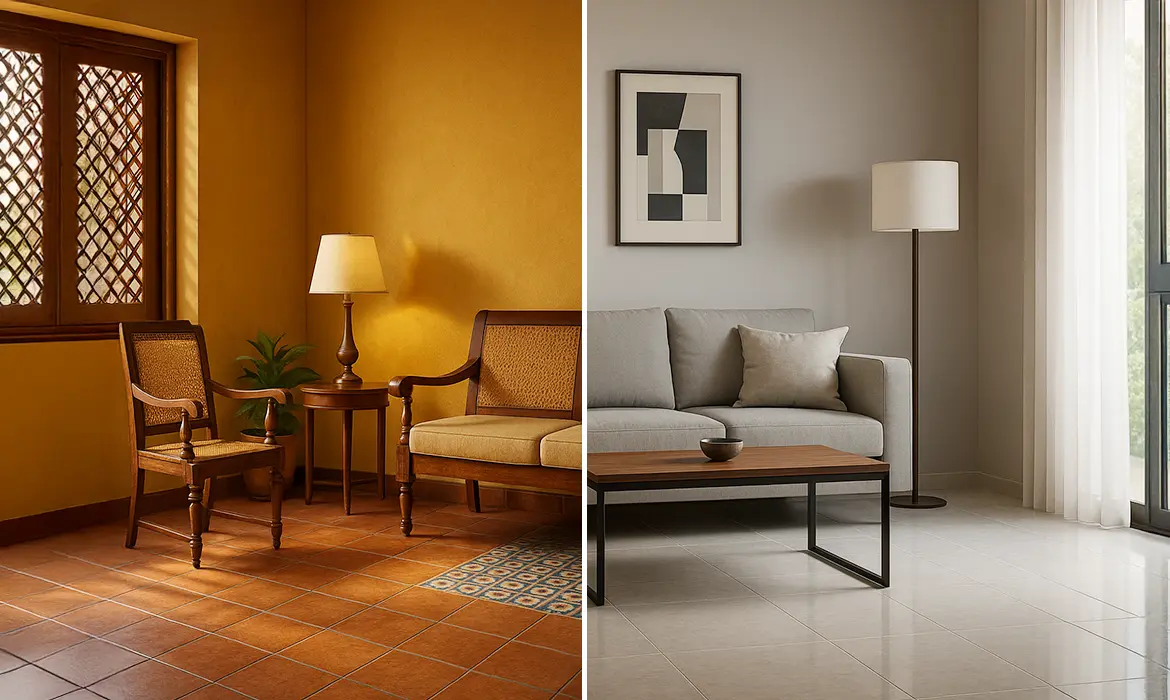
Before choosing paint, the first step is to understand the style of tiles you are working with. Tiles broadly fall into two categories, traditional and modern, and each demands a different approach.

Traditional Tiles

These tiles often have deep cultural roots and carry artisanal craftsmanship:

  • Terracotta Tiles: Rustic, earthy, and naturally warm.
  • Jaipur Blue Pottery or Patterned Tiles: Hand-painted, often vibrant and intricate.
  • Ceramic Tiles with Indian Motifs: Popular in courtyards and heritage homes.

Traditional tiles usually feature rich colours or natural tones, and they thrive when paired with complementary warm, neutral, or muted shades on the walls.

Modern Tiles

Contemporary flooring options lean towards sleek finishes and minimalist aesthetics:

  • Glossy Vitrified Tiles: Smooth and reflective, widely used in urban flats.
  • Marble or Granite: Luxurious, with natural veining or subtle patterns.
  • Porcelain or Engineered Tiles: Durable and versatile, available in cool tones.

Modern tiles tend to work well with cooler neutrals, contrasting bold shades, or minimalist palettes that enhance their clean lines.

Recognising whether your flooring is heritage-inspired or contemporary sets the stage for selecting the perfect paint palette.

2. Choosing Complementary Paint Shades

Once you’ve identified your tile type, the next step is finding paint shades that highlight, rather than compete with, the flooring. Here’s how you can approach it:

For Traditional Tiles

These floors already carry warmth and personality, so wall shades should enhance their authenticity.

  • Earthy Neutrals: Beiges, creams, and taupes that allow the tiles’ details to shine.
  • Warm Shades: Ochres, muted reds, and soft terracotta tones for a harmonious rustic feel.
  • Off-Whites with Warm Undertones: To brighten up without clashing with the richness of the tiles.

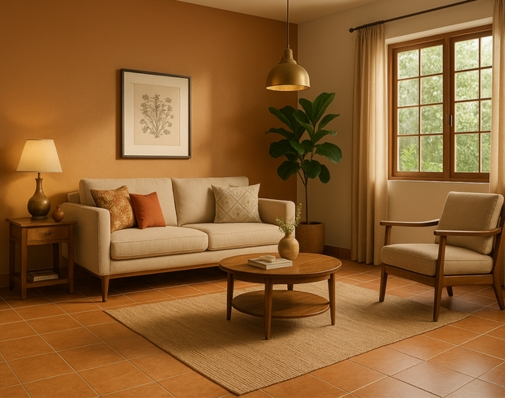
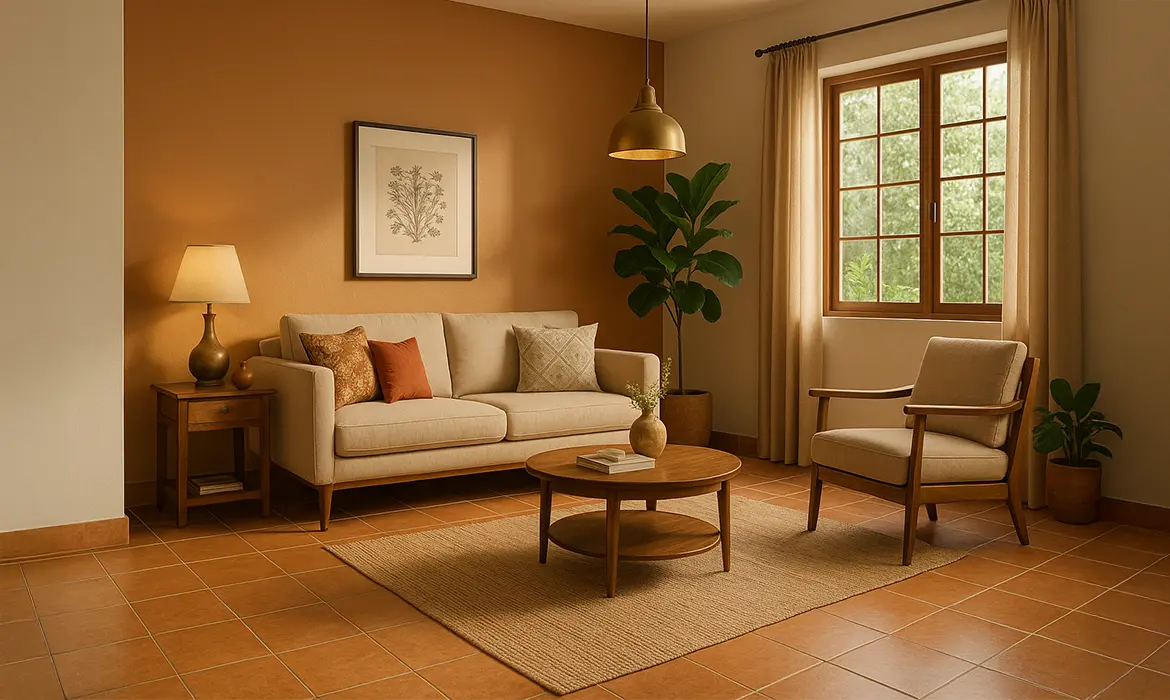
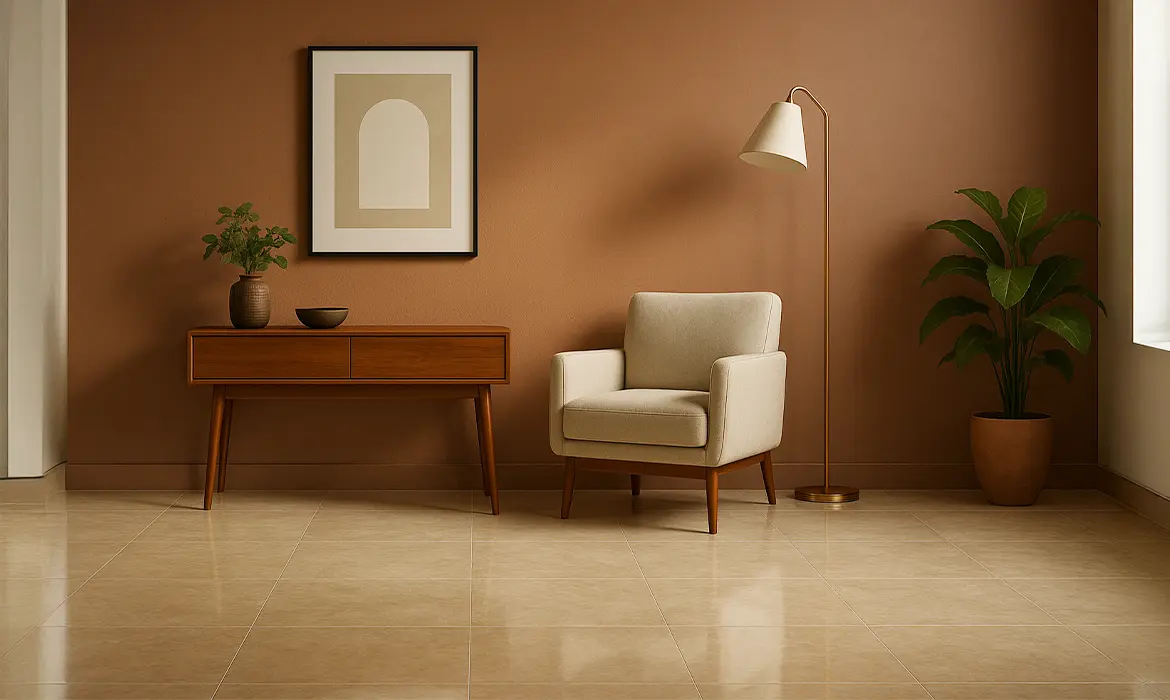
Example: Terracotta tiles paired with a soft cream wall create a timeless and inviting space, perfect for courtyards or family rooms.

For Modern Tiles

With their polished and sleek look, modern tiles can handle both neutrals and bold accents.

  • Cool Greys and Charcoal: Ideal for marble or glossy vitrified finishes.
  • Crisp Whites: Accentuates clean lines, perfect for minimal interiors.
  • Bold Accents: Navy blue, emerald green, or deep plum can add sophistication.
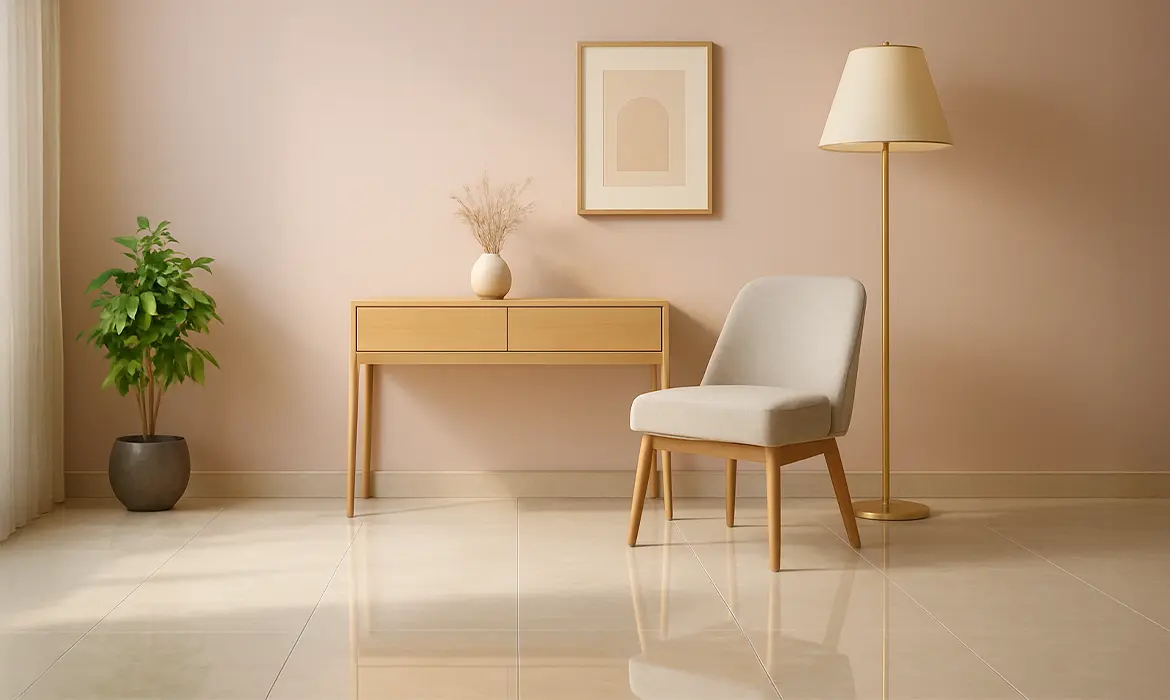
  • Warm Neutrals: Greige or soft beige for subtle elegance.

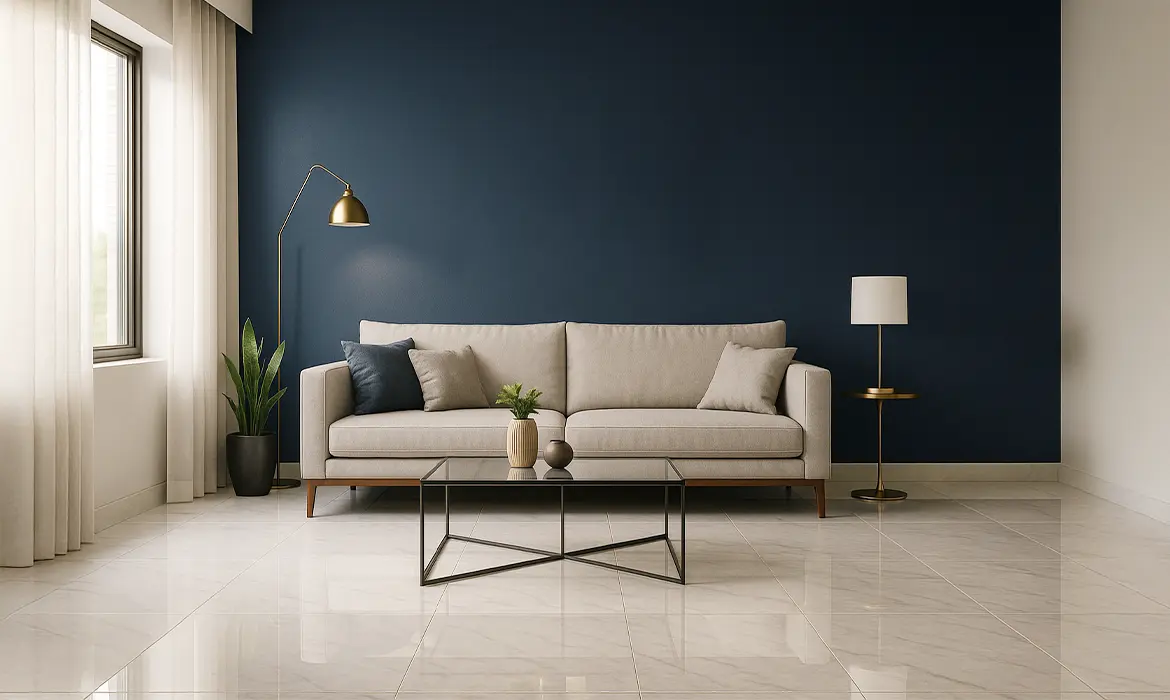
Example: White marble flooring paired with a deep navy accent wall offers a striking balance of modern luxury.

At Indicus Paints, our curated collections of neutrals, accents, and earthy shades are designed to simplify this process, ensuring every choice feels intentional.

3. Balancing Texture and Tone

Pairing is not just about colour, it is equally about texture and tone. The finish of your tiles and the surface effect of your paint should work in harmony.

Tips to Balance Texture and Tone

  • Glossy Tiles + Matte Walls: If your flooring has a shiny surface, choose matte or satin-finish paints to avoid an overly reflective look.
  • Textured Tiles + Smooth Walls: Allow patterned or tactile tiles to take the spotlight by keeping walls smooth and understated.
  • Light vs Dark Contrast: Pair lighter tiles with slightly deeper wall shades for depth, or balance dark floors with lighter wall tones to avoid a heavy atmosphere.

Example: Granite flooring in dark grey pairs beautifully with warm neutral walls in beige, preventing the room from feeling overly stark.

Indicus Paints also offers special finishes that add depth without overwhelming your flooring, giving you the flexibility to create balance across textures.

4. Tips for Seamless Combinations

To achieve interiors that feel cohesive and timeless, consider a few practical guidelines:

Keep the Room’s Function in Mind

  • Kitchens: Bright, washable finishes like soft neutrals to balance patterned tiles.
  • Living Rooms: Warm tones or accent walls that bring out character in floor tiles.
  • Bathrooms: Moisture-resistant paints in cool tones for freshness and hygiene.

Layer Accents Thoughtfully

  • Feature walls can add drama when paired with simple flooring.
  • Trims, skirting boards, or even ceiling colours can connect tiles and walls.

Balance Bold with Subtle

  • If tiles have heavy patterns, keep walls muted.
  • If tiles are plain or minimal, use accent walls to create visual interest.

Consider Lighting

Natural light and artificial lighting both change how paint looks against tiles. Always test paint swatches in your space before finalising.

Conclusion

Pairing wall colours with tiles is both an art and a science. Traditional tiles like terracotta or Jaipur ceramics deserve earthy, warm shades that honour their heritage, while modern tiles such as marble or vitrified styles shine with cool neutrals and bold accents. Beyond colour, the balance of texture, tone, and lighting completes the look.

Indicus Paints brings you a palette that is curated for Indian homes, ensuring you don’t just decorate but design interiors that feel whole. From timeless earth tones to modern neutrals and bold accents, our collections make it easy to pair your flooring with the perfect shade.

Investing in the right wall–tile combination doesn’t just elevate your home’s aesthetic; it creates a space that reflects comfort, elegance, and personality. With Indicus Paints, you have a trusted partner to bring this harmony to life.

Muted Valentine-Inspired Tones for Modern Indian Interiors

Muted Valentine-Inspired Tones for Modern Indian Interiors

Valentine’s Day has long been associated with bold reds and dramatic pinks. While these shades are expressive, modern Indian interiors are increasingly leaning towards palettes that feel more refined, versatile, and liveable beyond a single season. This shift has brought muted Valentine-inspired tones into focus colours that evoke warmth, romance, and comfort without overpowering a space.

For contemporary Indian homes, where design balances aesthetics with climate, light, and everyday living, muted hues offer a softer, more sophisticated way to celebrate romance. These shades blend seamlessly into modern interiors, creating spaces that feel calm, inviting, and effortlessly elegant all year round.

Key Colour Palette: Soft Romance with Depth

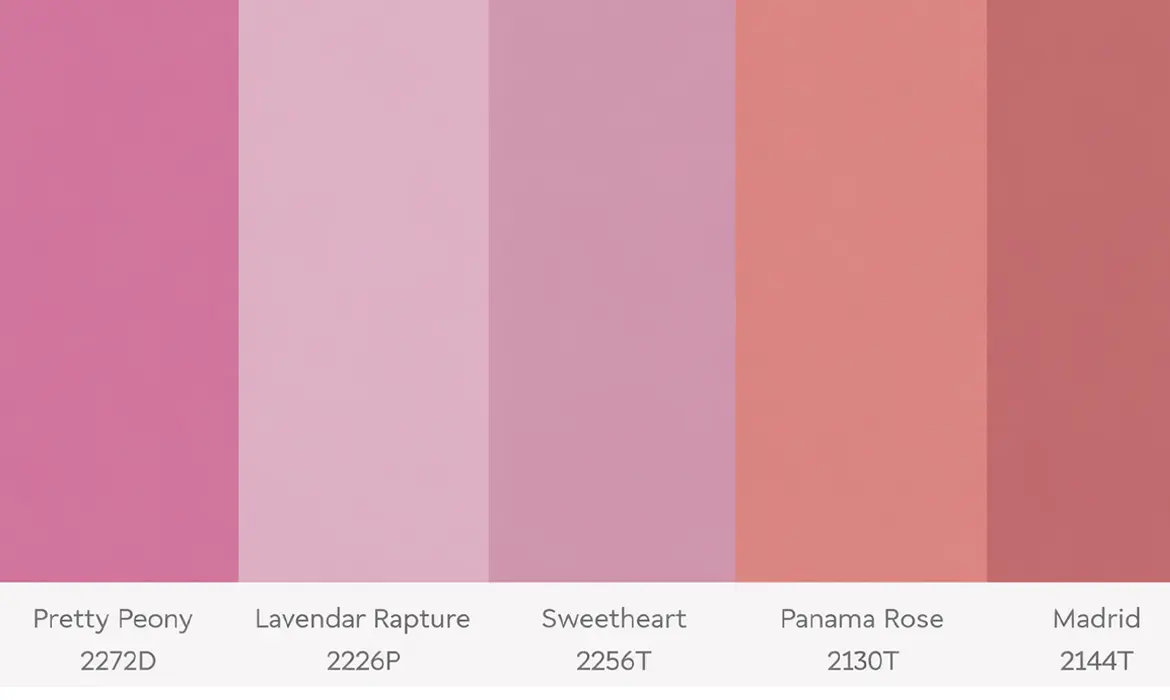
Muted Valentine tones are about subtlety and nuance. Instead of loud statements, they rely on understated warmth and natural elegance. Some of the most popular shades redefining romantic interiors include:

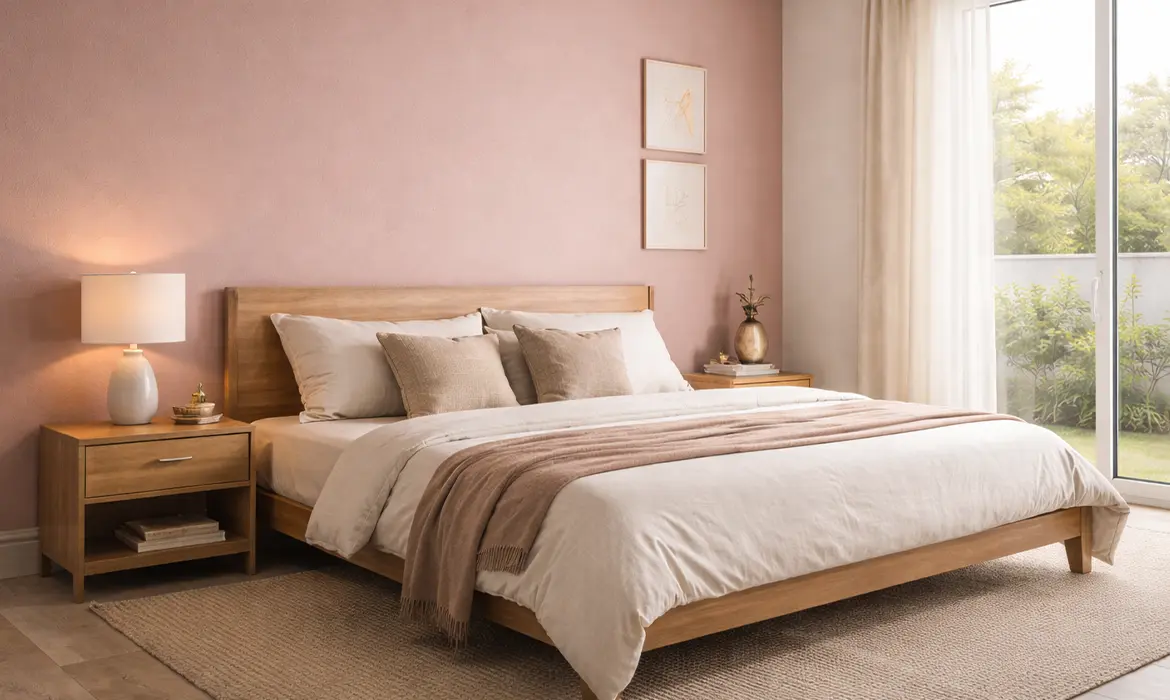
  • Peony (2272D) – A toned-down pink with a hint of grey, offering warmth without being overly sweet.
  • Lavender Rapture (2226P) – A gentle neutral that carries a soft romantic undertone, ideal for modern settings.
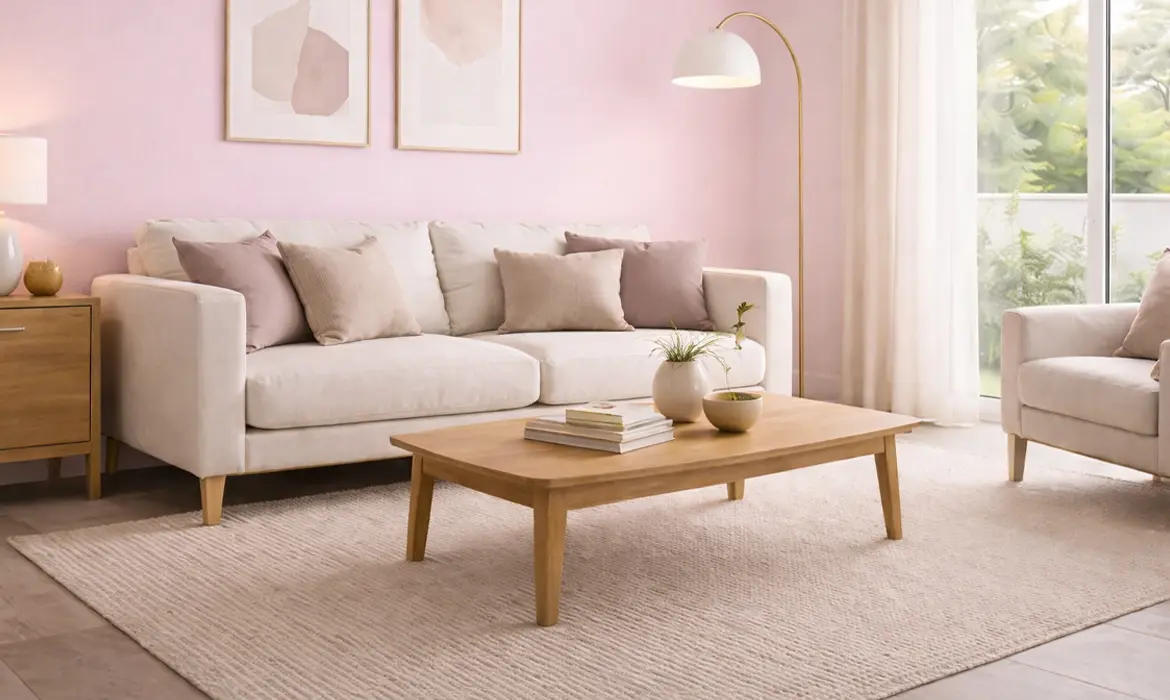
  • Sweetheart (2256T) – Where pink meets grey, this shade feels contemporary, calming, and versatile.
  • Panama Rose (2130T) – Earthy yet romantic, perfect for Indian homes that favour warmth.
  • Madrid (2144T) – A refined blend of brown and pink, adding depth and maturity to interiors.

These colours work beautifully because they sit comfortably between neutrals and accents, making them easy to integrate into existing décor without a full makeover.

Where to Use Them: Creating Intimate, Lived-In Spaces

Muted romantic tones are remarkably adaptable and can be introduced across various areas of the home depending on the desired mood.

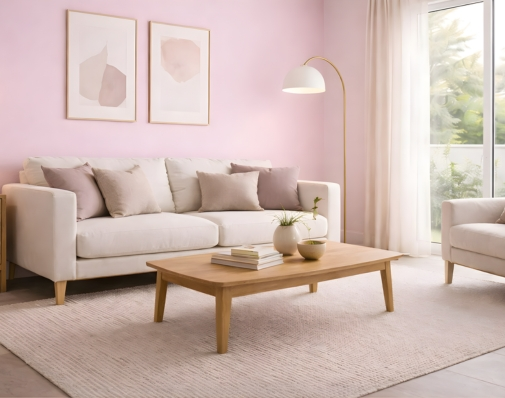
In bedrooms, these shades create a sense of calm and intimacy. Soft blush or dusty rose walls shades help establish a relaxing environment, ideal for winding down at the end of the day.

For living rooms, muted Valentine tones add warmth without overwhelming social spaces. Mauve greys or blush beiges work particularly well in homes with open layouts, maintaining a cohesive flow while adding character.

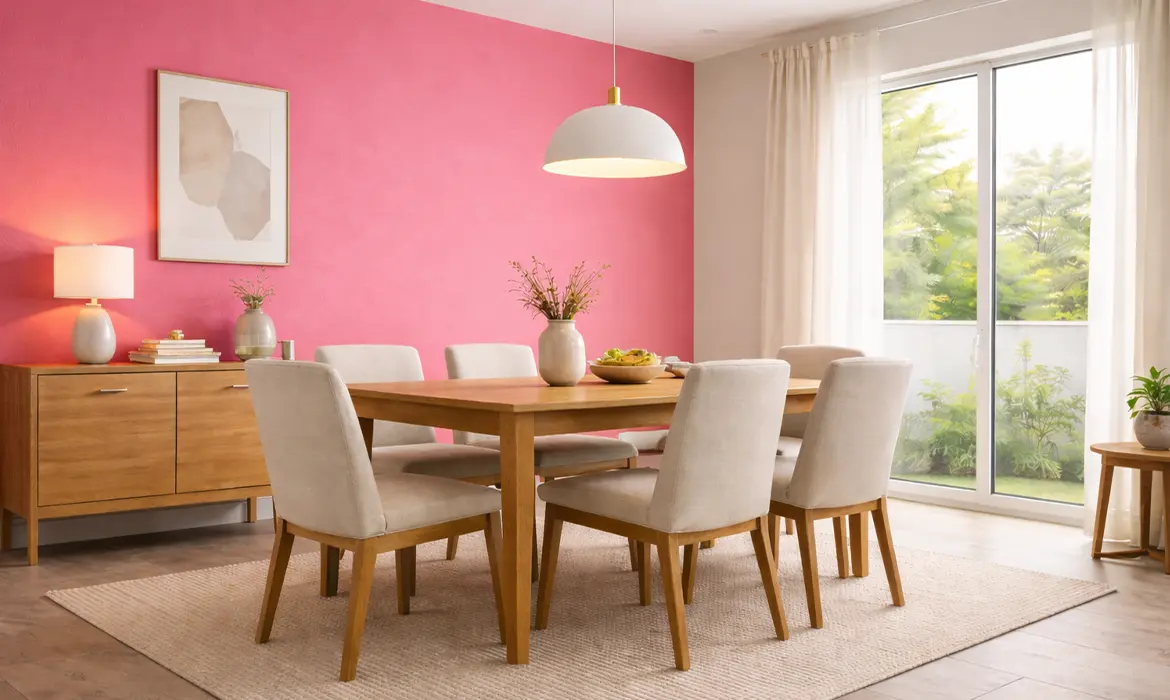
In dining spaces, soft terracotta pinks or cocoa shades create a welcoming atmosphere that feels both elegant and grounded, perfect for shared meals and conversations.

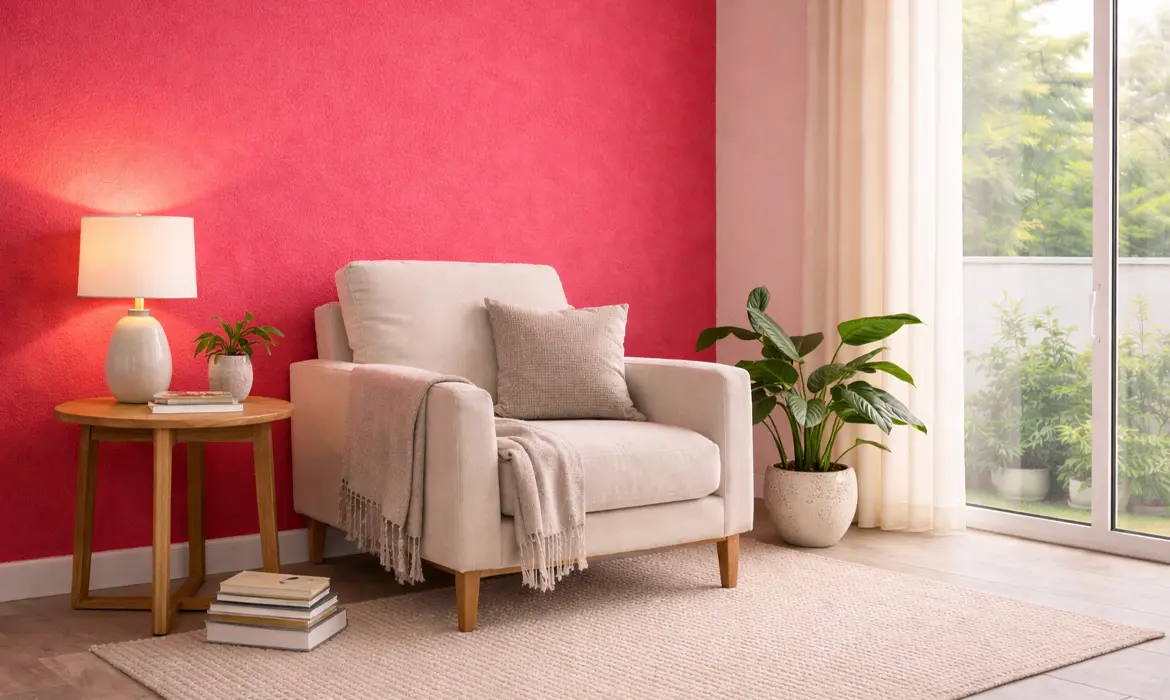
Smaller areas like reading nooks, window seats, or cosy corners benefit greatly from these hues. Used as accent walls, they bring depth and personality without dominating the space.

Pairing Suggestions: Enhancing the Palette Naturally

Muted Valentine tones truly shine when paired thoughtfully with complementary elements. Balance is key, these shades work best when grounded by neutral or natural textures.

Effective pairings include:

  • Off-whites and warm ivories to keep the space light and airy
  • Soft, warm greys that enhance the modern appeal
  • Natural wood finishes that add warmth and authenticity
  • Brass or muted gold accents for a subtle hint of luxury

Instead of competing with the wall colour, these elements support it, allowing the space to feel cohesive and visually soothing. The result is an interior that feels styled yet comfortable, modern yet timeless.

Lighting Impact: Letting the Colours Breathe

Lighting plays a crucial role in how muted tones are perceived. In Indian homes, where natural light varies throughout the day, these shades respond beautifully to changing conditions.

Natural daylight highlights the softness of blush and dusty rose tones, preventing them from appearing heavy. In spaces with ample sunlight, muted colours feel fresh and luminous rather than dull.

Warm artificial lighting such as soft LED or warm-white fixtures enhances the romantic undertones of these shades in the evenings. It adds depth and warmth, making rooms feel cosy and inviting without altering the colour’s integrity.

Avoid harsh white lighting, as it can flatten muted tones and strip them of their warmth. Thoughtful lighting choices ensure these colours maintain their elegance throughout the day.

Why It Works in India: Practical, Elegant, and Climate-Friendly

Muted Valentine-inspired tones are particularly well-suited to Indian homes for several reasons. Beyond aesthetics, they align with the realities of climate, lifestyle, and long-term design needs.

  • Calming Effect: These tones create soothing interiors, ideal for homes that often serve as a retreat from busy urban life.
  • Heat-Friendly Shades: Softer, muted colours absorb less visual heat compared to darker or overly saturated hues, making spaces feel cooler and more comfortable.
  • Year-Round Elegance: Unlike festive reds or bright pinks, muted tones don’t feel seasonal. They transition effortlessly from Valentine’s Day to everyday living.
  • Versatility: These shades adapt easily to evolving décor styles, whether modern, minimal, or softly traditional.

For homeowners seeking interiors that feel current yet enduring, muted romantic palettes strike the perfect balance.

A Thoughtful Take on Modern Romance

Muted Valentine-inspired tones redefine how romance is expressed in contemporary Indian interiors. They move away from fleeting trends and instead focus on creating spaces that feel personal, balanced, and welcoming.

With thoughtfully curated shades and finishes designed for Indian homes, Indicus Paints makes it easier to explore these softer, modern palettes with confidence. Each colour is crafted to complement Indian light, climate, and lifestyles, ensuring walls that feel warm, expressive, and lasting. Because in modern Indian homes, romance isn’t loud, it’s subtle, enduring, and beautifully lived in.

Modern Monochrome Wall Paint Trends for Indian Homes

Modern Monochrome Wall Paint Trends for Indian Homes

As Indian homes evolve in design and functionality, one of the most compelling trends gaining traction is the use of monochrome wall paint. Once considered stark or utilitarian, monochrome colour schemes have now emerged as a sophisticated choice, blending elegance with modern minimalism. Ideal for urban spaces, these sleek tones help create timeless, balanced interiors that reflect contemporary living while accommodating traditional elements. Let’s explore why monochrome walls are a perfect choice for Indian homes in 2025.

Modern Appeal: Sleek and Refined Aesthetics for Urban Living

Monochrome wall paint has become synonymous with modern design. In the context of Indian homes, especially urban apartments and contemporary residences, monochrome brings clarity, organisation, and a sense of calm amidst the fast-paced lifestyle.

Why Monochrome Works for Modern Indian Homes:

  • Clean and Streamlined Look

    Monochrome tones eliminate visual clutter, providing a neat and organised appearance that enhances the perception of space in smaller urban homes.

  • Minimalist Harmony

    These colours align perfectly with minimalist furniture, simple décor, and uncluttered layouts that are favoured in metropolitan areas.

  • Adaptability Across Spaces

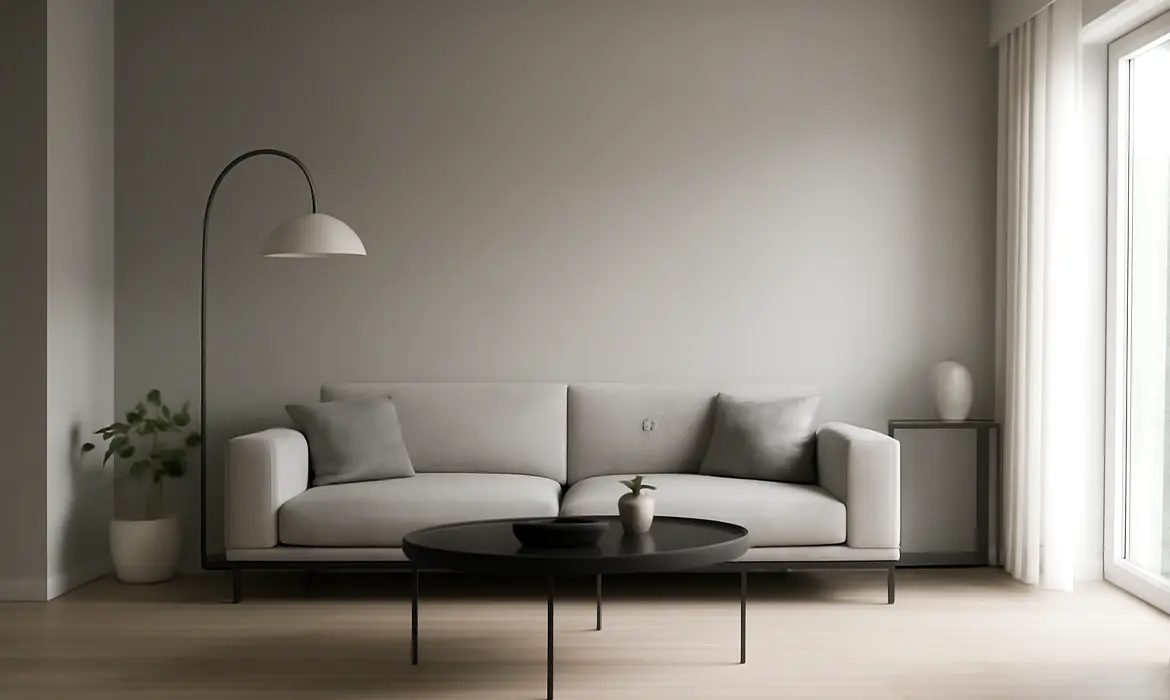
    Whether it’s the living room, bedroom, or home office, monochrome walls effortlessly support various interior styles, from industrial to Scandinavian.

The understated nature of monochrome allows homeowners to showcase statement furniture or artwork without overwhelming the senses. This balance between subtlety and statement is exactly why monochrome is gaining immense popularity.

Beyond Just Black & White: Exploring a Sophisticated Colour Range

While black and white are the most recognised monochrome choices, the trend has expanded into a much richer spectrum. Soft greys, charcoal tones, and warm neutrals have emerged as preferred shades, offering greater versatility and warmth to Indian homes.

  • Soft GreysA light grey offers a gentle backdrop, adding sophistication without harshness. Ideal for enhancing natural light and making small rooms feel airier.
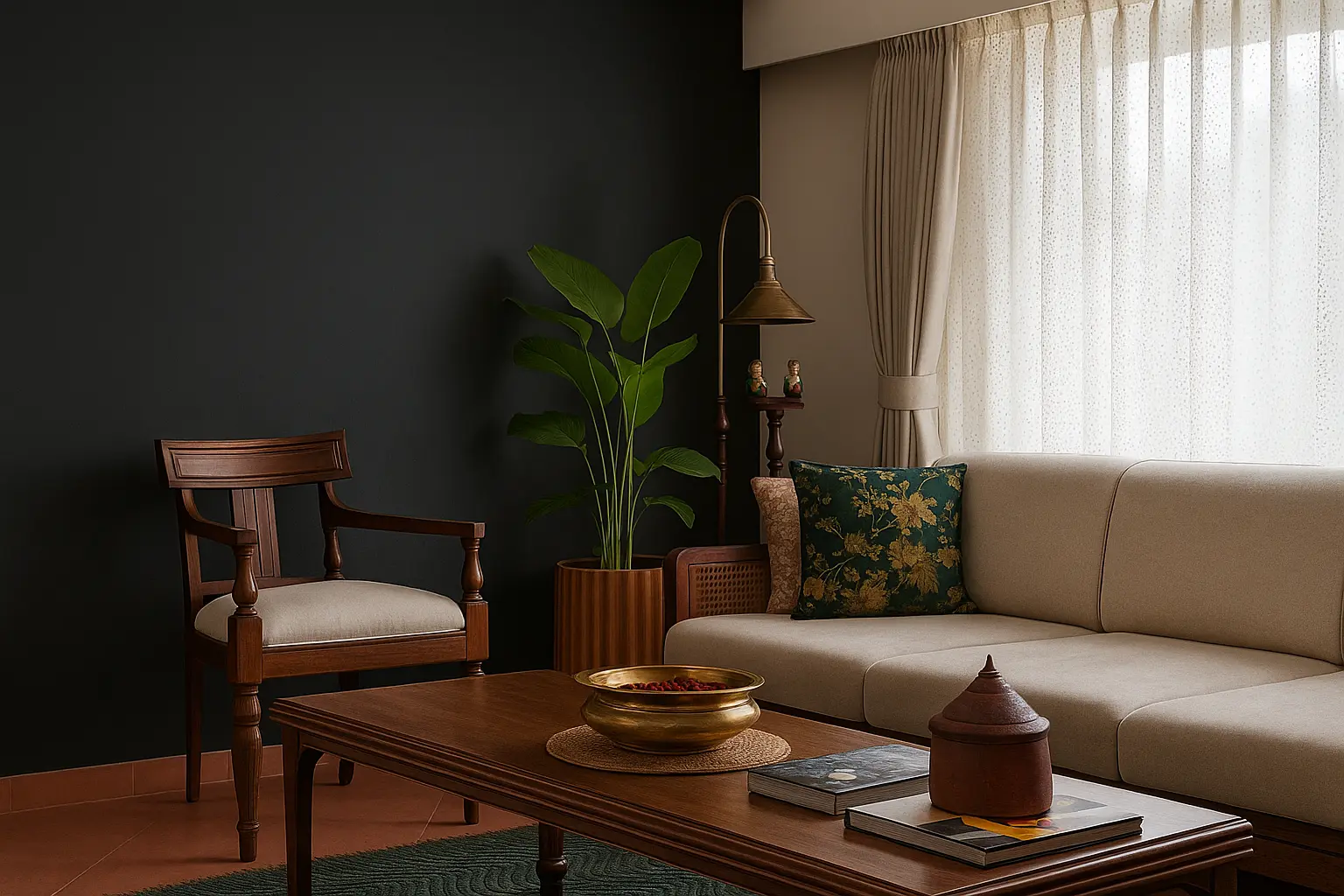
  • Charcoal TonesDark grey or charcoal walls introduce a dramatic, elegant touch. Perfect for accent walls in living rooms or bedrooms, charcoal provides depth without making the space feel confined.
  • Warm Neutrals Shades like taupe, beige, and greige (a blend of grey and beige) provide subtle warmth while maintaining the modern monochrome appeal. These tones suit traditional Indian décor and create a comfortable atmosphere.

Benefits of Exploring Beyond Black & White:

  • Adds visual depth and dimension.
  • Prevents a sterile or cold feeling.
  • Makes it easier to pair with natural materials like wood, stone, and metals.

Rather than sticking to stark contrasts, modern monochrome trends focus on layering similar tones to create a cohesive and elegant space. This approach ensures the home feels warm, inviting, and never overpowering.

Balanced & Elegant: Complementing Monochrome with Materials and Lighting

A monochrome wall is only part of the story. The interplay of textures, materials, and lighting completes the design, resulting in a harmonious and timeless home.

How to Achieve Balance with Monochrome Walls:

  • Incorporate Natural Materials
    • Wood finishes (teak, walnut, oak) soften the monochrome palette and introduce warmth.
    • Metal accents (brass, copper, matte black fixtures) provide an industrial touch without clashing.
  • Utilise Warm Lighting
    • Opt for warm LED lights instead of harsh white lights to prevent the space from feeling cold or sterile.
    • Layer lighting using floor lamps, table lamps, and pendant lights to create a cozy, inviting atmosphere.
  • Select Modern Neutral Shades from Indicus Paints

    Indicus Colour Symphony offers an extensive range of carefully curated neutral shades that perfectly complement the monochrome trend. These include:

    • Warm Greys: Soft and adaptable, ideal for every room.
    • Charcoal Shades: For striking feature walls.
    • Muted Taupes and Beiges: Offering understated warmth.

Practical Tips for Homeowners:

  • Pair a charcoal feature wall with light grey on adjacent walls to maintain balance.
  • Use wooden furniture and warm-toned accessories to break the monotony of monochrome and add personality.
  • Accentuated with greenery, plants not only bring life to the space but also contrast beautifully against grey or black walls.

By combining monochrome walls with thoughtful materials and lighting, homeowners can create spaces that are not only modern and elegant but also comfortable and personal.

Conclusion: Elevate Your Home with Monochrome Sophistication

Monochrome wall paint trends offer the perfect solution for modern Indian homes seeking a balance between style, simplicity, and functionality. Whether you are aiming for a sleek urban look, a cosy retreat, or a timeless design that transcends trends, monochrome tones provide unmatched versatility.

From the subtle charm of soft greys and warm neutrals to the bold confidence of charcoal tones, monochrome paints help you craft spaces that reflect your personality while remaining elegant and balanced. When complemented with natural wood, metal accents, and thoughtful lighting, these walls transform from mere backgrounds into integral components of your home’s story.

At Indicus, we understand that home is where your story begins. Our Colour Symphony palette offers a wide variety of modern neutral shades, specially curated for Indian homes. Explore our collection today and discover how the perfect monochrome colour can elevate your living space with elegance, warmth, and lasting appeal.

Embrace modern monochrome wall trends and let your home speak the language of sophistication.

Traditional Meets Modern: Pongal Wall Painting Ideas

Traditional Meets Modern: Pongal Wall Painting Ideas

Pongal is more than a harvest festival, it is a celebration of gratitude, abundance and new beginnings. As homes across Tamil Nadu are cleaned, decorated and prepared to welcome prosperity, wall colours play a quiet yet powerful role in setting the festive mood. Today, homeowners are increasingly blending tradition with modern design sensibilities, creating interiors that honour culture while reflecting contemporary lifestyles.

Wall painting for Pongal offers the perfect opportunity to refresh your home in a meaningful way. With the right colour choices, techniques and styling.

Pongal-Inspired Colour Choices

Colour has always been central to Pongal celebrations. From the bright kolams at the doorstep to the earthen pots used during festivities, traditional hues symbolise warmth, prosperity and connection to nature. When translated onto walls, these colours instantly create a festive foundation.

Classic Pongal-inspired shades work beautifully because they feel familiar yet uplifting. They also pair well with both traditional décor and modern furniture.

Popular festive colour inspirations include:

  • Turmeric yellow, which symbolises prosperity, positivity and celebration
  • Kolam white or soft off-white, offering purity and balance
  • Terracotta red, reflecting earth, tradition and warmth
  • Sugarcane green, inspired by harvest fields and abundance

For modern homes, these colours can be softened or muted to suit contemporary interiors. Instead of bold saturation across all walls, use them selectively either as accent walls or within smaller spaces to maintain elegance without overwhelming the room.

Modern Wall Painting Techniques

Modern painting techniques allow you to reinterpret traditional colours in a clean, stylish way. These methods are simple enough for homeowners to try themselves, yet impactful enough to transform the look of a space.

Instead of repainting an entire room, focus on visual interest through thoughtful application. This keeps the project manageable while delivering strong festive appeal.

Some easy and effective painting techniques include:

  • Colour blocking, using two complementary Pongal shades on the same wall
  • Subtle accent walls, where one festive hue anchors the room
  • Geometric patterns, inspired by symmetry often seen in kolam designs
  • Painted borders or panels, creating structure and elegance
Traditional Meets Modern Pongal Wall Painting Ideas
These techniques work particularly well in living rooms, dining areas and entryways spaces that naturally become gathering points during Pongal celebrations. Using clean lines and minimal patterns helps maintain a modern aesthetic while still celebrating tradition.

Kolam-Inspired Wall Designs

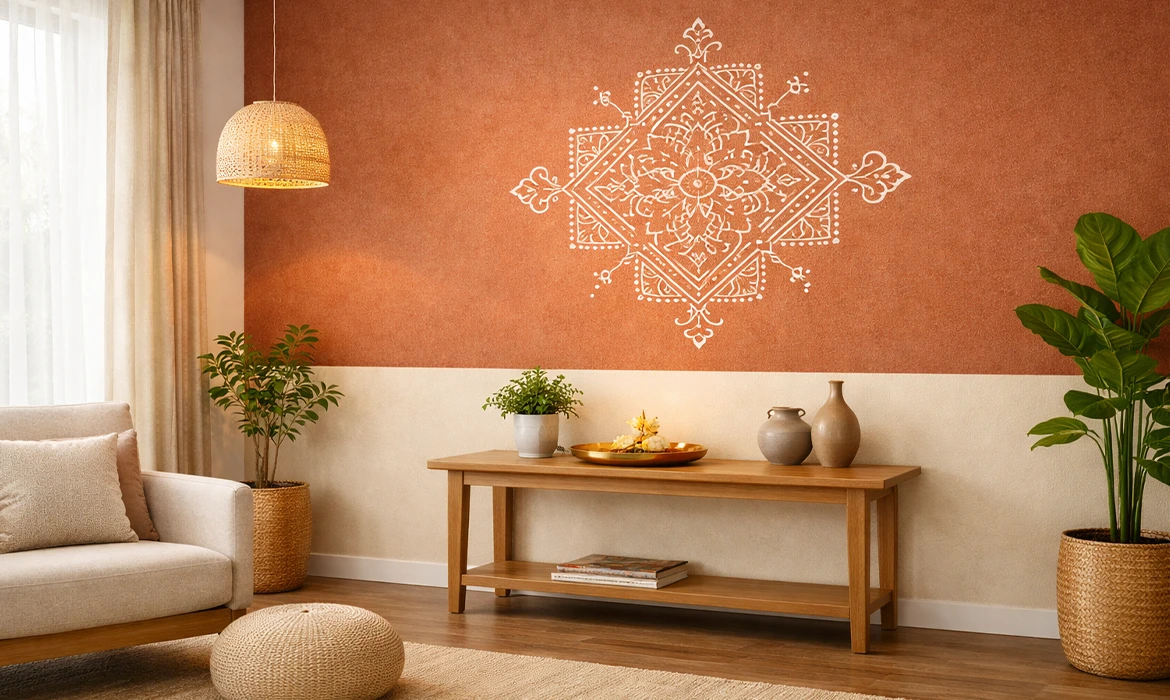
Kolams are one of the most recognisable and meaningful elements of Pongal décor. Traditionally drawn on floors using rice flour, their symmetry and symbolism can be beautifully adapted into wall designs through paint.

Painting kolam-inspired patterns on walls offers a longer-lasting alternative while adding a unique focal point to interiors. This approach works especially well for accent corners, pooja rooms, or dining walls.

You can recreate kolam motifs by:

  • Using stencils for clean, repeatable patterns
  • Painting freehand designs for a more artistic, personal touch
  • Choosing neutral base colours with white or soft contrast detailing
  • Keeping patterns minimal to maintain a contemporary feel
Traditional Meets Modern Pongal Wall Painting Ideas

Rather than replicating large, complex kolams, focus on simplified motifs dots, curves, or borders that echo traditional designs without dominating the space. The result feels festive, artistic and thoughtfully modern.

Prep & Paint Smartly

Even the most beautiful colour or design can fall short without proper preparation. Smart prep ensures that your Pongal paint project not only looks good but also lasts beyond the festive season.

Before you begin painting, take time to prepare the surface. This step is especially important if you’re painting close to festival time and want neat, professional-looking results.

Key preparation steps include:

  • Cleaning walls to remove dust, grease, or moisture
  • Filling cracks or uneven areas for a smooth finish
  • Applying primer to improve paint adhesion and colour accuracy
  • Using painter’s tape to protect edges, switches and borders

Choosing quick-drying, low-odour interior paints makes the process easier, especially in occupied homes. Good preparation also reduces the need for frequent touch-ups, ensuring your festive walls remain fresh and vibrant.

Traditional Meets Modern Pongal Wall Painting Ideas

Style for a Festive Finish

Once the paintwork is complete, styling brings everything together. The right décor enhances wall colours and transforms them into a festive setting that feels warm, welcoming and authentic.Pongal décor traditionally celebrates nature and craftsmanship, making natural materials the perfect companion to painted walls.To complete the look:
  • Add brass or copper décor to reflect warmth and tradition
  • Use earthen pots, sugarcane elements, or clay lamps as accents
  • Incorporate fresh flowers and banana leaves for natural vibrancy
  • Layer cotton or linen fabrics in cushions and runners
Traditional Meets Modern Pongal Wall Painting Ideas

Lighting also plays a key role. Warm lighting enhances earthy and golden tones, making walls appear richer and more inviting. Together, paint and décor create a harmonious festive environment that feels thoughtfully curated rather than overdone.

Conclusion

Blending tradition with modern design is what makes today’s Indian homes truly special. With Pongal wall painting ideas, you don’t need elaborate renovations to make your home festive-ready. Thoughtful colour choices, simple techniques and meaningful styling can transform everyday walls into expressions of culture and creativity.

With Indicus Paints, achieving this balance becomes effortless. A carefully curated range of shades and finishes, designed for Indian homes. This Pongal, let your walls tell a story, one that celebrates heritage while embracing modern living. With a little planning and creativity, your home can welcome the harvest season with warmth, elegance and pride.