
Colours of Puthandu: Traditional Tamil New Year Shades for Your Homes
Significance of Colours in Puthandu and Tamil Cultural Traditions
Puthandu, the Tamil New Year as it marks gratitude and the hopeful beginning of another year filled with prosperity and harmony. Across Tamil households, preparation for this festival begins with cleaning, decorating, and refreshing living spaces and colour plays a deeply symbolic role in this transformation.
In Tamil culture, colours are never chosen at random. They carry meaning rooted in tradition, spirituality, and nature. From the bright hues of festive kolams at the entrance to the rich tones of silk sarees and temple décor, colour becomes a language of celebration. Incorporating these traditional shades into home interiors during Puthandu is not only culturally meaningful but also visually uplifting.
Today, many homeowners are rediscovering these timeless palettes, adapting them thoughtfully to suit contemporary interiors while retaining their symbolic depth.
Traditional Colour Palette
The traditional colours of Puthandu are inspired by nature, harvest, and sacred rituals. These hues are vibrant, warm, and filled with life.
Key shades associated with Tamil New Year celebrations include:
- Mango Yellow – A bright, joyful tone symbolising harvest and auspicious beginnings
- Vermilion Red – A sacred shade associated with strength, energy, and devotion
- Turmeric Gold – A warm golden-yellow reflecting purity and prosperity
- Leaf Green – Representing growth, fertility, and renewal
- Coconut White – A clean, calming shade symbolising peace and spiritual clarity
These colours are visible in everyday festival elements from mango leaf garlands (thoranams) to turmeric powder used in rituals. When thoughtfully incorporated into interiors, they bring authenticity and cultural richness to modern homes.
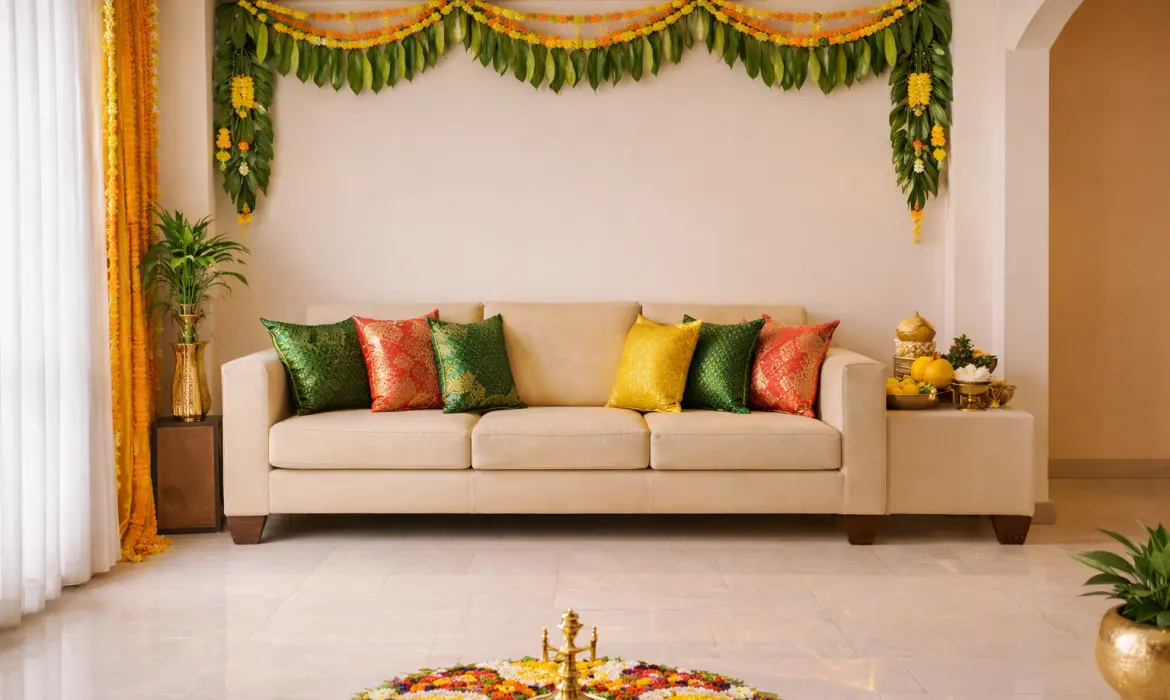
Symbolism of Shades
Each colour used during Puthandu carries a layered meaning, rooted in Tamil traditions and spiritual beliefs.- Prosperity: Mango yellow and turmeric gold are strongly associated with wealth and abundance. They mirror the colour of ripened crops and the warmth of the sun, signifying success and fullness.
- Positivity: Vermilion red embodies vitality and auspiciousness. It energises spaces and is often seen in temple décor and festive adornments.
- Renewal: Leaf green represents fresh beginnings, echoing the renewal of nature during harvest cycles.
- Purity and Harmony: Coconut white brings balance to brighter tones, ensuring the home feels serene rather than overwhelming.
Where to Use Them
Introducing festive colours does not require a complete home overhaul. Instead, strategic placement can make a meaningful impact while maintaining elegance.
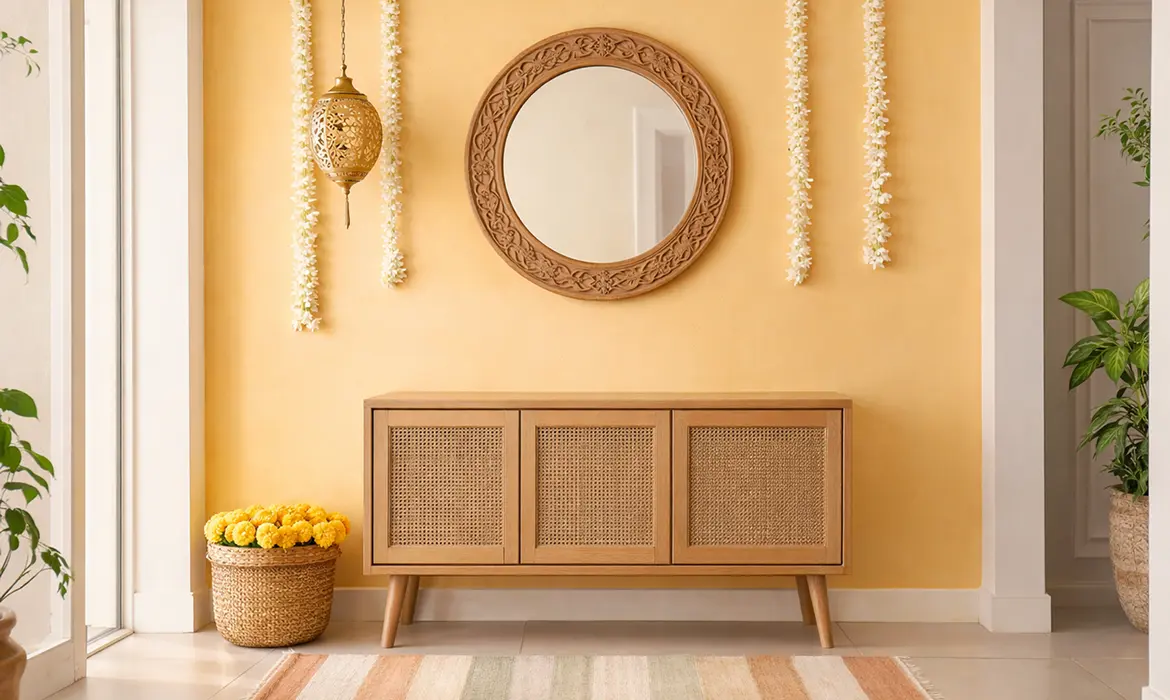
Entrance Walls
The entrance sets the tone for the home. Soft mango yellow or turmeric gold walls create an inviting first impression. Paired with traditional kolam patterns and brass lamps, the effect feels warm and celebratory.
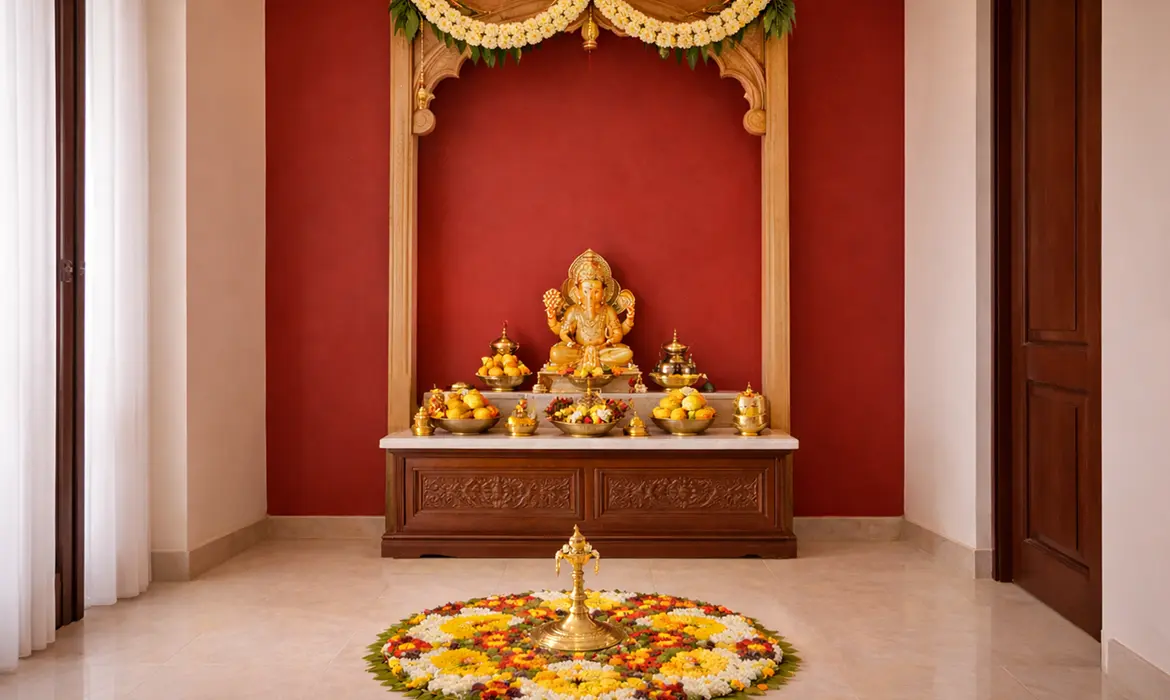
Pooja Rooms
This is where deeper symbolism shines. Vermilion accents or muted gold backgrounds enhance the spiritual atmosphere. Leaf green can be used sparingly to add freshness without overpowering sacred elements.
Living Spaces
In living rooms, consider incorporating these shades through:
- Accent walls in softened mango or muted terracotta-red
- Cushions or throws in leaf green
- Decorative pieces in gold and brass
The key is balance allowing vibrant hues to enhance rather than dominate the space.
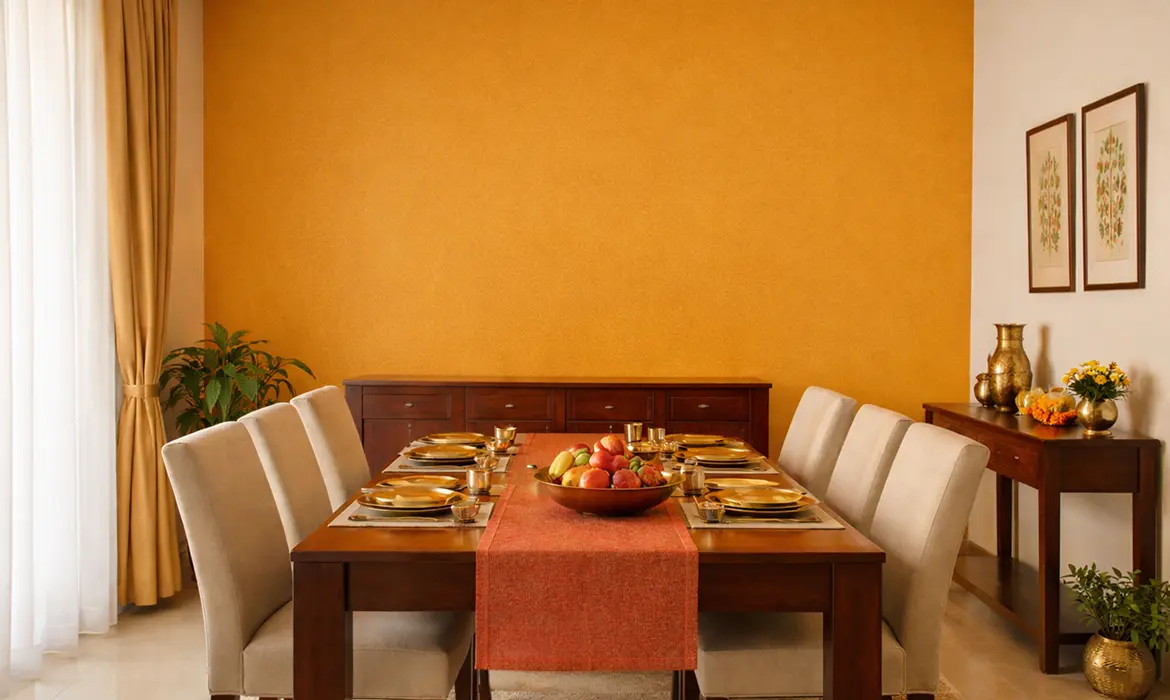
Dining Areas
Dining spaces benefit from warm tones such as turmeric gold and soft red accents. These shades stimulate conversation and create a welcoming environment for festive meals shared with family.
Modern Adaptation: Bringing Tradition into Contemporary Homes
While traditional colours are vibrant, modern interiors often favour subtler palettes. The solution lies in adaptation rather than dilution.
Instead of bold, saturated shades, homeowners can explore:
- Pastel mango instead of bright yellow
- Muted terracotta-red instead of intense vermilion
- Soft sage green as a refined alternative to bright leaf green
- Warm ivory in place of stark white
These softened tones maintain cultural authenticity while blending seamlessly with minimalist furniture and contemporary layouts.
Additionally, using these colours as accents rather than covering entire rooms ensures that the décor feels sophisticated and suitable for year-round living.
Why It Works Today: Festive Yet Timeless
In modern Indian interiors, there is a growing appreciation for culturally rooted design. Rather than following fleeting global trends, homeowners are embracing palettes that reflect heritage while maintaining elegance.
Puthandu colours work beautifully today because:
- They are emotionally meaningful, not just visually appealing.
- They suit India’s warm climate, where sunlit interiors enhance golden and earthy tones.
- They transition easily from festive décor to everyday sophistication.
A soft mango-toned wall can feel celebratory during Tamil New Year and remain cheerful throughout the year. Leaf green accents provide freshness in every season. Coconut white keeps spaces balanced and breathable.
By choosing the right intensity and placement, these shades remain timeless rather than seasonal.
A Celebration of Heritage Through Colour
Puthandu offers an opportunity to reconnect with tradition in a deeply personal way. Refreshing your home with culturally significant colours transforms walls into expressions of optimism, gratitude, and renewal.
Whether through a subtle accent wall, festive décor updates, or thoughtfully curated material pairings, the colours of Tamil New Year bring warmth and identity into contemporary homes. They celebrate prosperity, positivity, and abundance values that extend far beyond a single day.
By blending tradition with modern sensibilities, homeowners can create interiors that honour heritage while embracing the present as a true reflection of what Puthandu stands for: new beginnings rooted in timeless culture.
At Indicus Paints, we believe that colour is more than decoration, it is an expression of culture, emotion, and identity. The shades inspired by Puthandu beautifully combine tradition with contemporary living, allowing homes to feel festive yet refined throughout the year.