
Blending Modern Interiors with Traditional Indian Colour Palettes
Listen to the audio version of the blog here:
Interior design in contemporary Indian homes is increasingly moving towards a thoughtful blend of modern aesthetics and cultural heritage. While minimalist layouts, clean lines and uncluttered spaces dominate modern interiors, many homeowners are seeking ways to reconnect with traditional elements that reflect India’s rich visual identity.
One of the most effective ways to achieve this balance is through colour. Traditional Indian colour palettes are deeply rooted in nature, rituals and regional craftsmanship. These colours carry cultural meaning and emotional warmth, making them ideal for adding character to modern spaces.
Rather than using them in bold, overwhelming ways, today’s interiors reinterpret these traditional hues through subtle tones, selective placement and thoughtful pairings with modern materials. The result is a home that feels contemporary while still reflecting a sense of heritage and cultural depth.
Traditional Colours that Define Indian Aesthetics
Indian design traditions have always celebrated colour. Many of these hues originate from natural pigments, textiles and architectural finishes used for centuries across different regions of the country.
Some of the most iconic traditional colours include:
- Olympian blue (2392C) – Historically used in textiles and murals, known for its calming depth
- Sundawn (2055D) – A warm and auspicious colour associated with positivity and energy
- Tyler’s truck (2112C) – Symbolising celebration, tradition and cultural significance
- Redwood (2812C) – Inspired by clay, soil and natural building materials
- Green flash (2644C) – Reflecting nature, balance and freshness
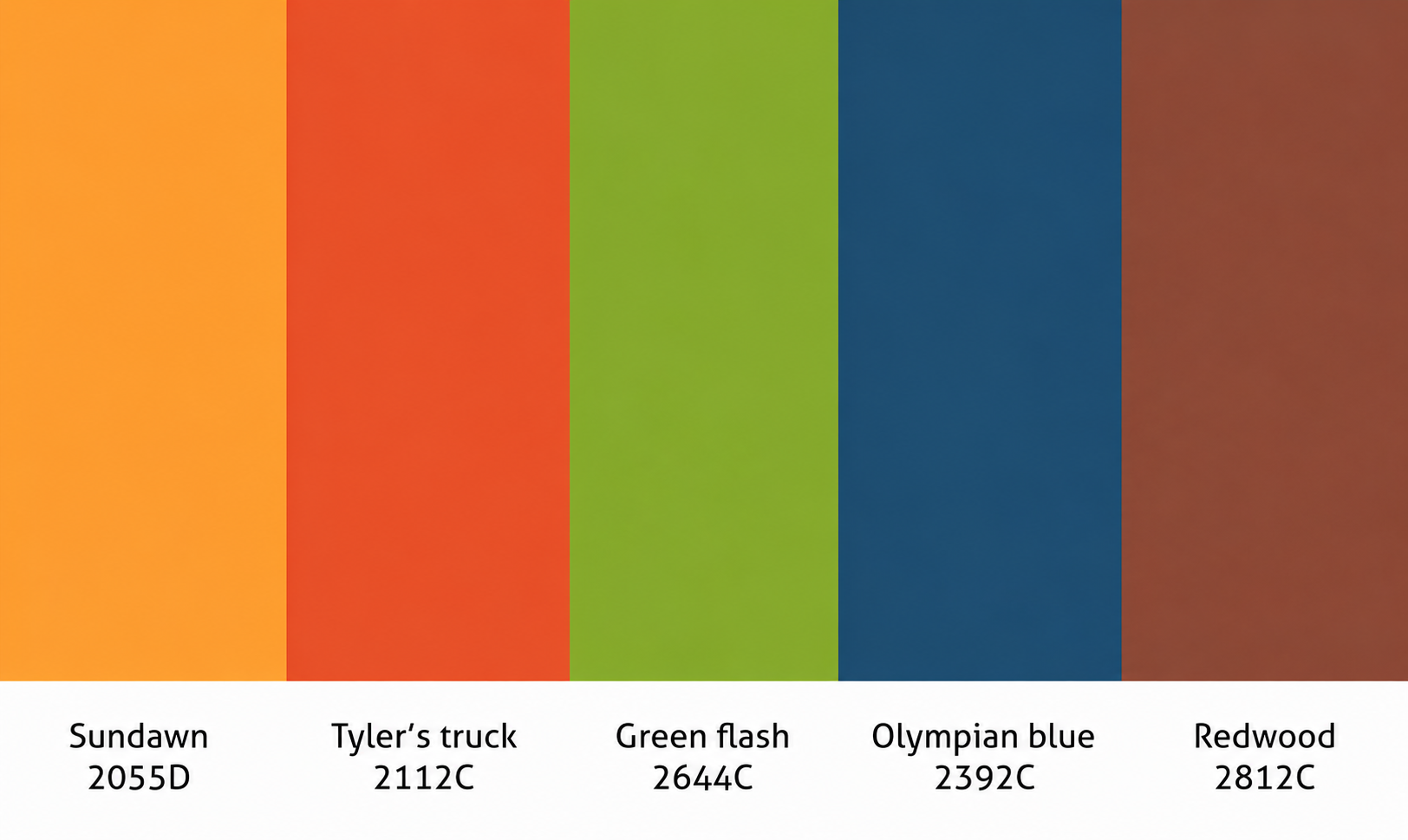
These colours often appeared in temples, traditional homes, handwoven fabrics and decorative art forms. In modern interiors, they are not necessarily used in their original intense form but are reinterpreted in softer or more refined shades.
By adapting these colours thoughtfully, homeowners can introduce tradition without compromising the clean and sophisticated feel of contemporary design.
Modern Application: Subtle Ways to Introduce Traditional Colours
Modern interiors prioritise simplicity, openness and visual harmony. To integrate traditional colours successfully, the focus should be on controlled application rather than overwhelming colour schemes.
Using Muted or Refined Shades
Instead of bold, saturated tones, many designers now opt for softened versions of traditional colours.
For example:
- Indigo may appear as a dusty or deep navy shade
- Turmeric yellow can be softened into warm mustard or muted saffron
- Vermilion red may be toned down to terracotta or brick hues
These variations retain the cultural essence of the colour while blending seamlessly with modern interiors.
Accent Walls and Focal Areas
Traditional colours work particularly well as accent elements within neutral spaces.
Popular approaches include:
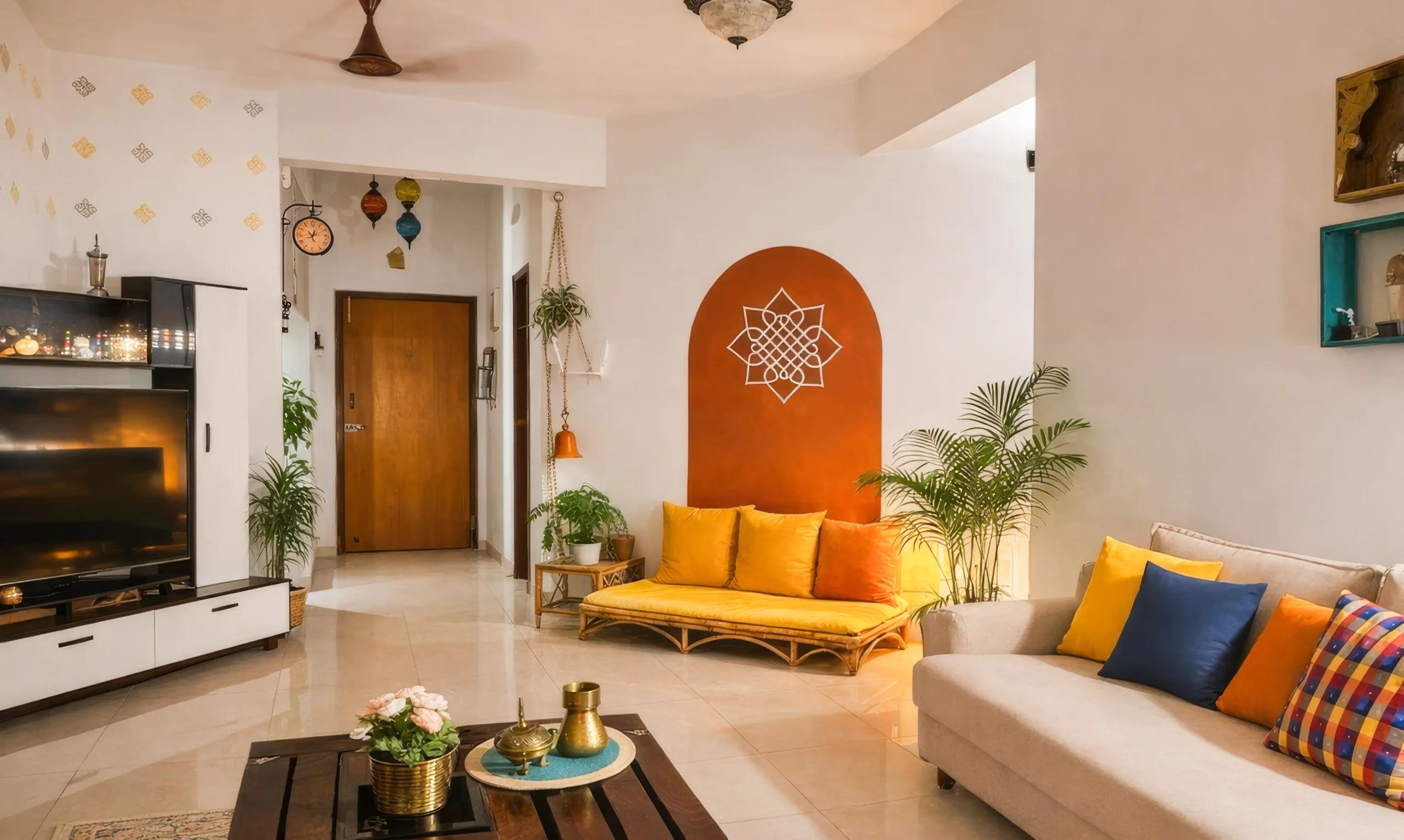
- A single coloured wall behind seating or artwork
- Painted niches or architectural features
- Decorative panels or framed colour sections
This method allows the colour to stand out while keeping the overall space balanced.
Where to Use Traditional Colours in Modern Homes
Traditional Indian colours can be integrated across different parts of the home, depending on the mood and purpose of the space.
Living Rooms
The living room is often the most visible and welcoming area of the home, making it an ideal place to introduce heritage-inspired colours.
Effective design ideas include:
- Indigo or earthy-toned accent walls
- Upholstery or cushions in turmeric or leaf green shades
- Decorative elements such as rugs or artwork incorporating traditional colours
These touches create a warm and inviting atmosphere without overwhelming the room.
Pooja Corners
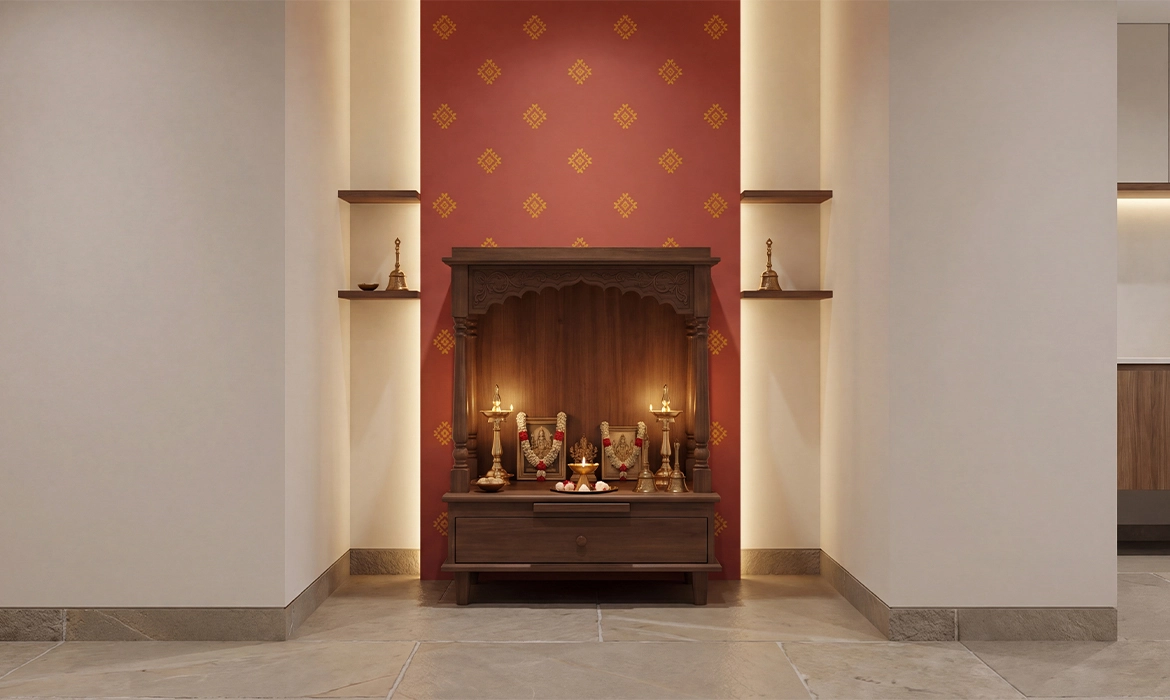
Pooja spaces naturally lend themselves to traditional colours due to their spiritual and cultural significance.
Common colour choices include:
- Vermilion or deep red backdrops
- Turmeric yellow niches or panels
- Earthy tones paired with brass elements
These colours help create a sacred and calming environment while still fitting within a modern interior layout.
Dining Areas
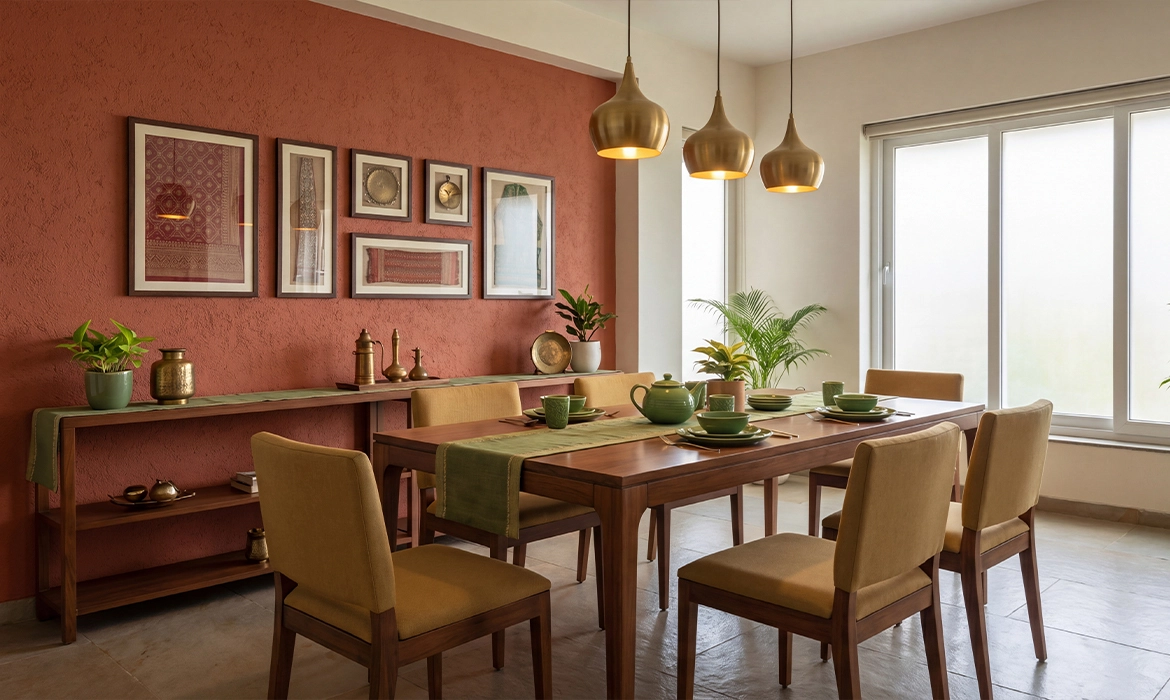
Dining spaces benefit from colours that stimulate warmth and social interaction.
Suitable options include:
- Soft terracotta or earthy browns on feature walls
- Leaf green accents paired with wooden furniture
- Mustard or turmeric-toned upholstery for dining chairs
Such combinations add vibrancy while maintaining a comfortable, relaxed setting for meals and gatherings.
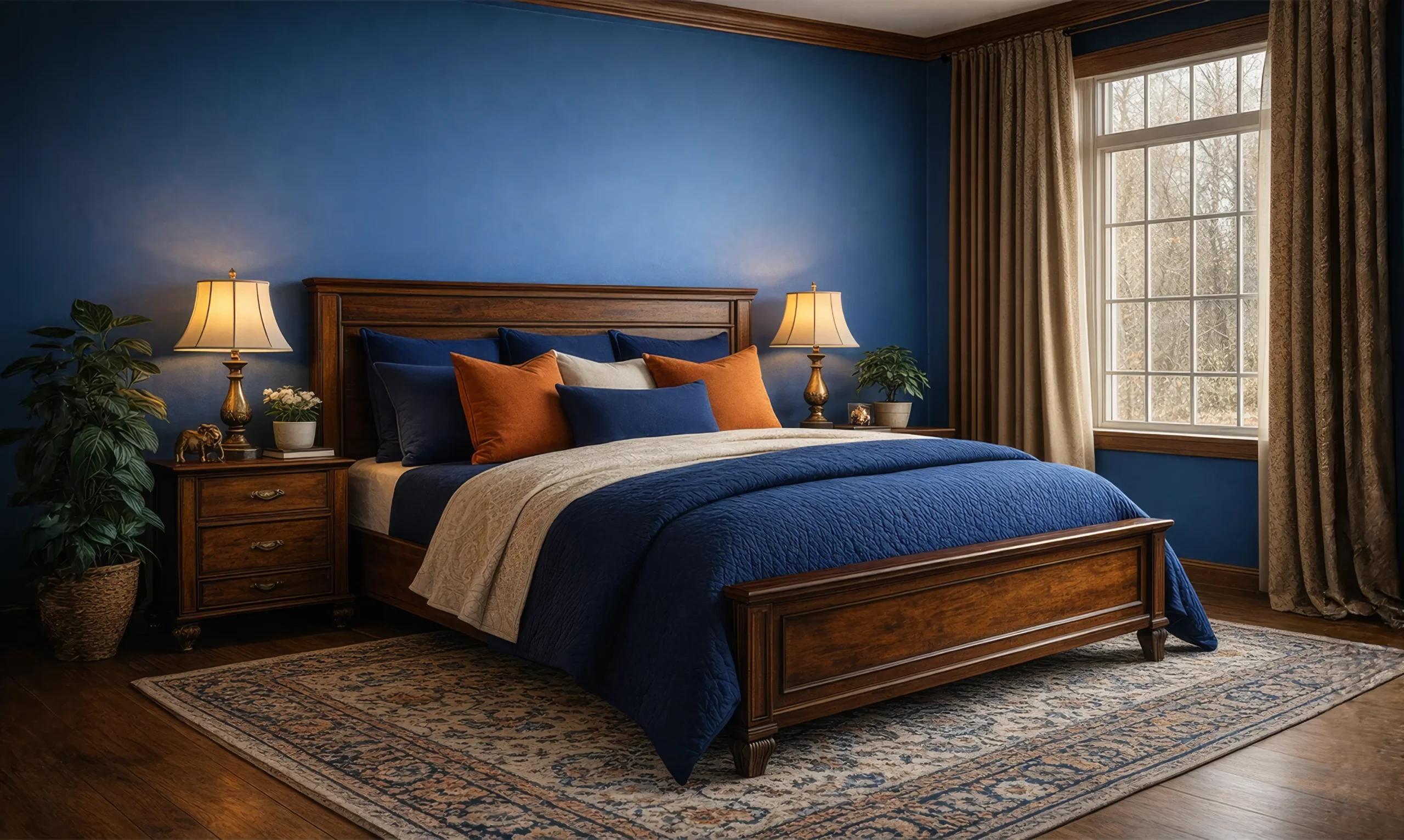
Bedrooms
Bedrooms typically require a more restful atmosphere, so traditional colours should be introduced in softer forms.
This can be achieved through:
- Muted indigo walls for a calm and elegant look
- Leaf green fabrics or cushions that evoke freshness
- Earthy tones combined with neutral bedding and textures
These colours create a soothing environment while preserving a subtle cultural influence.
Material Pairings that Enhance Traditional Colours
The success of blending traditional palettes into modern interiors often depends on how colours interact with materials. Natural materials help reinforce the authenticity and warmth of heritage-inspired colours.
Some effective material pairings include:
- Wood – Adds warmth and complements earthy browns, turmeric yellows and deep reds
- Brass – Enhances traditional tones such as vermilion, mustard and indigo while adding a touch of elegance
- Stone – Natural stone surfaces provide a neutral base that allows traditional colours to stand out
- Handloom fabrics – Textiles such as cotton, linen and woven materials introduce texture and cultural authenticity
These materials ground the colours in tradition while maintaining the refined aesthetic associated with modern design.
When used together, they create interiors that feel layered, tactile and visually balanced.
Design Balance Tip: Let Colours Carry the Tradition
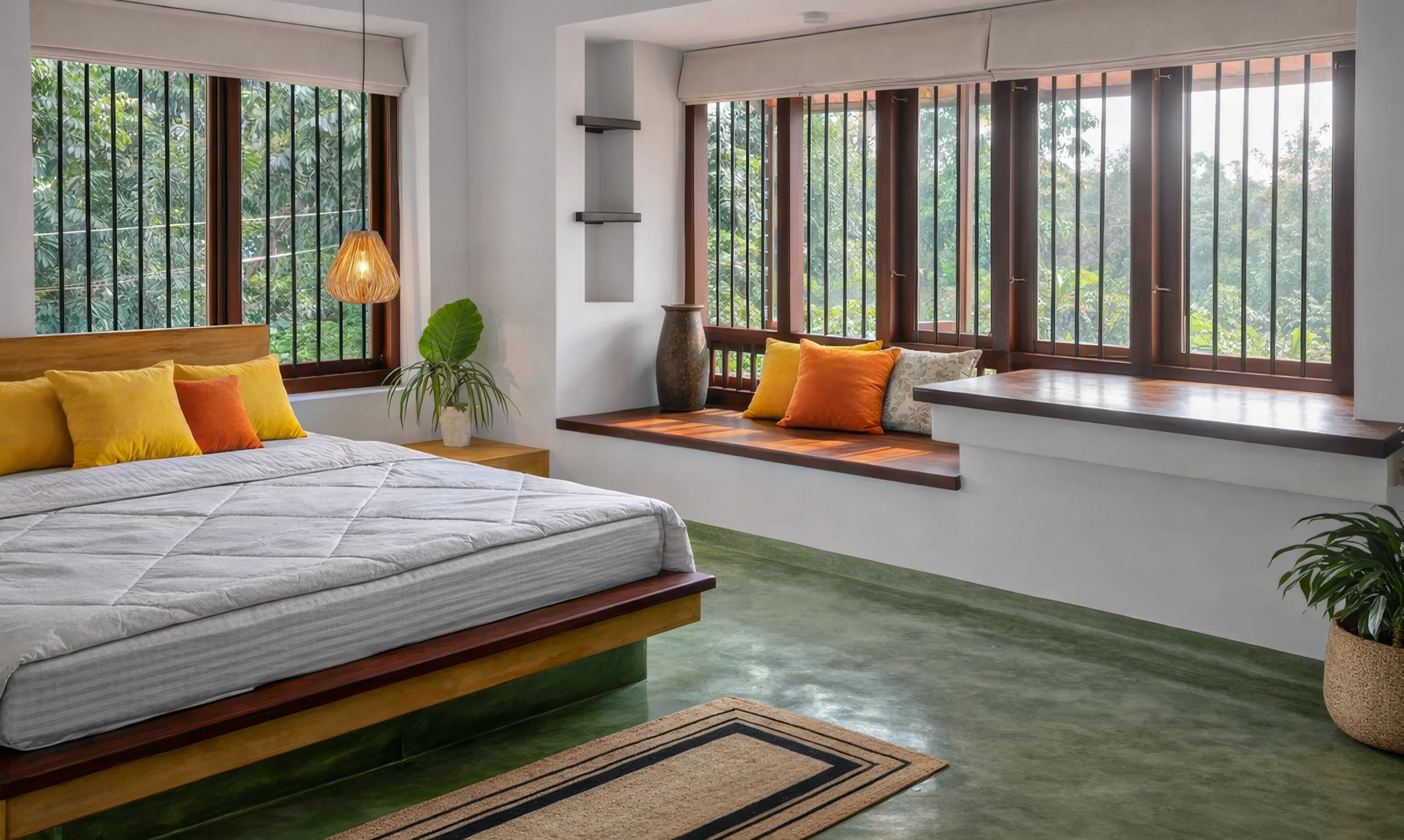
One of the most effective strategies when combining modern and traditional elements is to keep the layout contemporary while allowing colour to represent heritage.
A balanced approach may include:
- Clean architectural lines and uncluttered layouts
- Neutral base colours such as white, beige or soft grey
- Selective use of traditional hues in walls, textiles or décor
By following this principle, homeowners can ensure that the space remains visually light and modern while still reflecting cultural identity.
This approach prevents interiors from appearing overly ornate or dated, allowing traditional colours to stand out as sophisticated design accents.
Why This Approach Works: Timeless Appeal with Cultural Warmth
The combination of modern design and traditional Indian colour palettes works because it respects both aesthetics equally. Contemporary interiors provide simplicity, functionality and openness, while traditional colours introduce warmth, depth and cultural resonance.
Key reasons this design approach remains popular include:
- Timelessness – Traditional colours have endured for centuries and rarely feel outdated
- Emotional connection – These hues evoke familiarity, festivals and heritage
- Visual richness – Even subtle applications add depth and personality to minimal spaces
- Versatility – Traditional colours can adapt to different interior styles and room functions
At Indicus Paints, rather than choosing between modernity and tradition, this design philosophy celebrates both. By thoughtfully blending heritage-inspired colours with contemporary interiors, homeowners can create spaces that feel elegant, meaningful, and deeply connected to cultural roots.