
Best Exterior Colours for Homes in Tropical Climates
Listen to the audio version of the blog here:
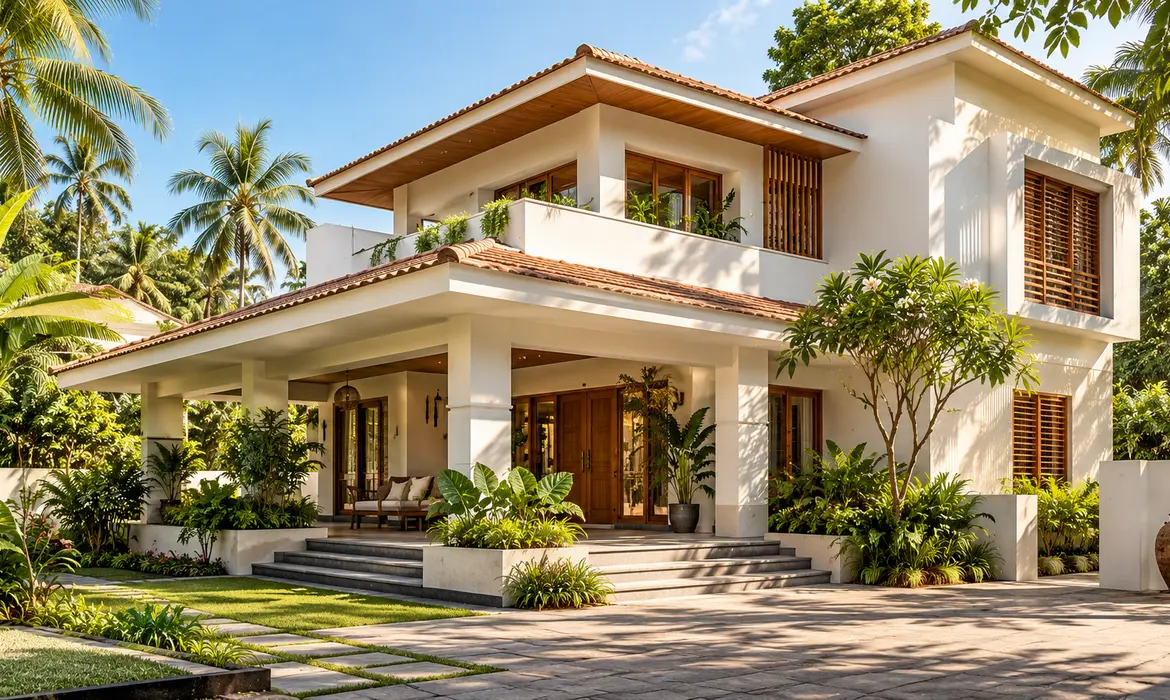
Light, high-reflectance shades such as whites, off-whites and muted sandstones perform best on tropical exteriors, absorbing less heat and resisting UV fade longer than darker tones. Exterior walls here carry a specific set of stresses, sustained sun, high UV and monsoon moisture, often within the same year. The shade chosen for a facade is never a cosmetic decision. It decides how much heat a wall carries and how long the paint film lasts before it fades or chalks.
The Weather Decided the Colour Long Before Paint Did
Homes on the subcontinent have never known a mild season. The sun does not arrive gradually. It arrives with intent. The monsoon gives little warning before it breaks. Humidity settles in and stays. Generations before paint chemistry existed, builders across South India chose lime washes and pale renders, not for how they looked but for what they could withstand. The logic was never fashionable. It was survival. That logic has not changed. Only the materials carrying it have.
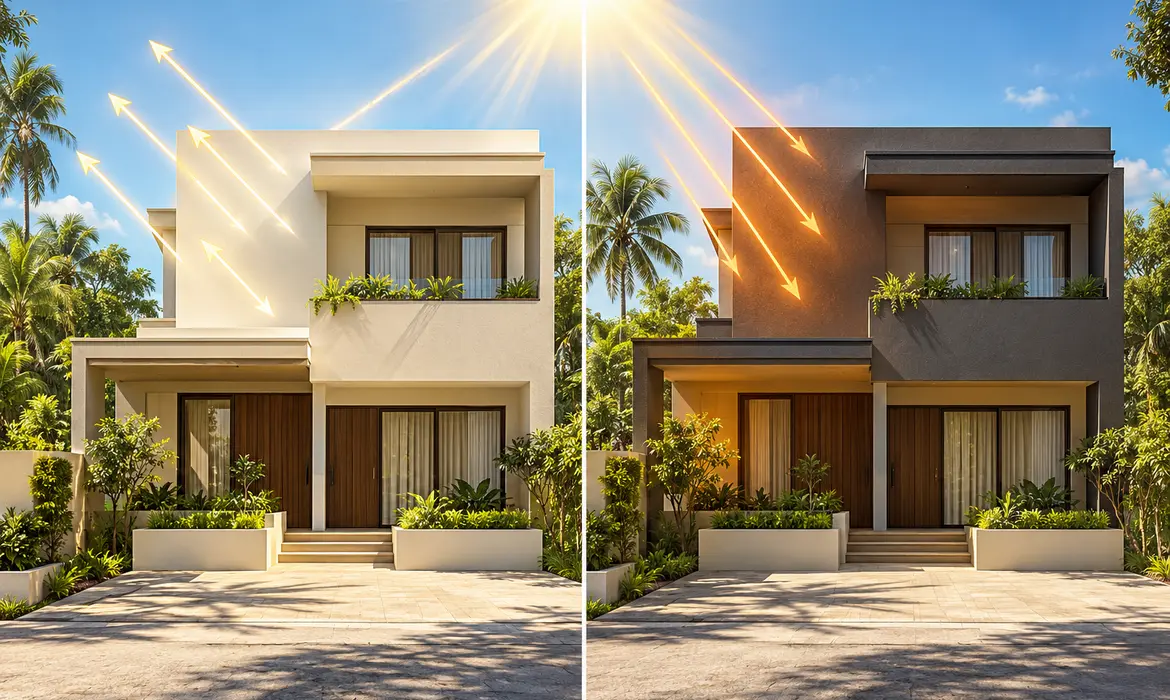
The Sun Does Not Treat Every Colour the Same
Heat, UV and moisture do not treat every colour equally. Darker pigments absorb more solar radiation, raising surface temperature and accelerating the breakdown of paint-film binders, shortening the interval before a wall chalks or fades. Damp exteriors also breed algae and fungal growth through sustained monsoon months. Colour choice here is a performance decision with an aesthetic outcome.
The Shades Built to Take the Heat
Whites, off-whites and pale sandstones carry the highest light-reflectance value, absorbing the least heat and staying coolest at the surface. A soft, cool-toned white reads crisp against strong daylight and resists yellowing under UV. A warm off-white with a beige undertone softens that brightness without the heat load of a true beige. A pale sandstone beige pulls in the colour of local stone, so the home sits naturally against its surroundings. A lighter, fresher blue with a grey or green undertone stays calm and airy, pairing well with stone and timber. Each fades more gradually than a darker equivalent.
Where Deep Shades Belong: Doors, Gates and Shaded Walls
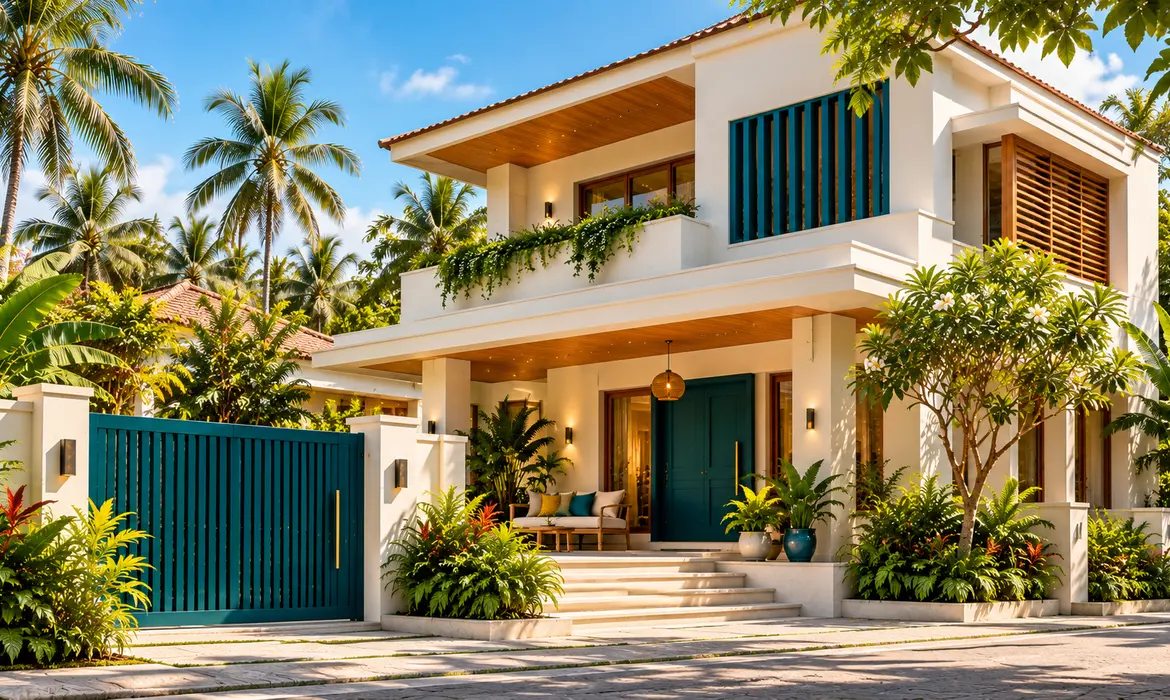
Deep, saturated shades absorb more heat and fade more visibly on full, sun-facing elevations, so they earn their place only where the sun does not reach directly. A deep teal brings a cool, grounded richness against a light base. A dusky plum and a rich indigo blue carry a quiet, evening depth, best in small doses. A warm golden yellow feels lively at a doorway or gate, while its softer cousin, a muted amber, gives the same warmth with less intensity. Doors, gates, boundary walls and shaded porches carry these shades best, since they take less direct sun than a full elevation.
Building a Facade That Works Together
A single reflective shade rarely tells the whole story of a facade. A base of warm off-white or pale sandstone beige across the main elevation, with a muted lighter blue on window frames or a porch wall, keeps the surface working against heat while giving the home character. For a stronger accent, a warm golden yellow on a single feature wall or gate, set against a light base, delivers warmth without heating an entire elevation. Trims and doors are the natural place for a deeper shade, since they take less direct sun than a full wall.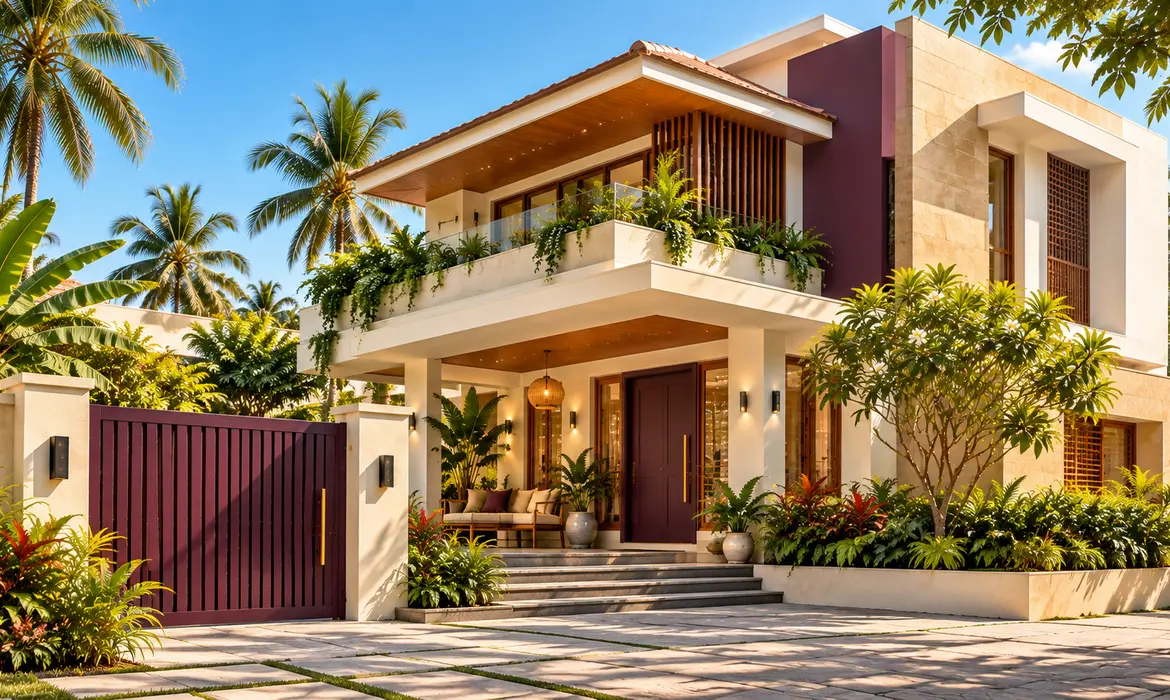
Shade Guide at a Glance
| Shade Categories | Apply It For | Mood |
|---|---|---|
| Soft, cool-toned white | Full elevation | Crisp, clean |
| Warm off-white, beige undertone | Full elevation | Soft, welcoming |
| Pale sandstone beige | Full elevation, near stone | Grounded, natural |
| Lighter, fresher blue | Frames, porch walls | Calm, airy |
| Deep teal | Small accents, doors | Cool, grounded |
| Dusky plum / rich indigo | Doors, ceilings | Evening depth |
| Warm golden yellow | Doorways, gates | Lively, welcoming |
| Muted amber | Porch ceilings | Warm, gentle |
Use this as a starting map. Match each character to the closest shade in the current Indicus palette before finalising a facade.
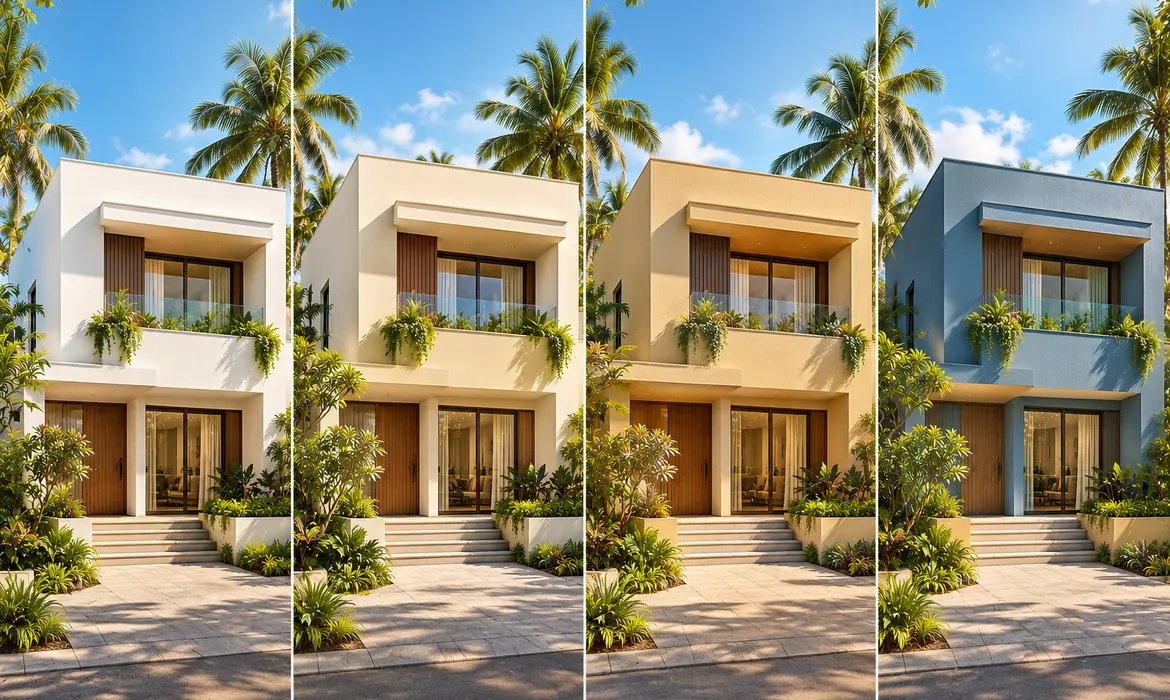
See It on Your Wall Before You Seal It
Light behaves differently across a coastal afternoon in Chennai and a dry evening in Coimbatore and a shade that reads cool on a screen can look different on a sun-facing wall. Indicus Colourcast app lets homeowners visualise a shade against their own facade before a single litre is opened.
What Holds the Colour in Place
The colour on an exterior wall is only as durable as the coating carrying it. Forto’s Dura-colour Technology holds colour, resists dirt pick-up and stands up to efflorescence and alkali attack, so the shade applied stays the shade you see, years on.What Changes Between Chennai and Coimbatore
Coastal Tamil Nadu, Chennai and the Bay of Bengal belt, carries sustained humidity most of the year, putting fungal resistance ahead of heat reflection. Interior Tamil Nadu, Coimbatore and Madurai among them, runs drier but hotter, where surface heat and UV degradation matter more. The right choice for a home in Chennai is not automatically right for one in Coimbatore.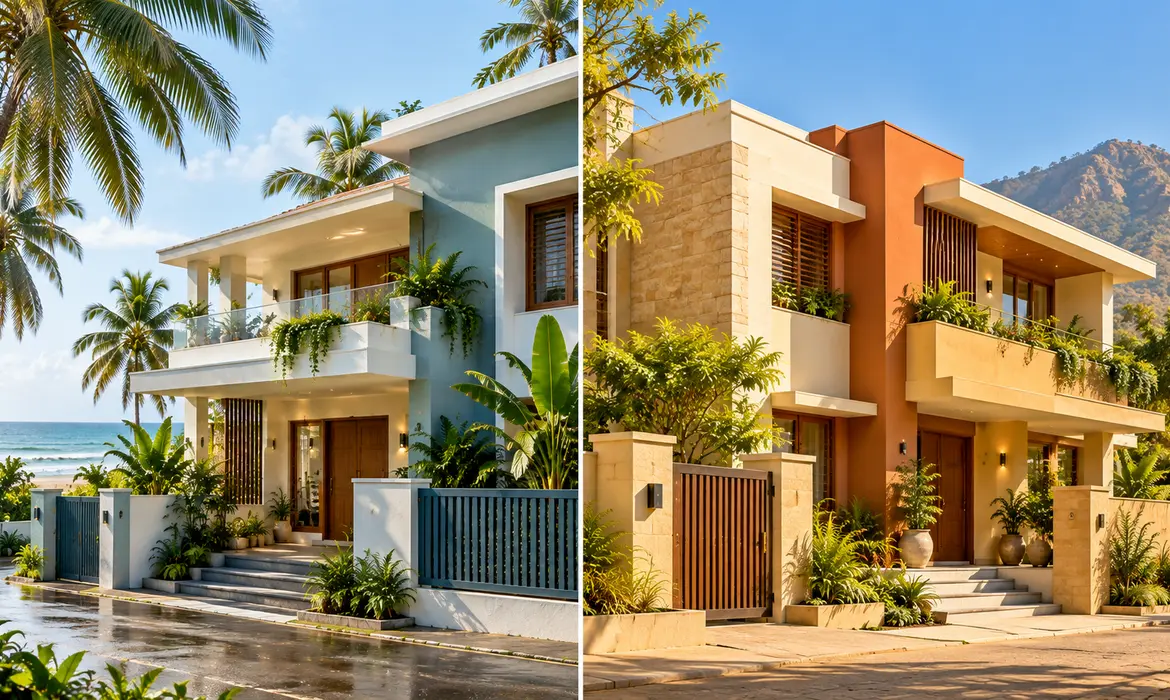
A Colour Chosen to Outlast the Season
Every home on this land answers to the same sky. The sun returns each year, the monsoon follows and the wall stands between the two. Builders on the subcontinent understood this long before paint existed and chose pale, reflective surfaces to meet it. The shades in this guide carry that wisdom forward. Light tones sit across the main elevation, deeper colour settles at doors, gates and shaded corners and a coating holds each shade true through the seasons.
Whether your home faces the humid coast of Chennai or the dry heat of Coimbatore, the right colour is the one that belongs to its weather. See it on your own wall with the Colourcast app and the facade will wear its character with ease, year after year.