
Signs Your Home Needs a Robust Exterior Waterproof Coating Now
Listen to the audio version of the blog here:
Hairline cracks, damp patches, bubbling paint, white chalky deposits, mould growth and a faded or powdery wall surface are the clearest signs that your home’s exterior waterproofing has failed. If you’re seeing any of these, your walls need attention before the next spell of rain.
Indicus builds paints and coatings for the realities Indian homes face, walls exposed to relentless sun, sudden downpours and the kind of humidity that lingers long after the rain has passed.That is the thinking behind Godry Aquaseal, a waterproof coating engineered specifically for these conditions rather than adapted from a formula built for milder climates.
Why Exterior Protection Matters
Exterior walls take the full hit from rain, humidity, wind driven moisture and daily temperature swings. When the protective layer weakens, water slips into cracks, pores and joints and gradually damages the plaster, the paint and the structure beneath. A robust exterior waterproof coating builds a barrier that stops this cycle before it spreads.

Damp Patches on Walls
One of the clearest signs is damp patches on exterior walls. These patches look darker than the surrounding surface and become more visible after rainfall. They signal that water is entering through tiny openings in the wall finish or through weak joints.
If damp spots keep returning in the same area, the wall is absorbing moisture instead of resisting it. At that point, an exterior waterproof coating stops being optional.
Bubbling or Peeling Paint
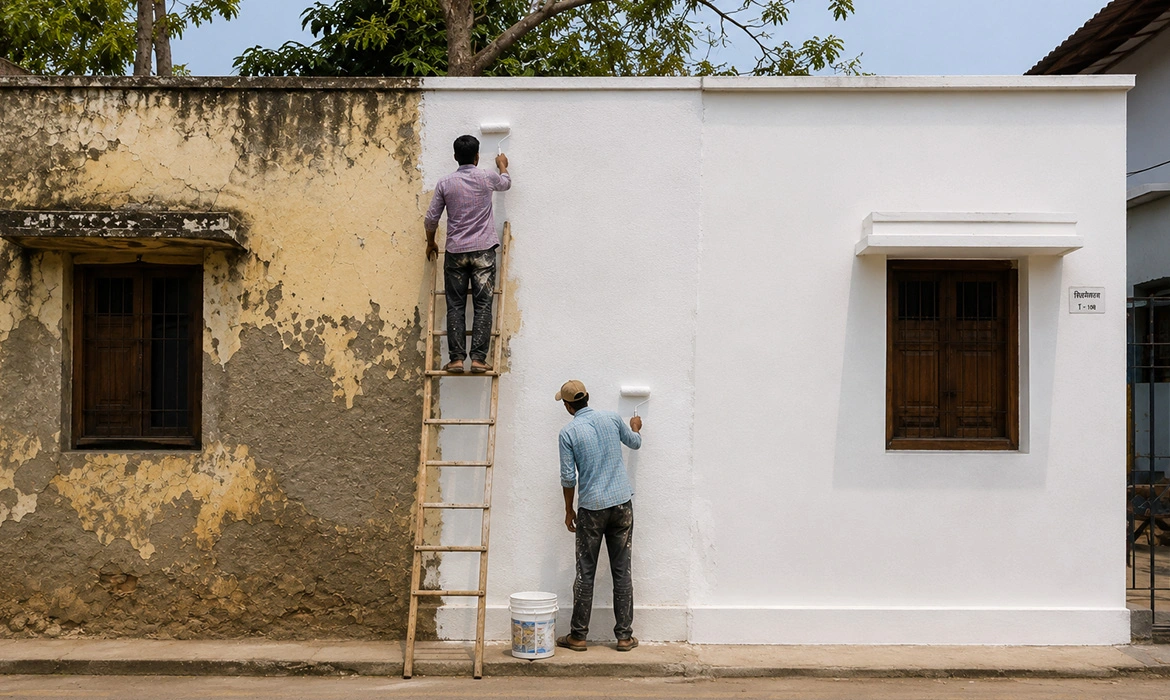
Paint that blisters, bubbles or peels is a strong indicator of trapped moisture. Water behind the paint layer pushes outward, breaking the bond and lifting the finish off the surface. This exposes the wall to even more water.
A fresh coat of paint will not solve this if the wall underneath is still absorbing moisture. The surface needs to be cleaned, dried and properly prepared, with loose or flaking paint removed, before any waterproof coating goes on. Skipping this step is the most common reason a repaint fails within a single season.
Cracks in Plaster or Walls
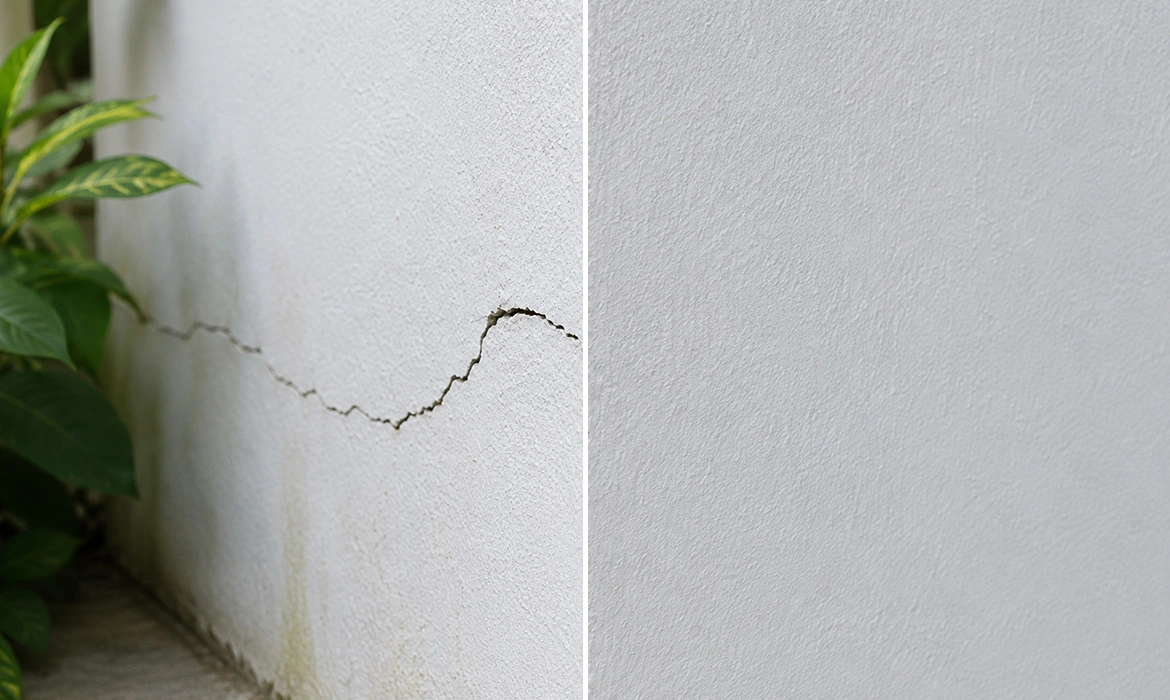
Hairline cracks become entry points for rainwater. Repeated wetting and drying widens these cracks over time and weakens the wall surface. Larger cracks let water travel deeper into the wall system, which is where the real damage starts.
A waterproof coating seals these openings and adds a layer of defence against further movement. This matters most on older homes, where the outer finish has typically been exposed the longest.
Efflorescence and White Stains
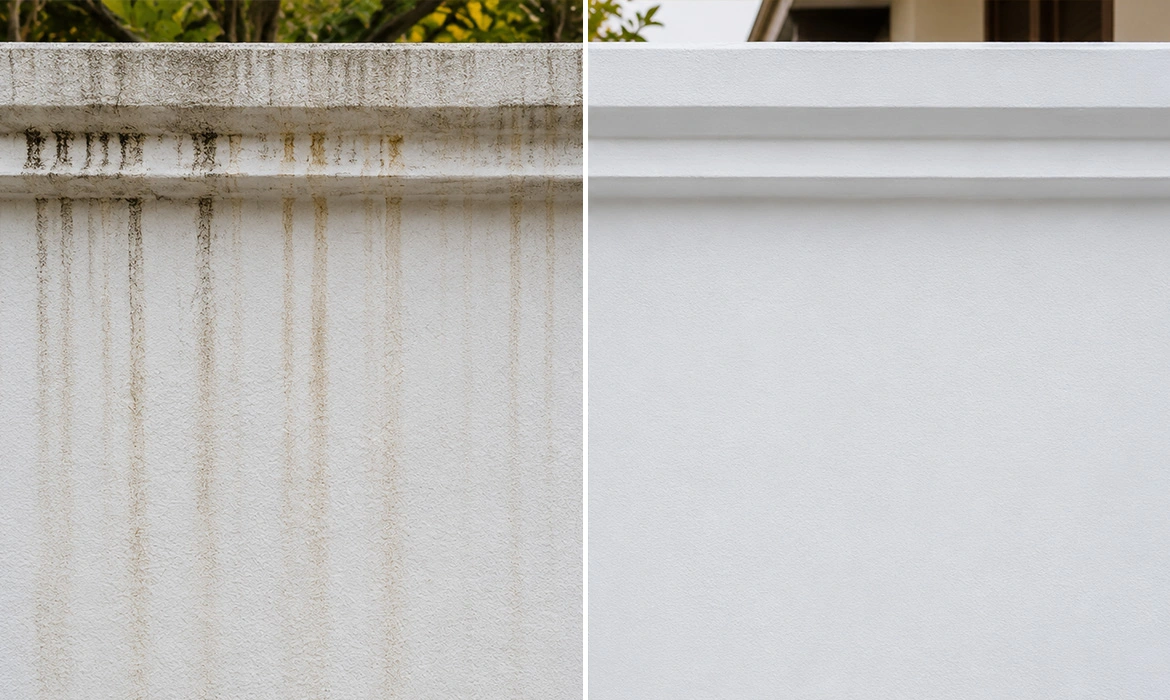
White powdery marks or streaks on the exterior point to efflorescence. Water moves through the wall, dissolves salts within it and leaves them behind on the surface as the moisture evaporates. The stains look cosmetic but they confirm water is actively moving through the wall.
A coating built to resist water penetration at the surface addresses this at the source rather than treating the stains themselves.
Mould, Algae and Mildew Growth
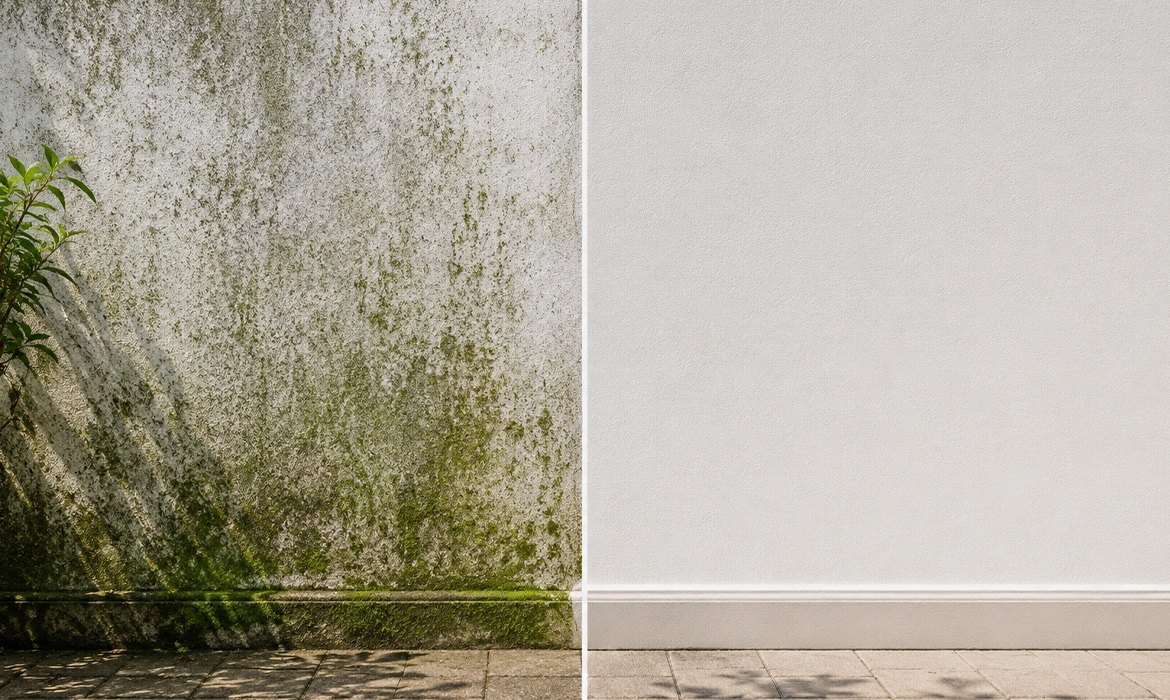
Green, black or brown patches on exterior walls point to trapped moisture. These growths take hold where walls stay damp for extended periods, especially in shaded or poorly ventilated areas, and return quickly in humid regions unless the underlying moisture is addressed.
A waterproof coating reduces how much water the surface absorbs, which limits the conditions this kind of growth needs to establish itself.
Faded or Chalky Exterior Finish
When a wall looks dull, powdery or uneven in colour, the outer layer is breaking down. Constant exposure to sun and rain wears down paint and weakens its protection over time. A chalky finish means the wall is ageing and losing its ability to keep water out.
At this stage, the wall needs a proper waterproof coating, not just a cosmetic repaint, to restore its protection.
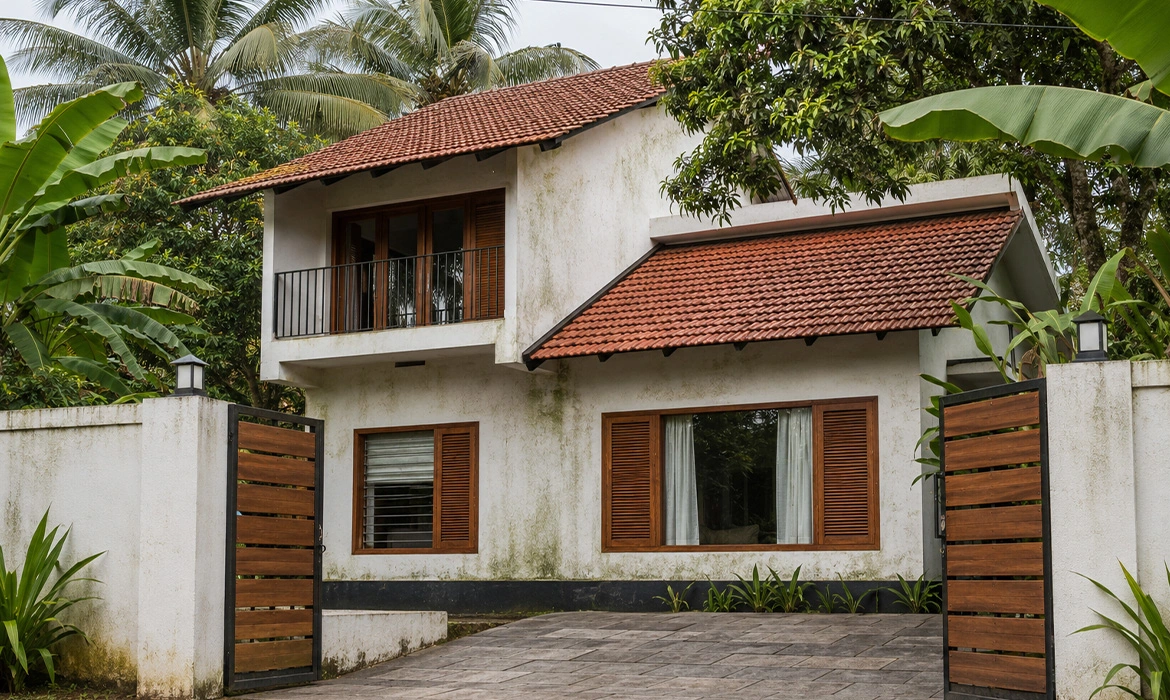
Water Seepage After Heavy Rain
If the inside of your home shows signs of moisture after a storm, the exterior has failed to keep water out. Even when the problem shows up indoors, it typically starts outside through porous walls, cracks or damaged joints, most often around parapets, balconies, terrace edges and window surrounds.
Seepage that repeats after every heavy spell is one of the clearest signs that waterproofing needs attention.
What to Do Next
A waterproof coating works best when applied before damage sets in deep. Once water has worked its way into the wall, repairs take longer and cost more.
Godry Aquaseal is formulated for exactly this. It is engineered for India’s toughest conditions, sustained heat, driving monsoon rain and the humidity that follows through the seasons after. It carries a 5-year waterproofing warranty, over 50% elongation to bridge hairline cracks as they form and built-in resistance to efflorescence, all developed and tested for the way Indian homes actually age. Because what we do, we do extremely well.