
THE UNBLINKING SENTINEL: INDICUS CROSSECTIONS EXPLORES DRISHTI BOMMAI
I. The Unblinking Sentinel
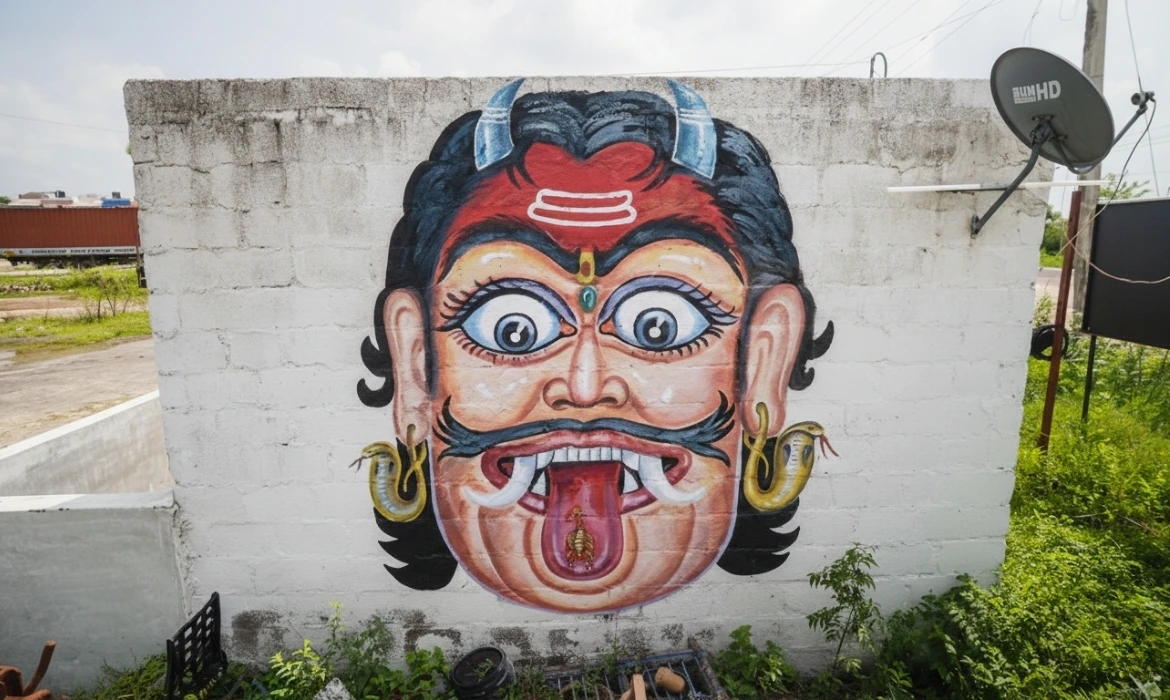
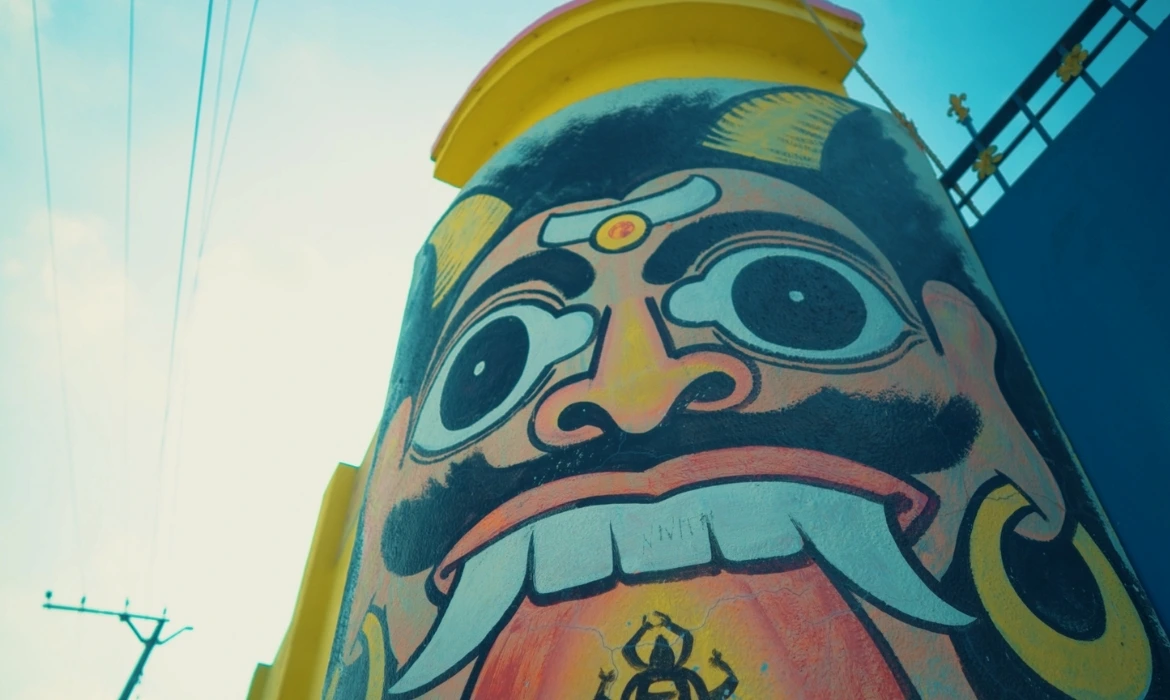
The face is unforgettable: wide-eyed, fearsome, often crowned with sharp teeth and an enormous, colourful moustache. This fearsome figure, the Drishti Bommai (known across South India as Drishti Gombe in Kannada or Drishti Bomma in Telugu), stares down from rooftops, guards the entrances of new construction sites, and rides the back of countless lorries and auto-rickshaws. It is an enduring cultural constant—a pervasive, unblinking sentinel regarded as an apotropaic talisman intended to ward off evil and malicious gazes.
Through our cultural platform Indicus Crossections, we premiered our latest feature documentary, “Drishti Bommai: Reviving The Tradition”. The film provides an examination of this essential piece of South Indian visual culture, tracing its deep anthropological roots, dissecting its powerful semiotics, celebrating its vibrant craftsmanship, and confronting the urgent socio-economic crisis facing the artists who create it.
This documentary is more than a film; it is a vital call to action. The feature traces the faith, practice and craft that mustn’t be lost. The film’s focus on preserving traditional arts aligns seamlessly with Indicus Paints’ commitment to revitalising and reinterpreting South Indian heritage.
II. The Deep Gaze: Tracing the Roots of Drishti and Fear
The documentary begins by establishing the universal nature of the central concern: the belief in the malevolent gaze, or the Evil Eye. This phenomenon, known as Drishti, is an ancient, global anxiety, with origins tracing thousands of years back. This belief is present in many cultures around the world, including in Mesopotamian and Greco-Roman cultures.
The Mechanism of Malice and Ancient Anxiety
The core of the Drishti belief lies in the conviction that a person’s intense thought or intent—particularly those rooted in negative emotions like jealousy, malice, or envy—can be transmitted telepathically through a fixed glance. This malevolent gaze is believed to potentially diminish the success, possessions, or general well-being of the victim. The film argues that this belief system developed as a crucial mechanism for managing the constant fear and social tension prevalent in resource-scarce environments, such as ancient forager or early agrarian communities.
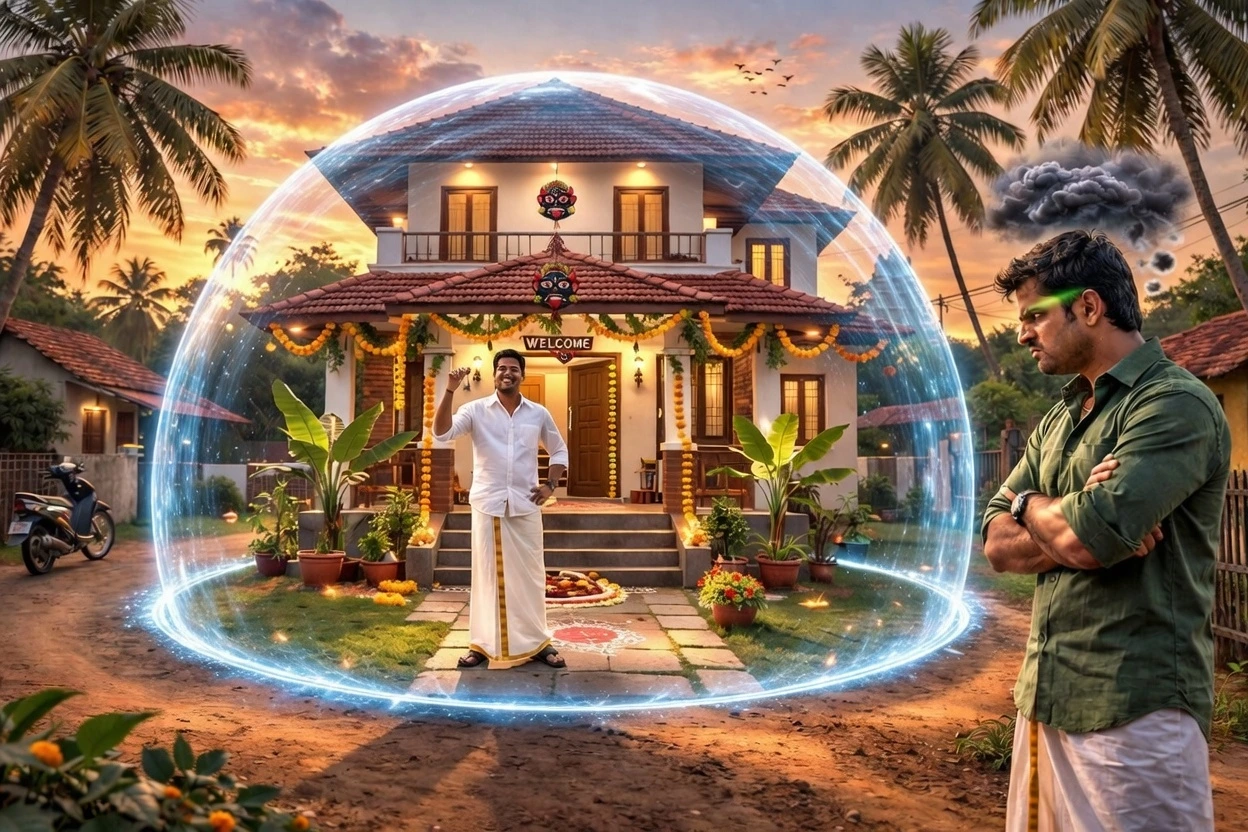
In these societies, visible signs of prosperity—a thriving harvest, a healthy newborn, or a newly constructed dwelling—were highly valued but inherently vulnerable. Such success generated extreme community envy.
The protective Bommai functions as a social firewall, validating the anxiety of those who have achieved prosperity while simultaneously regulating the behaviour of the envious by attributing subsequent misfortune to their negative intent.
Indigenous Lineage and Cultural Defences
Within the Indian subcontinent, the concept is ancient and diverse. The film traces the Drishti Bommai specifically to the indigenous folk traditions prevalent across South India (Tamil Nadu, Karnataka, Telangana, and Andhra Pradesh). The documentary explores how the Bommai fits into a wider spectrum of protective cultural defences, ranging from temporary rituals to permanent installations.
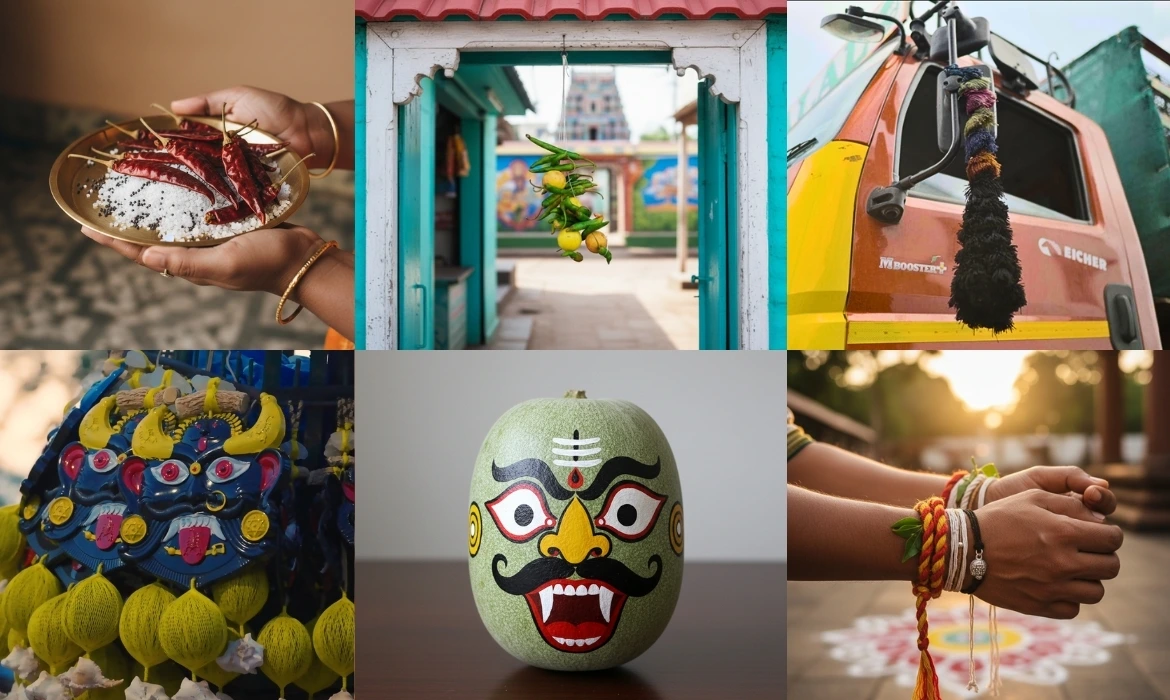
The many different form include practices such as hanging garlands of lemons and green chilies at entrances, placing a black spot of kajal on a child’s cheek, or performing rituals involving the rotation of salt or mustard seeds to absorb negative energy. Among these protective measures, the Drishti Bommai stands out as the most fearsome, permanent, and visually arresting talisman, designed specifically to capture and deflect the gaze.
III. Semiotics of Intimidation: Decoding the Apotropaic Artefact
The efficacy and longevity of the Drishti Bommai are rooted in its sophisticated visual language, known technically as apotropaic semiotics—the use of intimidating visuals to avert harm.
The Principle of Deflection and Metonymy
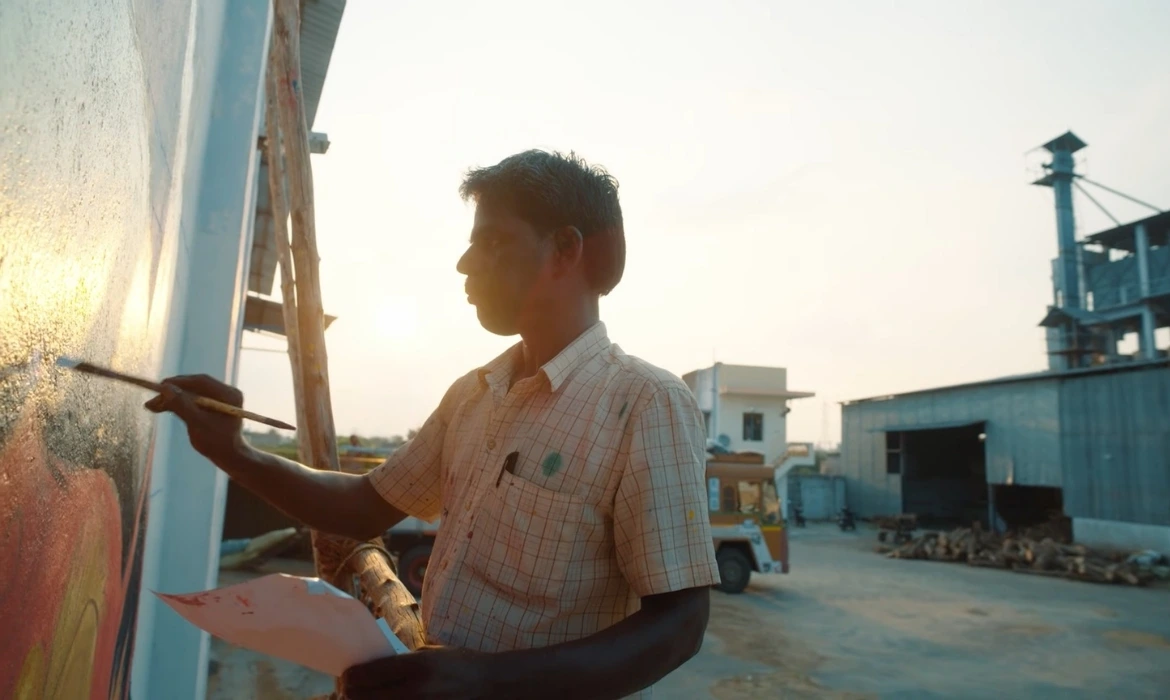
The primary cultural function of the Bommai is that of a “drishti absorbent”. The object is intentionally placed prominently in the environment—on rooftops, at entrances, or on large machinery like rice mills, power looms, and cement factories—to ensure it is the first thing an onlooker notices. This strategic positioning absorbs or deflects the malevolent gaze, seizing the evil intent before it can affect the desired object or person.
Crucially, the protective mechanism relies on the semiotic principle of metonymy: the protection offered by the doll at the entrance or on the exterior is believed to extend to the entire space or asset it guards. The location thus serves as a proxy for the whole.
Visual Language and Exaggerated Symbolism
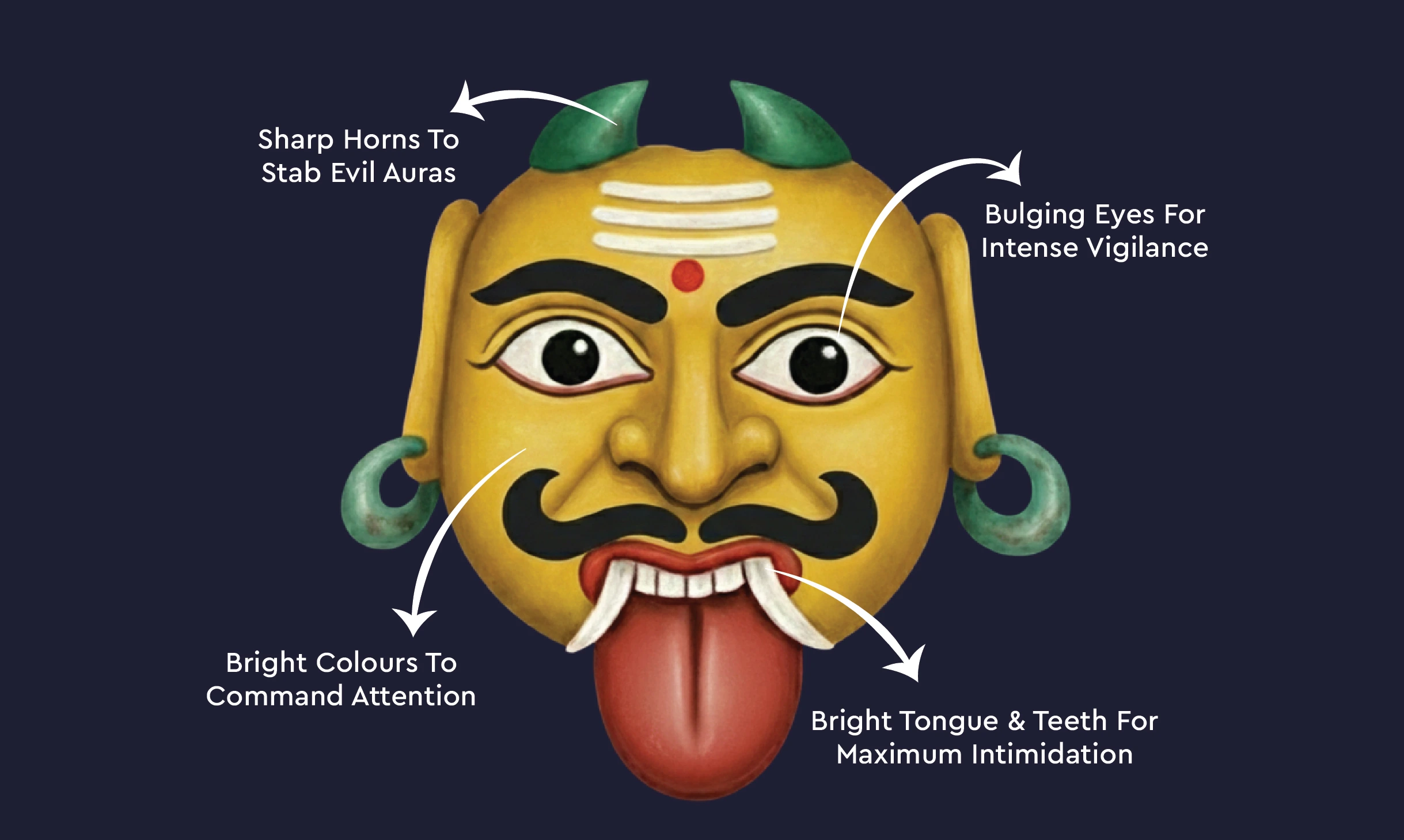
The visual intensity of the Drishti Bommai is not arbitrary; it is a calculated effort to symbolically amplify its repelling power through exaggeration. Key features analysed in the film include:
- Oversized Eyes: The enormous, bulging eyes are the most defining feature, symbolizing intense vigilance and the capacity to confront the evil eye directly.
- Intimidating Anatomy: The face is intentionally grotesque, often featuring raised brows that depict anger, sharp horns designed to stab the evil aura, and an open mouth with long white teeth and a protruding red tongue. These elements are engineered to horrify and strike immediate fear in the viewer.
- Colour and Placement: The masks are brightly painted, utilizing red, yellow, or green, and are designed to command attention. They are typically regarded as protective figures.
Cultural Syncretism
The identity of the Drishti Bommai is subject to regional and devotional interpretation, highlighting its adaptability as a purely folk artifact. The figure is universally regarded as a benevolent Asura (demon) intended to frighten malicious forces. However, local beliefs vary: some communities identify the protective face as one of the Bhootha Kanangal (devotees of Lord Shiva), whose depiction prevents the evil angel (Thusta Devadai) from entering the premises.
IV. The Handcrafted Legacy: Craftsmanship, Evolution, and Contemporary Relevance
Traditional Craftsmanship and Techniques
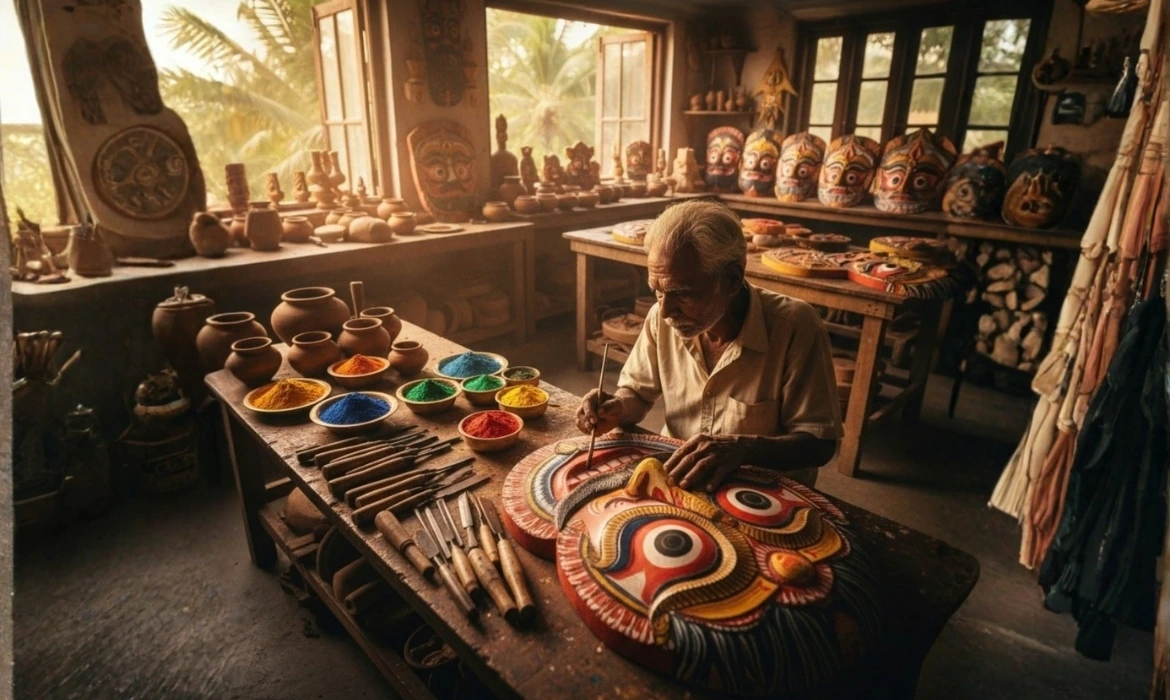
Historically, the dolls or masks were constructed using durable materials appropriate for long-term exposure to the elements, such as clay, wood, or metal. The art form requires specialized knowledge in sculpting or carving, followed by vibrant painting techniques that have been preserved through generational instruction. The dolls are talismans whose craft focuses on maximizing intimidation.
Adaptation and Material Innovation
The art form is not monolithic; it has undergone significant and revealing modifications over time, often driven by the need for permanence and novelty. About twenty years ago, artists making large murals on industrial structures and vehicles transitioned from traditional water colour paints to more robust oil paints, seeking greater weather resistance and durability for their outdoor work.
In terms of style, newer generations of artists have introduced specific visual updates. For example, the addition of a dark scorpion mark onto the doll’s typically red, protruding tongue emerged 30 to 40 years ago. This innovation is a compelling case study in how folk art actively evolves its iconography to maintain its contemporary relevance and enhance its frightening effect, ensuring the talisman remains visually potent.
V. The Crisis of the Fading Canvas: Economic Hardship and Cultural Erosion
The final, and most compelling, narrative thread of the documentary addresses the human cost of this aesthetic decline. The film pivots sharply to the plight of the traditional artisans, whose generational craft is now severely threatened, causing cascading socio-economic consequences within their communities.
The Market Decline and Threat of Extinction
The market for indigenous art and craft in India has witnessed a significant decline, largely attributed to competition from cheaper and machine-made products. As urban expansion prioritizes streamlined aesthetics, the traditional, sometimes grotesque, folk art is being overlooked, contributing to the “fading” of these faces from the public landscape.
The Plight of the Artisans
The economic failure of the market directly translates into acute poverty for the artisans. Research, such as a study conducted on Drishti Bommai vendors in the Tiruchirappalli district, reveals the stark reality of their living conditions, where most families are struggling below the poverty line.
VI. An Attempt For Revival
The “Drishti Bommai: Reviving The Tradition” documentary is positioned as a catalyst designed to generate appreciation, which is essential to boost demand for authentic, handmade artifacts and stabilize the livelihoods of the artists.
Indicus Paints’ cultural initiative, Indicus Crossections, aims to shine a spotlight on these issues and to promote and develop traditional arts and handicrafts. By examining the faith, practice, and craft of the Drishti Bommai, the documentary ensures that this ancient sentinel, which was designed to guard prosperity against human envy, receives the necessary attention and protection it now requires from the forces of urbanization and economic precarity.